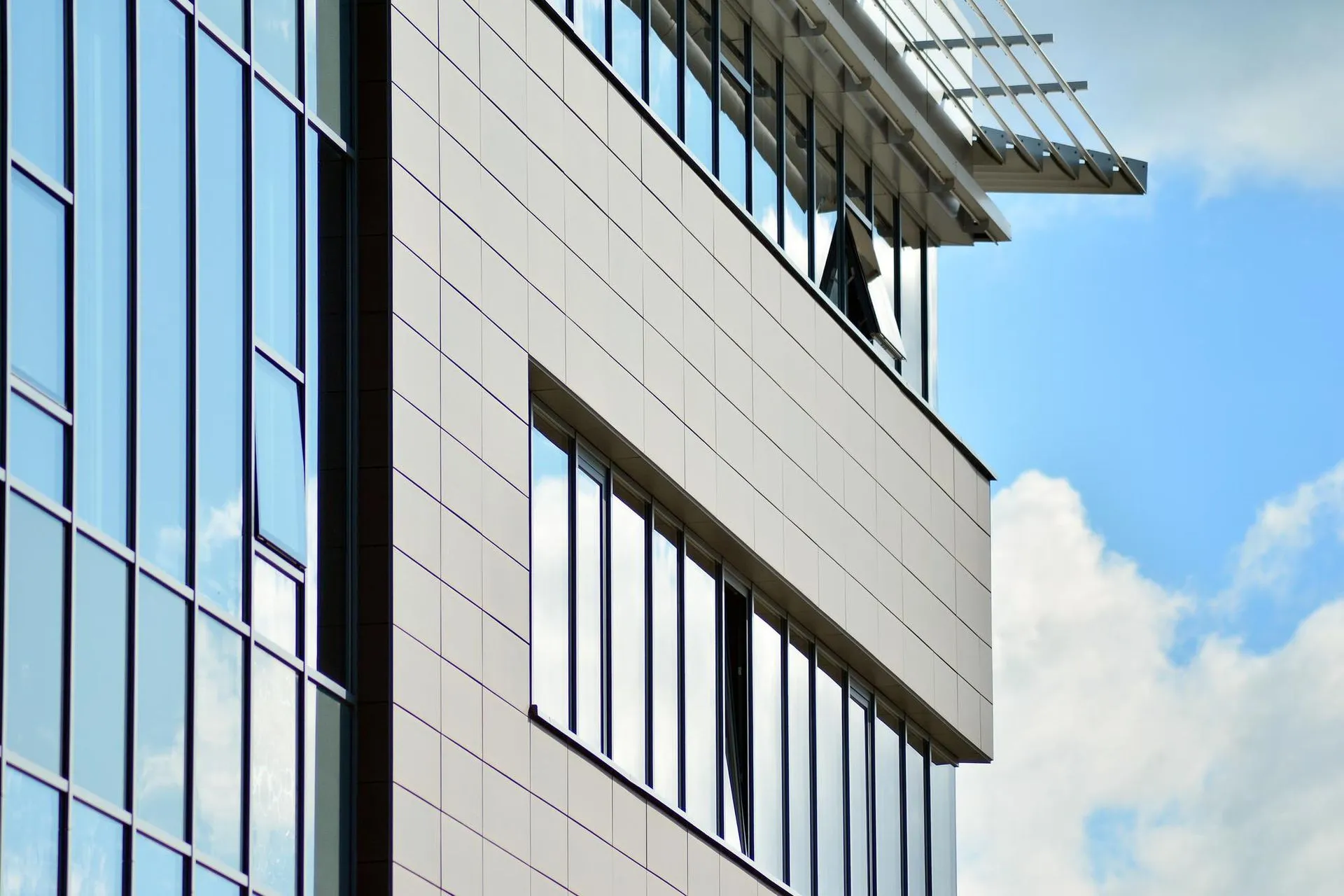
Cladding comparison table
Cladding materials guide
Comparing cladding materials
Every cladding type side by side: cost, maintenance, advantages and planning points
A facade's cladding stays with the building for decades, so it is worth choosing with open eyes. Here are the cladding types we design and install, to compare at a glance and come to the planning meeting with a clear picture.
Costs are relative estimates and vary with the product, the finish and the project's scope.
- Cladding type

Dry-fixed stone cladding
Relative cost5 of 5MaintenanceLow to medium
Depending on the type of stoneMain advantages- Natural, luxurious look
- Mechanical anchoring
- Option to include insulation and an air cavity
- Individual panel replacement
Planning points- Relatively heavy
- Complex planning and anchoring
- Sensitive to variation between stones
Fire resistanceThe stone itself is usually non-combustible
All the system’s components must be checked - Cladding type

Wet-fixed stone cladding
Relative cost4 of 5MaintenanceMedium
Main advantages- Natural stone look
- A familiar installation method
- Suitable for areas where direct application is possible
Planning points- Highly dependent on the quality of the substrate and the workmanship
- Working and drying time
- Repair and replacement are more complex
Fire resistanceThe stone itself is usually non-combustible
Adhesives and anchoring must also be checked - Cladding type

Porcelain stoneware
Relative cost4 of 5MaintenanceLow
Main advantages- A wide range of colors and textures
- Precision and uniformity
- Good weather resistance
- Easy cleaning
Planning points- Panels are fragile during transport and processing
- Drilling, cuts and joints must be planned carefully
Fire resistanceThe ceramic panel usually has good fire performance
Approval is required for the product and the system - Cladding type

Compact HPL
Relative cost3 of 5MaintenanceLow to medium
Main advantages- A wide design range, including a wood look
- Relatively light
- Easy processing
Planning points- Panel movement must be allowed for
- Choosing an exterior-grade product and planning the fixings matter
- Fire limitations depend on the product
Fire resistanceVaries between products and grades
The classification and approval for the project must be checked - Cladding type

Alucobond / aluminum composite panel
Relative cost4 of 5MaintenanceLow to medium
Main advantages- Light weight
- Good flatness
- Cassettes, folds and special shapes
- A clean look
Planning points- The finish may be damaged by an impact
- Thermal expansion must be planned for
- The internal composition is critical to fire safety
Fire resistanceA fundamental difference between a PE core, a fire-retardant core and an A2 core
The exact product must be specified - Cladding type

Fiber cement
Relative cost3 of 5MaintenanceLow to medium
Main advantages- A mineral look
- A range of textures
- Light weight
- Option for a ventilated facade
Planning points- Edges, cuts and fixings require precise handling
- The panels’ look varies between manufacturers and finishes
Fire resistanceFacade panels of class A2-s1,d0 are available
The specific model must be checked - Cladding type

Bespoke architectural cladding
Relative cost5 of 5MaintenanceVaries by solution
Main advantages- Freedom of form
- Full match to the building’s identity
- Combining special materials and details
Planning points- Complex planning, sampling and manufacturing
- Cost and timelines depend on the solution
Fire resistanceDetermined by the chosen materials and system
- Cladding type

Aluminum panel cladding
Relative cost4 of 5MaintenanceLow
Main advantages- Low weight
- High resistance to corrosion and weather
- Freedom of form: bends, perforations and cuts
- A range of colors and finishes
Planning points- Thermal expansion that needs suitable joint details
- Keeping large panels flat
- Planning edges, corners and joints
Fire resistanceSolid aluminum is non-combustible
Check every component of the system
* Fire behaviour depends on the whole system: the panel, the insulation and the anchoring details. Check the exact product's classification against the standard and the safety consultant.
Back to the materials guideThank you! We received your request and will get back to you soon.