Concrete Column Restoration
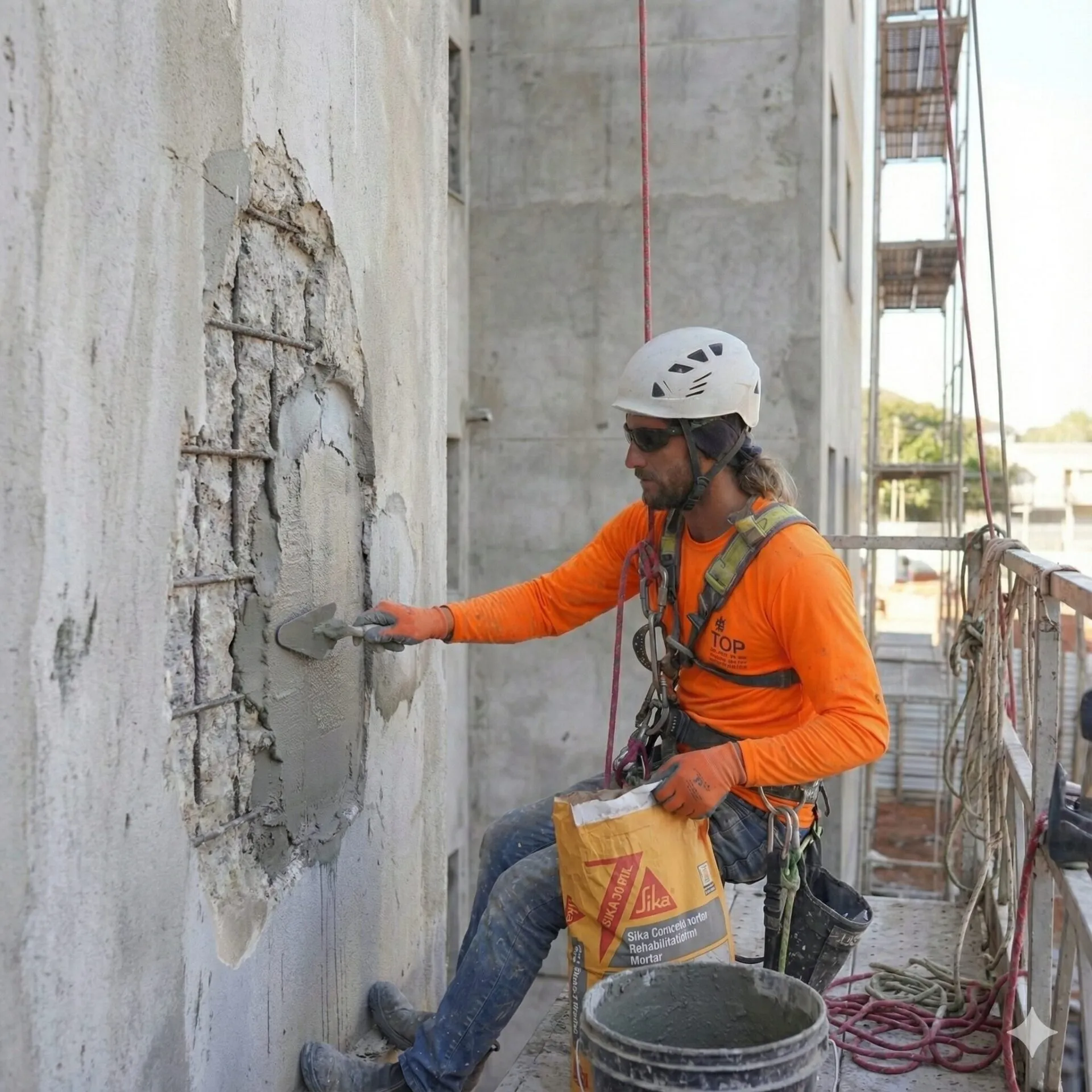
Concrete column restoration: the silent danger threatening your building’s stability
Most of us tend to look up when we think about problems in a building: looking for damp in the ceiling, cracks in the exterior walls or loose tiles on the facade. But often, the biggest and most urgent danger is right at eye level, on the ground floor or in the building’s parking garage: the concrete columns that support the whole structure.
The building’s supporting columns (the building on pillars, the open ground floor) carry on their shoulders an enormous weight of tens to hundreds of tons. When cracks appear in them, or worse, when the concrete starts to crumble and expose rusty steel, it is a glaring red warning light that must not be ignored. In this article we explain why the columns are damaged, what the damage means in engineering terms, and how professional restoration is carried out (a hint: it goes far beyond smearing on a little cement).
Why do concrete columns start to crumble?
The destructive process that damages the columns is called “corrosion of the reinforcing steel”, or in professional jargon, segregation.
Inside every cast concrete column is a mesh of steel bars that gives it its flexibility and load-bearing capacity. In normal condition, the concrete is sealed and protects the steel from oxygen and moisture. However, columns on the ground floor or in the parking garage are exposed to several accelerating factors:
- Rising damp from the ground (capillary): water from the soil climbs up the column.
- Mechanical damage: light knocks from parked cars that create tiny cracks in the concrete.
- Increased exposure to pollution: soot from cars and moisture (especially near the sea) contain salts that speed up rust.
Once moisture and oxygen penetrate through the small cracks and reach the reinforcing steel, the steel starts to rust. The rusting process is accompanied by significant swelling of the steel (up to 4 times its original volume). The tremendous pressure created inside the column simply “blows off” the outer layer of concrete (the concrete cover), which falls away and exposes the steel to the open air, accelerating the destruction even further.
The real danger: why must it not be neglected?
When concrete falls away from the column and the steel is exposed and rusts, two critical things happen:
- Loss of the steel’s cross-section: the rusty steel loses thickness and structural strength, and as a result the column’s load-bearing capacity drops significantly.
- Removal of support: the concrete cover that falls away is also meant to support the steel bars and keep them from buckling under the load (collapse).
Neglecting crumbling columns over time can lead to settlement of the structure, to diagonal cracks in the walls of the apartments above, and in extreme cases to the collapse of parts of the building. The local authorities treat this very seriously, and discovering columns in such a condition almost always leads to the issuing of a “dangerous building” order, which obliges the residents to repair the defects immediately, under threat of heavy fines and legal proceedings.
Concrete column restoration: how do you do it right?
The most serious (and most infuriating) mistake you can make is to bring in a “handyman” who plasters the column with ordinary cement and paints it. That hides the problem, it does not solve it. The rust will go on eating the steel from the inside, and within a few months the column will burst again.
Column restoration is a surgical engineering process. At Top Gova, we carry out the restoration to the strictest standards (Israeli Standard 3201) using the most dedicated and advanced materials on the market, chief among them the systems of the global company Sika:
- Prior shoring (where needed): in cases of very severe damage to the load-bearing capacity, a structural engineer will instruct that temporary supports be placed around the column (props/acrow props) before the work begins.
- Chiseling and exposure: using small hammers, we chisel and remove all the loose, contaminated and cracked concrete, until we reach completely healthy concrete and full exposure of the rusty steel, including behind it (to allow it to be fully cleaned and wrapped).
- Deep mechanical cleaning: we clean the steel with heavy steel brushes or sandblasting, until every trace of rust is completely removed and we reach shiny, clean metal (“white metal”). At this stage, an engineer (if involved in the project) confirms whether the steel has lost more than 15% of its cross-section and new reinforcing bars need to be welded to it (added reinforcement).
- Stopping the corrosion (rust converter): we coat the clean steel with a dedicated material (such as “Sika MonoTop 910” or equivalent) that acts as a rust converter and as active protection preventing the rust from returning, and also serves as a base coat (primer) for the new concrete.
- Rebuilding the column (polymer concrete): this is the critical stage. Instead of simple cement that shrinks and cracks, we use an advanced polymer repair mortar (such as “Sika Rep”). This is an especially strong material that bonds perfectly to the old concrete and to the steel, does not shrink as it dries, and restores the column’s original structural strength.
- Curing, smoothing and paint: after the material has been properly dried (cured), we smooth the column to restore its original geometric shape, and finally paint it with a flexible paint system (and sometimes with a protective material against carbonation, anti-carbonation) to seal it against future penetration of moisture.
Do not wait for it to fall
The building’s columns are the legs that hold up your home. A crack in a column is not a cosmetic flaw to be painted over, but a serious warning that calls for professional, thorough and uncompromising treatment.
Seen deep cracks or rusty steel in your columns? Do not take a risk. Contact us at Top Gova today for a professional assessment and concrete restoration to the highest standard, which will give you back your peace of mind and the safety of the structure.
Thank you! We received your request and will get back to you soon.
More articles you may find interesting
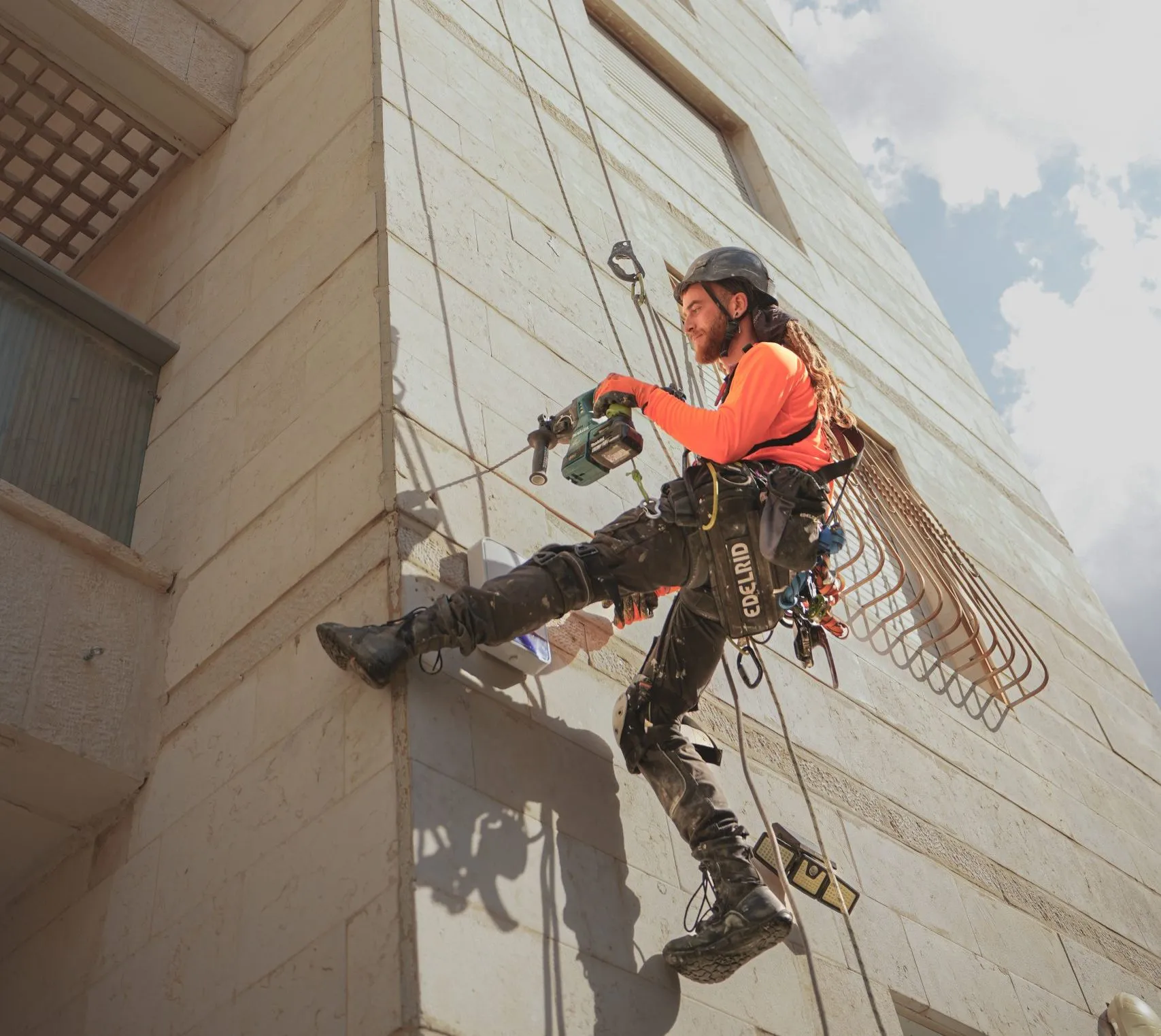
Read the article Annual Building Maintenance
A professional checklist for building committees: what to check every year on the envelope of a tall building, how to plan the budget and when to call a rope access company. A guide from Top Gova.
Read the article Parapet Wall Waterproofing
The parapet wall is the number one cause of damp on the top floor. Learn how to waterproof it properly with rope access and prevent damage to penthouse apartments.
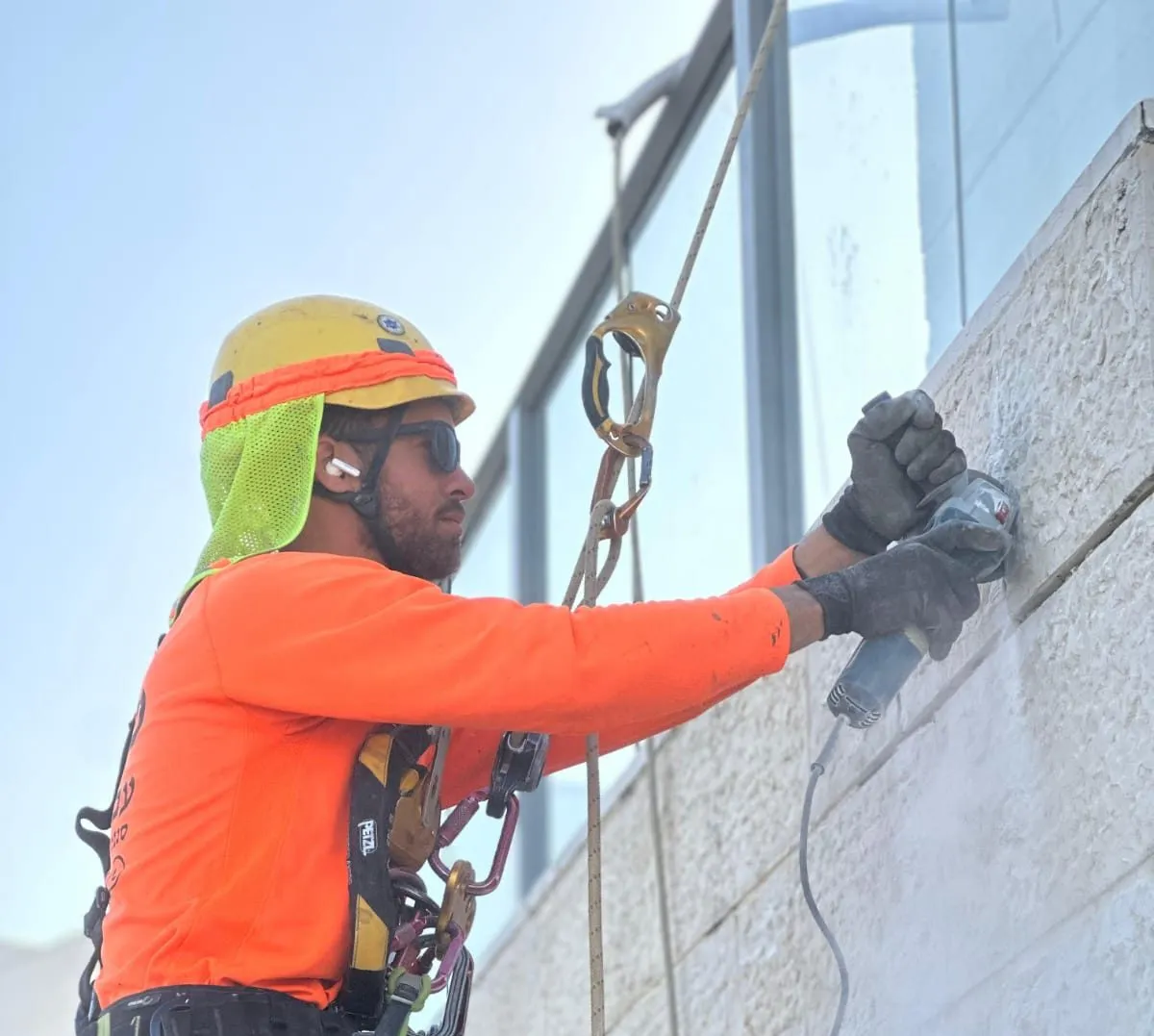
Read the article Efflorescence on Walls
Efflorescence on facades and exterior walls: the cause, how it differs from damp, and professional treatment at height. Get advice from Top Gova.