Efflorescence on Walls
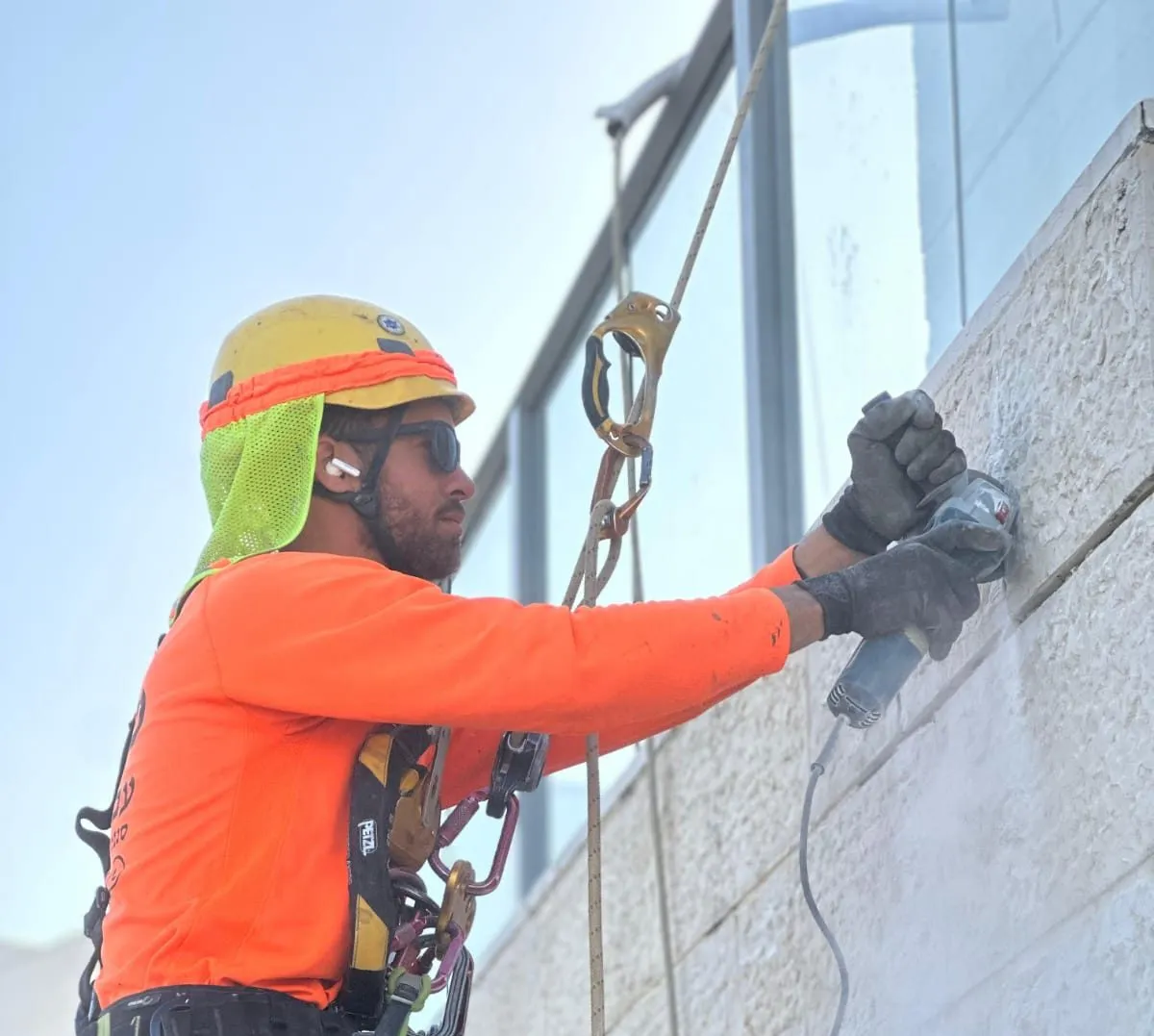
Efflorescence on walls and facades: not damp, but a sign of it
The white stains that appear on a building’s exterior wall look like stubborn dirt, but they are something else entirely. It is an engineering phenomenon called efflorescence, and it is not just a cosmetic matter: it is a red flag signaling that something beneath the surface is not working properly. In this article we explain what causes efflorescence, how to tell it apart from “ordinary” damp, and what the treatment process carried out at height looks like when the wall is on the fifth floor and above.
What exactly is efflorescence?
Efflorescence is a white crystalline deposit that appears on the surface of concrete, plaster, stone or brick. Its source is soluble salts (mainly calcium carbonate, sulfates and sodium chloride) found naturally in the building materials themselves. When water penetrates the wall, from inside or outside, it dissolves the salts and carries them through the capillaries of the concrete to the surface. When the water evaporates, the salt stays behind and forms that characteristic white layer.
It is important to understand: the efflorescence itself does not destroy the concrete immediately, but it is the visible evidence that water is moving through the material. And moving water = oxidation of the reinforcing steel, damage to the plaster’s grip on the concrete, and a gradual decline in the facade’s durability.
How do you tell efflorescence from ordinary damp?
Many residents come to us complaining of “damp on the facade” when it is really efflorescence. The distinction matters, because the treatment is completely different:
- Efflorescence: white stains, dry to the touch, flaking off easily by hand or with a brush. More visible after rain and drying.
- Active damp: dark stains (gray-brown), damp to the touch, sometimes with a smell of mold.
- Falling coatings: when the salts have built up such a mass that they push the plaster outward.
If you are not sure what you have, our extended guide on damp in the wall explains the symptoms in detail.
Why does the efflorescence come back after it is removed?
Many neighbors try to scrub the stains with a stiff brush and water. The stains disappear, and come back after the next rain. The reason is simple: the source of the problem (the water carrying the salt) was not treated. Removal without waterproofing is a purely cosmetic treatment that lasts a few weeks.
The common causes of efflorescence on high facades
- Rising damp (capillary rise): water from the ground or from a faulty horizontal joint climbing through the wall. We covered this in the article rising damp in walls.
- Rainwater penetration through cracks in the plaster or the exterior paint.
- “Young” concrete: in buildings less than 3 years old, there are salts that have not yet stabilized and rise with the first waves of absorption.
- Faulty waterproofing around windows, gutters or expansion joints.
- Non-standard waterproofing materials from the original construction: this is especially common in buildings from 1980-2000, before waterproofing standards in Israel improved.
The rope access efflorescence treatment process
The treatment is a systemic process, not a surface treatment. This is how a professional rope-access technician carries it out:
- Locating the source: a rope-access technician inspects the entire envelope: joints, gutters, windows, roof. Without locating the source, any further treatment will repeat itself.
- Mechanical removal of the efflorescence: pressure washing with hot water, and sometimes light sandblasting in stubborn areas.
- Chemical neutralization of the salt residues: using a weak acid (10% diluted hydrochloric acid) followed by a clean rinse. The material must suit the type of concrete and the application environment.
- Repairing the source of the damp: sealing cracks, renewing the waterproofing around windows, applying an elastomeric polyurethane (Sikaflex-11 FC or equivalent).
- Applying a salt inhibitor: a material that soaks into the concrete and prevents further salts from rising to the surface.
- A protective layer: a breathable silicone paint or a hydrophobic coating. Important: the coating must be breathable (vapor permeable), otherwise it creates a “pocket” of moisture and causes the plaster to burst.
How long does the process take?
In an ordinary 10-story building, with local patches of efflorescence, the treatment takes 3 to 7 working days. With rope access work at height it is done without erecting scaffolding, which makes the project 3 times shorter than with traditional methods.
When should you step in at once?
If the efflorescence consistently appears along one joint, if there are horizontal cracks beside it, or if the plaster starts to peel around it, don’t wait. This is no longer an exterior treatment: it is a sign of deep damp that may reach the apartments inside and cause extensive damage.
Work at height to standard is carried out according to the waterproofing standards of the Standards Institution of Israel (SI 1752 for waterproofing). A professional rope access wall waterproofing company will identify the source and provide a solution that lasts a decade and more.
Why Top Gova?
The Top Gova team carries out waterproofing and efflorescence treatment projects all over the country, from residential buildings to office towers. We work only with documented, standard-compliant materials, provide a written warranty on the work, and accompany the committee from the first survey to the full handover.
Further reading on the engineering phenomenon: Efflorescence in construction: Wikipedia.
Thank you! We received your request and will get back to you soon.
More articles you may find interesting
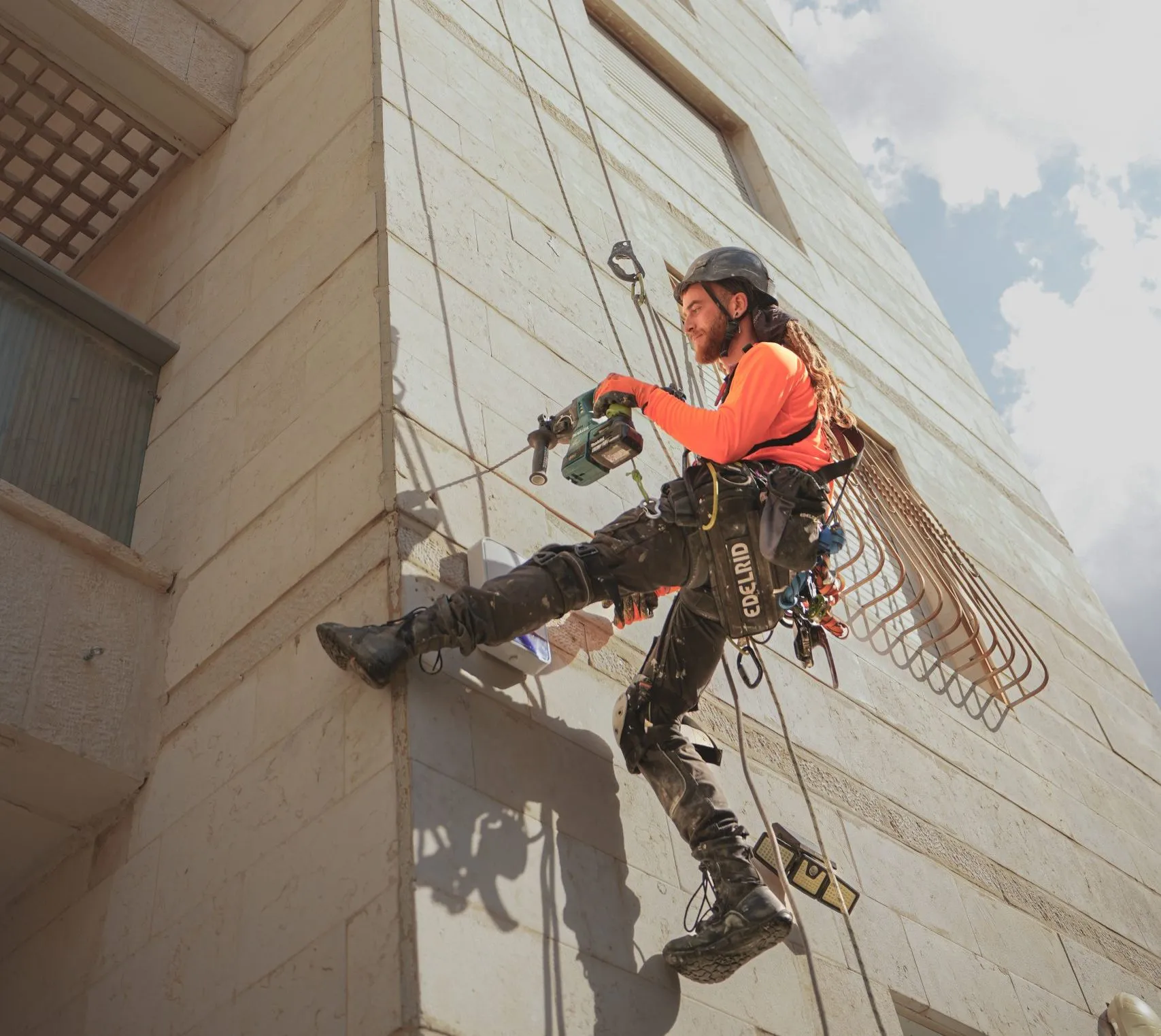
Read the article Annual Building Maintenance
A professional checklist for building committees: what to check every year on the envelope of a tall building, how to plan the budget and when to call a rope access company. A guide from Top Gova.
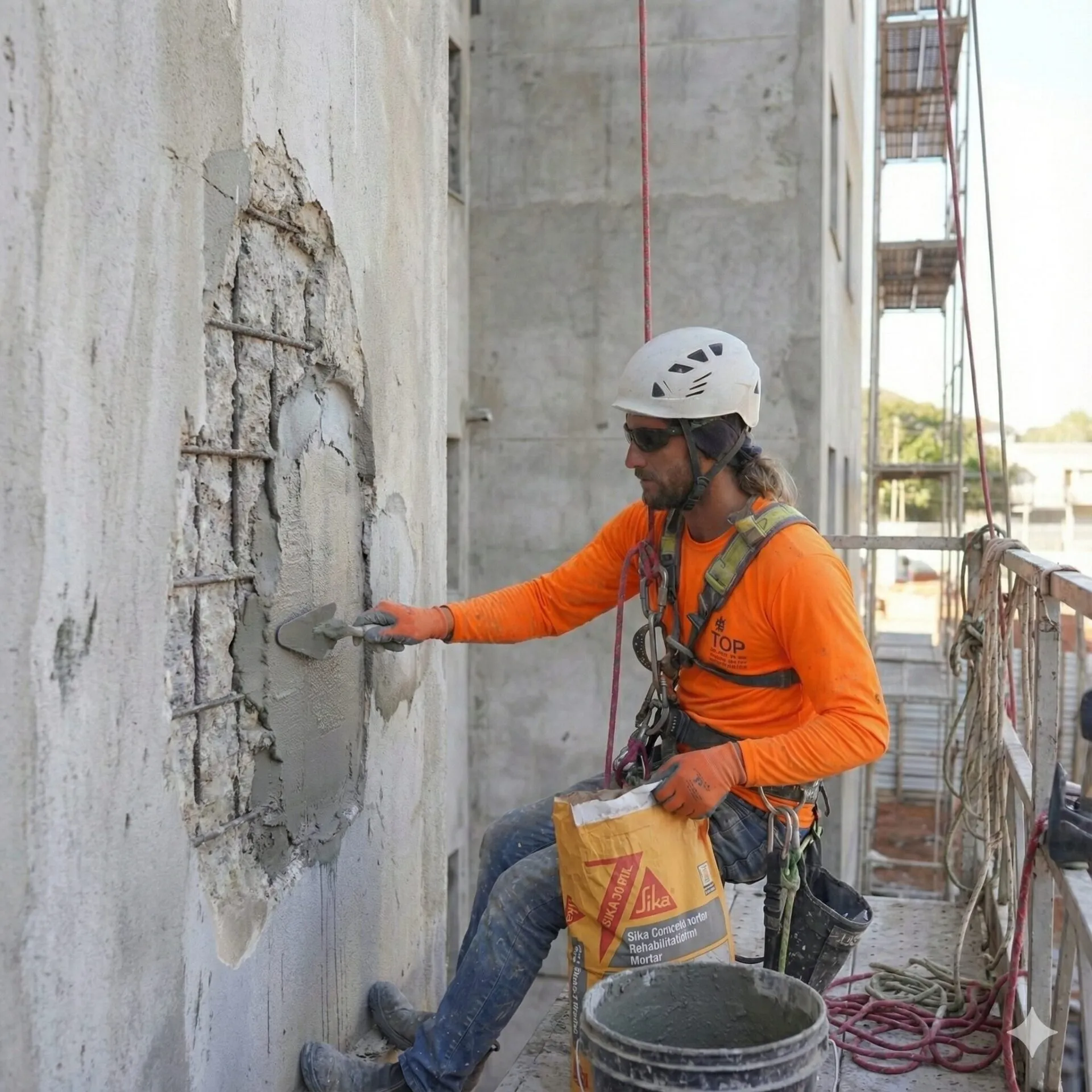
Read the article Parapet Wall Waterproofing
The parapet wall is the number one cause of damp on the top floor. Learn how to waterproof it properly with rope access and prevent damage to penthouse apartments.
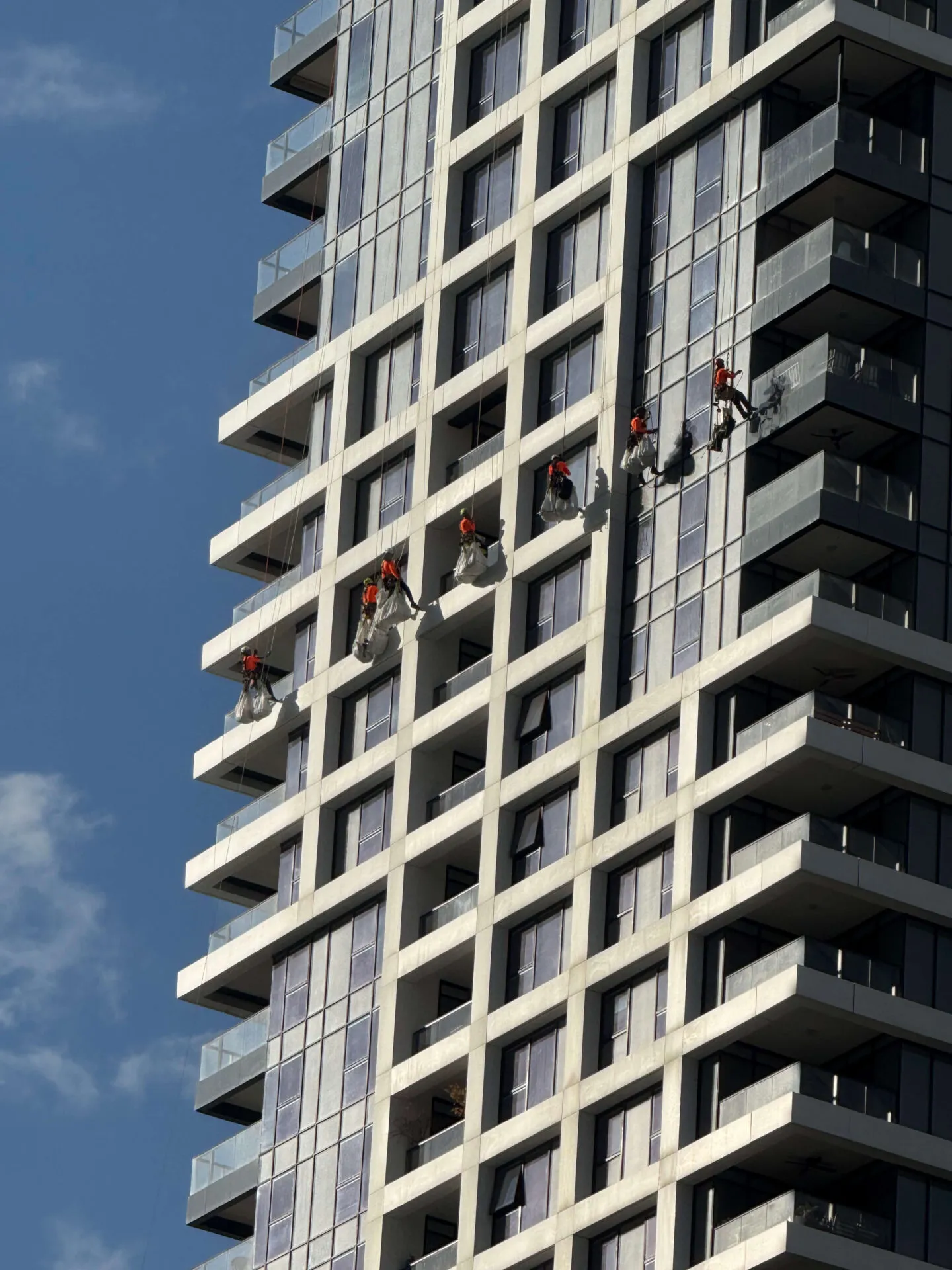
Read the article Segregation in Concrete
Segregation in concrete creates honeycombs and structural weakness in columns and facades. Learn to identify the defect and restore it with rope access. Call Top Gova.