Rising Damp in Walls
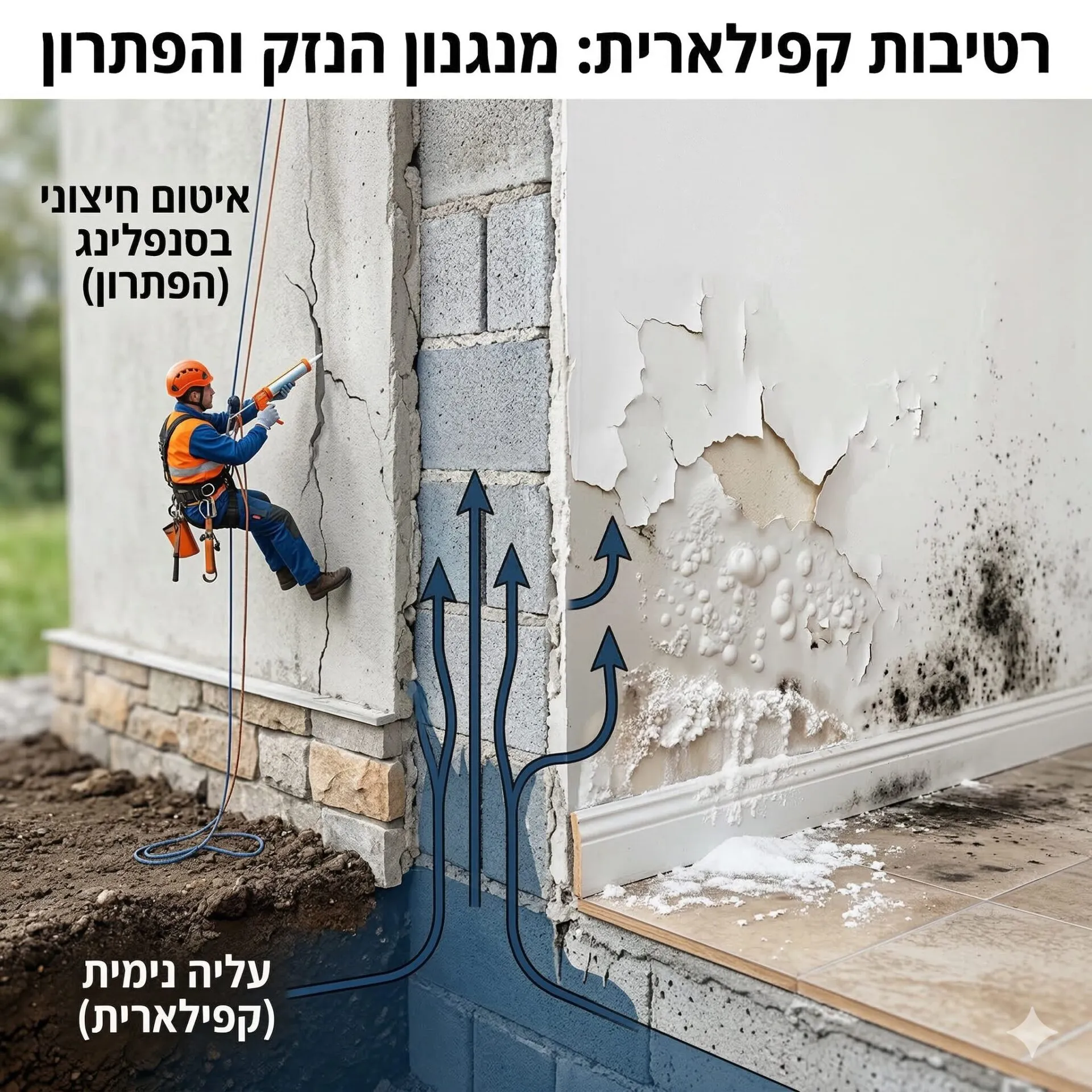
Capillary damp in walls: the comprehensive guide to identification, dangers, and the only solution that will stop water penetration for good
The Israeli winter may be short, but for many apartment owners and building committees it brings a nightmare that repeats itself year after year: damp stains, peeling paint and walls that start to “bloom”. The script is usually the same: you spot the damage, call in a professional who scrapes off the loose paint, spreads filler, seals the wall from the inside and repaints. The apartment looks great again, and you are sure the problem is behind you. But the next winter, at exactly the same spot (or a few centimeters beside it), the black stain and the peeling reappear, sometimes even worse.
If this frustrating vicious circle sounds familiar, it is very likely that you are dealing with a destructive physical phenomenon known as capillary damp (or “capillary rise”). In this article we will break the phenomenon down: we will understand the science behind it, learn how to identify it, explain why interior repairs are a waste of effort, and present the only solution that really works: cutting off the water source from the outside with rope access facade waterproofing.
What is capillary damp anyway? (The science behind the wall)
To understand the problem, we need to understand what our walls are made of. The common building materials (concrete, blocks, plaster, and sometimes certain stone claddings) are not completely watertight. At the microscopic level they are very porous materials, full of tiny voids and fine channels called “capillaries”.
Capillarity is a physical phenomenon in which a liquid can flow through narrow spaces against gravity, as a result of surface tension and adhesion forces. Just as plants draw water from the roots up to the leaves at the top of the tree, and just as a dry sponge placed on a puddle draws the water upwards, so does your wall behave.
When the building’s exterior envelope is damaged, whether by a tiny hairline crack (even as thin as a hair), a failure in the grout between cladding tiles, or faulty sealing around a window frame, rainwater is absorbed into the wall. Once the water has penetrated the outer layer, it begins to “climb” and move through the channels of the concrete and blocks. The water looks for the easiest way to evaporate, and usually finds it on the inner, warm and dry side of your apartment.
The signs: how will you know it is capillary damp and not just a leak?
A correct diagnosis is half the solution. While a leak from a burst pipe usually appears suddenly as a wet, dripping stain, capillary damp develops slowly and leaves very clear “fingerprints”:
- Swelling, bubbles and peeling paint: the water trapped inside the wall pushes the paint and plaster layer outwards and causes them to detach from the substrate.
- “Salt bloom” (Efflorescence): this is perhaps the most distinct sign. A white, crystalline, cotton-like powder that appears on the surface of the wall. These are in fact salts and minerals found naturally in concrete and cement materials. The water passing through the wall dissolves these salts and carries them to the inner surface, and there, when the water evaporates into the room, the salts are left behind and crystallize into a white powder that ruins any coat of paint.
- A musty smell and black mold: the constant moisture inside the wall is an ideal breeding ground for fungi and mold. Even when the surface looks relatively dry in summer, the fungi keep thriving deep in the wall and produce a typical musty smell.
- Yellow/brown stains: appearing mainly after heavy rainstorms and spreading gradually.
The hidden dangers: why capillary damp must not be neglected
Many people tend to treat damp in a wall as a cosmetic flaw that spoils the living room or bedroom. But the reality is that the visible damage is only the tip of the iceberg. Ignoring the problem over time carries two main dangers:
- A structural danger to the building (corrosion and segregation): when water (and oxygen) penetrates deep into the concrete and stays there for a long time, it eventually reaches the reinforcing steel, the skeleton that holds the building up. The steel begins to rust (the corrosion process). When steel rusts, its volume grows significantly (up to 4 times its original volume). This swelling exerts enormous pressure on the concrete from the inside, causing it to crack, crumble and finally fall off (a phenomenon known as “segregation”). In clad buildings, this process can lead to stone tiles falling onto the sidewalk, a real danger to life.
- A serious health hazard: the mold and fungal spores that develop inside a wet wall are released into the air of the room. Breathing mold-contaminated air every day is linked to a wide range of health problems, from allergies and skin and eye irritation to a significant worsening of respiratory diseases such as asthma, especially among children, the elderly and people with a weakened immune system.
The big (and expensive) mistake: treating the symptom instead of the root
The most common mistake is trying to stop the water from inside the home. Amateur contractors will offer to spread interior waterproofing materials (negative-side waterproofing) on the peeling wall. Why is this doomed to fail? Because such an action is equivalent to putting a plaster on a burst water pipe. The water still keeps penetrating the wall from the building’s outer facade. Now, instead of evaporating into the room, it is trapped behind the new interior waterproofing layer you applied. The hydrostatic pressure inside the wall will keep rising, and the water will simply look for another weak point: it will climb higher, move sideways, or cause a more massive blowout of the plaster at a nearby spot. In addition, the trapped water will accelerate the steel corrosion process we mentioned earlier.
The rule in building physics is simple: water is stopped on the side it comes from.
The real and only solution: rope access facade waterproofing
The only way to beat capillary damp is to dry the wall, and the only way to dry the wall is to cut off the water supply from the outside. This is where the expertise of work-at-height companies comes into the picture.
Instead of erecting expensive, cumbersome and burdensome scaffolding around the entire building to treat local damp spots, rope access work (descending the building envelope) allows a surgical, precise and far more economical solution.
The professional waterproofing process on the building’s facade includes several critical stages:
- Diagnosis and mapping: the team of rope-access technicians descends along the building’s facade, examines the exterior wall opposite the interior damp spot, and locates the source of the failure. Sometimes it is a clear diagonal crack, and sometimes it is tiny holes in the grout between mosaic tiles or a gap in the sealing around the window’s aluminum frame.
- Preparing the substrate: it is not enough to spread material over an existing crack. The cracks must be grooved and deepened with a disc or dedicated tools, and the area thoroughly cleaned of dust, dirt and loose parts, to ensure full adhesion of the new waterproofing materials.
- Injection and flexible sealing: the professional treatment uses advanced polyurethane-based waterproofing materials (such as the leading product lines of Sika or hybrid materials). Unlike ordinary cement or simple acrylic materials, which crack over time, these materials are completely flexible. They can “live” and move with the natural movements of the building, resist the UV rays of the Israeli sun, and form a total, impenetrable barrier to water.
- Drying and interior restoration: only after the outer envelope has been completely sealed should you wait. This is the stage that calls for patience. The inner wall is soaked with water and needs time (sometimes several weeks of dry weather) to dry out completely. Only once the wall has dried in depth is it advisable to carry out the interior cosmetic repairs (scraping, filler and paint). Only this way will you ensure that the damp never returns.
In summary
Capillary damp is a quiet and stubborn enemy, but it is not fate. Do not waste money and precious time on attempts to waterproof from the inside, which are doomed to fail and only worsen the hidden damage to the building’s structure. The right treatment requires a broad view, professional equipment, and reaching the source of the problem on the outer side of the wall.
At ‘Top Gova’ we specialize in locating and sealing capillary damp spots in the building envelope. Our certified rope access teams use the world’s most advanced waterproofing technologies to give you peace of mind and a dry winter, under warranty. Suffering from damp that comes back every year? Contact us today for a professional diagnosis and finally solve the problem at its root.
Thank you! We received your request and will get back to you soon.
More articles you may find interesting

Read the article Annual Building Maintenance
A professional checklist for building committees: what to check every year on the envelope of a tall building, how to plan the budget and when to call a rope access company. A guide from Top Gova.
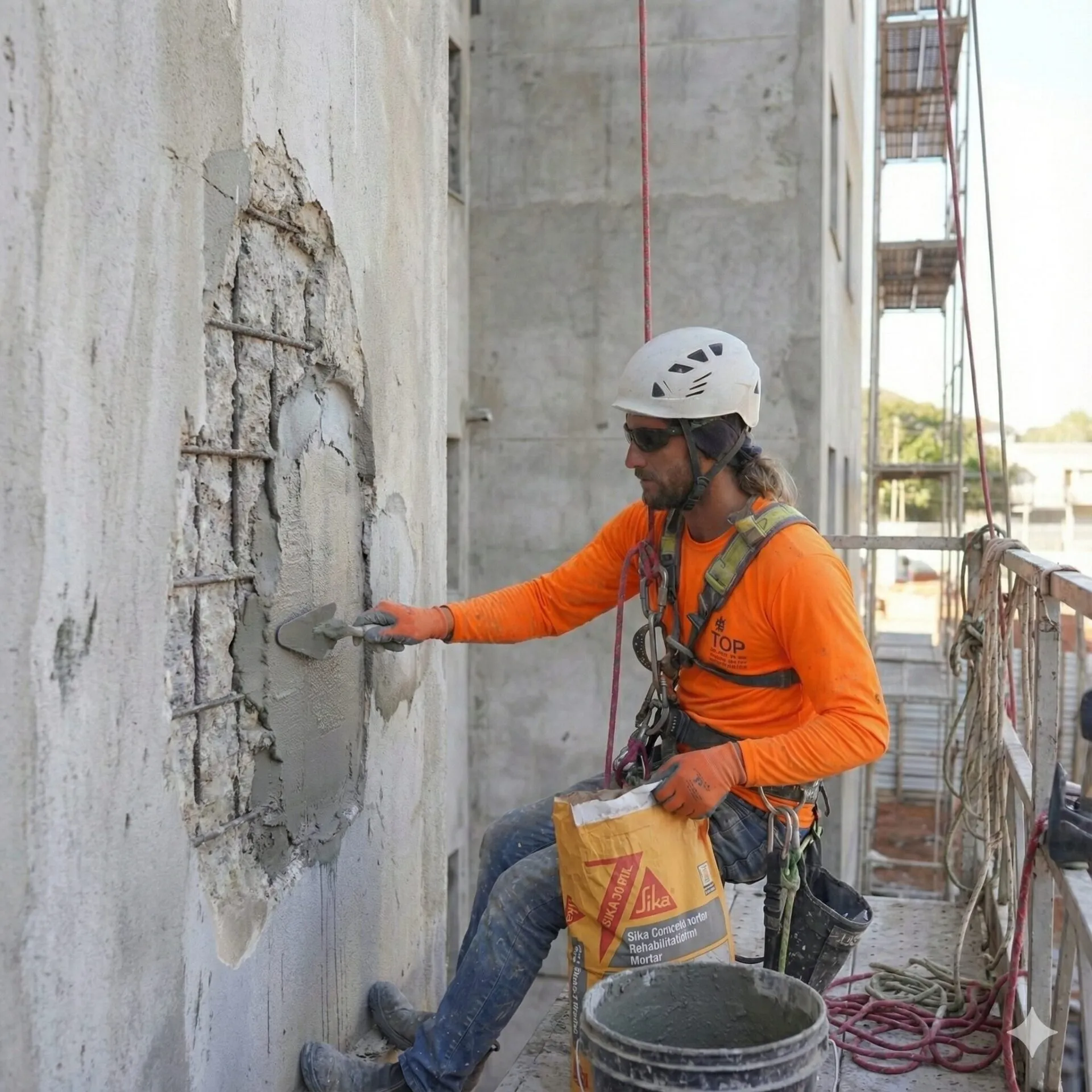
Read the article Parapet Wall Waterproofing
The parapet wall is the number one cause of damp on the top floor. Learn how to waterproof it properly with rope access and prevent damage to penthouse apartments.
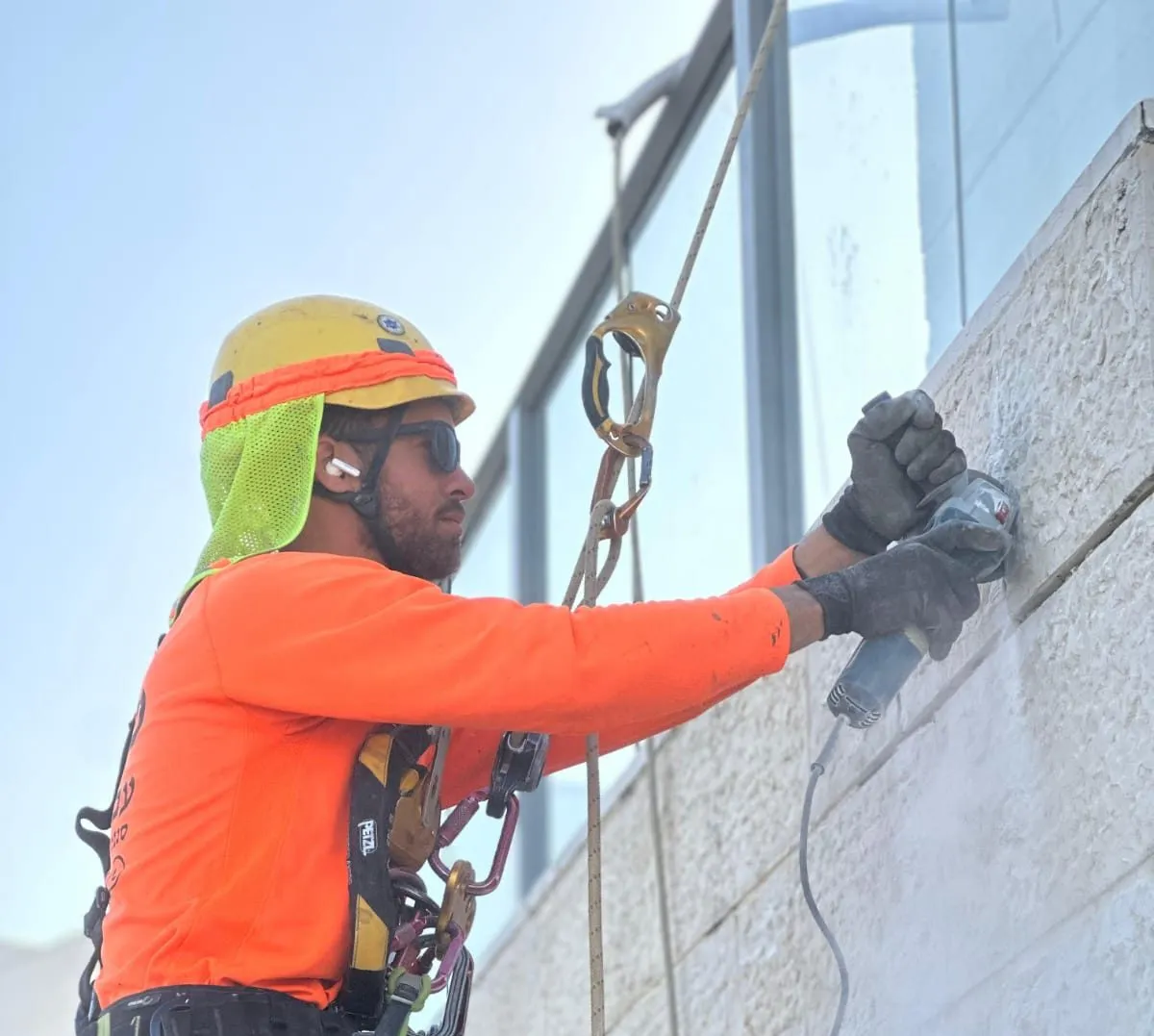
Read the article Efflorescence on Walls
Efflorescence on facades and exterior walls: the cause, how it differs from damp, and professional treatment at height. Get advice from Top Gova.