Concrete Restoration at Height
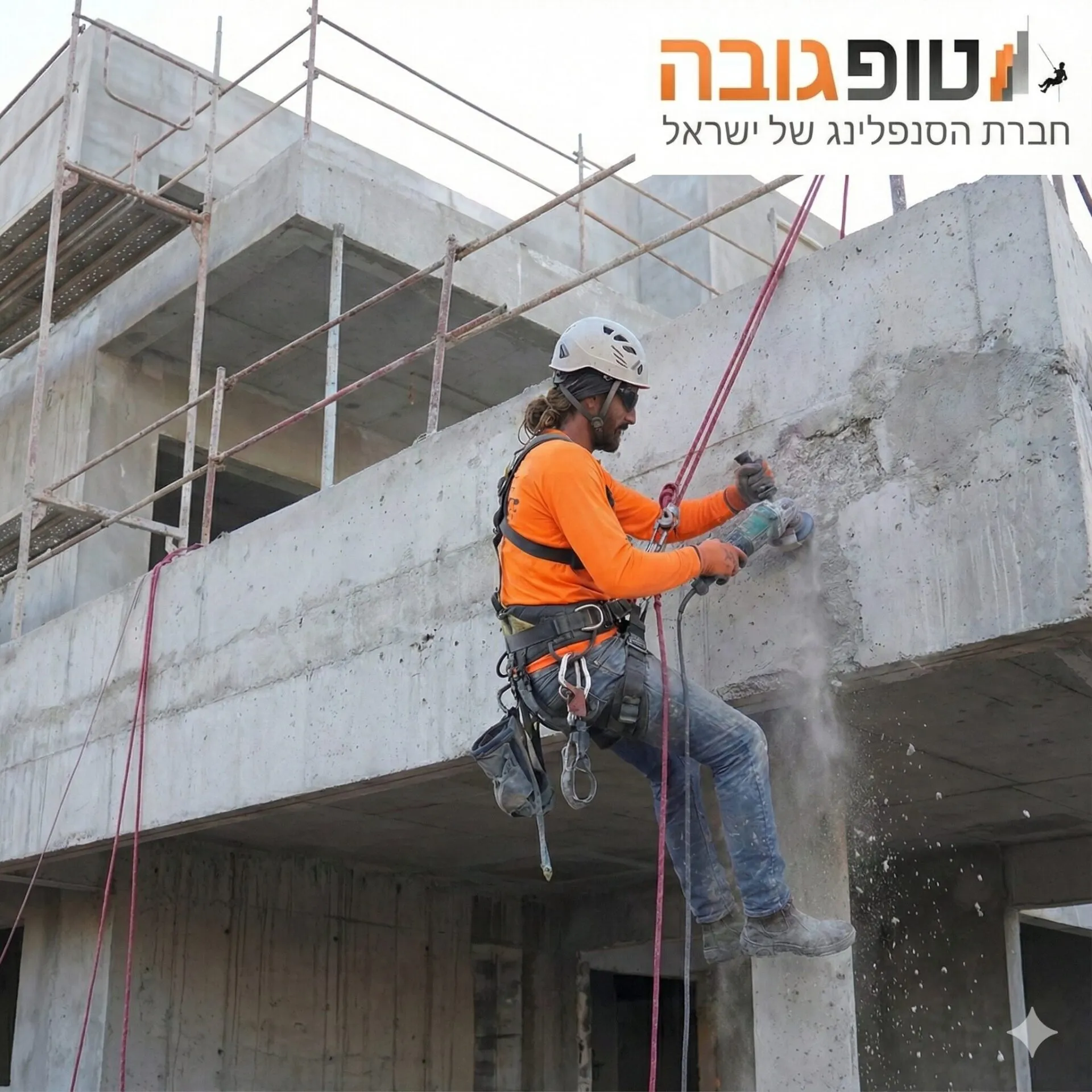
Concrete restoration at height: saving the structure and removing an immediate safety hazard
Have you ever looked up at your building’s facade and seen chunks of concrete missing from the beams? Or perhaps you noticed ugly rust stains running down the exterior walls? If the answer is yes, your building is signaling that it is in distress. Concrete restoration at height is not a cosmetic matter of improving the look; it is an action that saves lives and buildings.
Many buildings in Israel, especially those built in the 1970s and 1980s, suffer from a phenomenon called “envelope wear”. The steel inside the concrete rusts, swells, and causes the concrete to crack and fall. A chunk of concrete falling from a high floor can cause fatal damage. Top Gova specializes in carrying out complex rope access concrete restoration work, with no need for scaffolding, to restore the building’s strength and safety.
In this article we explain how the problem arises, why it must not be ignored, and what professional process we carry out to restore the concrete for many years.
The science behind the destruction: why does concrete crumble?
Concrete is a strong material, but it does not stand on its own. Inside the concrete castings (columns, beams and balconies) there are steel bars (reinforcing steel) meant to give the building flexibility and strength. The great enemy is a process called corrosion. When water and moisture penetrate through tiny cracks in the concrete, they reach the steel. The steel starts to rust.
The problem is that rust takes up more volume than the original steel. When the steel “swells” inside the concrete, it exerts enormous pressure from the inside out. The concrete cannot withstand this pressure, cracks, and eventually breaks off and falls. This process leaves the steel completely exposed to the air, which speeds up the rusting even more, and weakens the stability of the whole structure.
The dangers of neglecting concrete restoration
Many building committees postpone the treatment out of fear of high costs. It is a mistake that can be costly:
- An immediate danger to life: a piece of concrete weighing a kilo falling from the fourth floor is like a missile. The legal and criminal liability if a passer-by is hurt falls directly on the apartment owners.
- A dangerous building order: many municipalities employ inspectors who locate crumbling buildings and issue them a “dangerous building order”. This means heavy fines and legal proceedings until the defects are repaired.
- A drop in property value: a building with exposed, crumbling columns looks neglected and deters potential buyers.
Top Gova’s solution: rope access concrete restoration
In the past, to repair a concrete column on the 6th floor, scaffolding had to be erected along the full height of the building. It was expensive, long and cumbersome. At Top Gova we use the rope access method (abseiling down the building envelope) to carry out spot concrete restoration. Our rope-access technicians descend exactly to the damaged point, treat it surgically, and move on to the next point. The method saves you about 40% of the project costs compared with scaffolding, and allows fast, quiet treatment.
The work stages: how do you restore concrete properly?
Concrete restoration is not “plugging holes” with cement. It is an engineering process that requires the use of advanced materials (such as Sika materials). Here are the stages we carry out in every project:
- Chiselling and breaking out (surface preparation)
The first stage is to remove all the loose concrete. The technician uses a breaker to chisel around the rusted steel until sound, strong concrete is reached. We must expose the steel on all its sides in order to treat it.
- Treating the rusted steel
After exposure, we clean the layers of rust off the steel using steel brushes. After cleaning, we apply a rust converter and corrosion inhibitor. This material stops the oxidation process and protects the steel for years to come. If the steel is too eaten away, we add new steel bars (starter bars) by drilling and anchoring.
- Applying a primer (base coat)
For the new material to adhere to the old concrete, a bonding layer is a must. We apply a strong epoxy or cement-based primer that ensures a perfect bond between the layers.
- Rebuilding the concrete (geometric restoration)
At this stage we rebuild the missing part of the column or beam. We use a dedicated repair mortar (polymer-modified cement), which is several times stronger than ordinary concrete, does not shrink as it dries and resists water penetration. We shape the material so that it returns to the original form of the wall.
- Finish smoothing and paint
After the repair material has dried, we carry out an aesthetic smoothing (“render”) and paint the area with exterior-grade paint in a shade matching the rest of the building, so that no trace of the repair remains.
Why choose Top Gova to restore the building?
Concrete restoration done incorrectly will last only one winter. We at Top Gova are committed to the highest standard:
- Materials that meet the standard: we work with the world’s leading manufacturers of concrete repair products (Sika, Mapei).
- Certified workers: our team is made up of professionals who have undergone dedicated training in building restoration and work at height.
- Safety above all: the work area below is fenced and secured to prevent harm to passers-by during the chiselling.
Does your building need help? Do not wait for an order from the municipality or for a disaster. Contact Top Gova today for a professional opinion and a quote for rope access concrete restoration.
Thank you! We received your request and will get back to you soon.
More articles you may find interesting
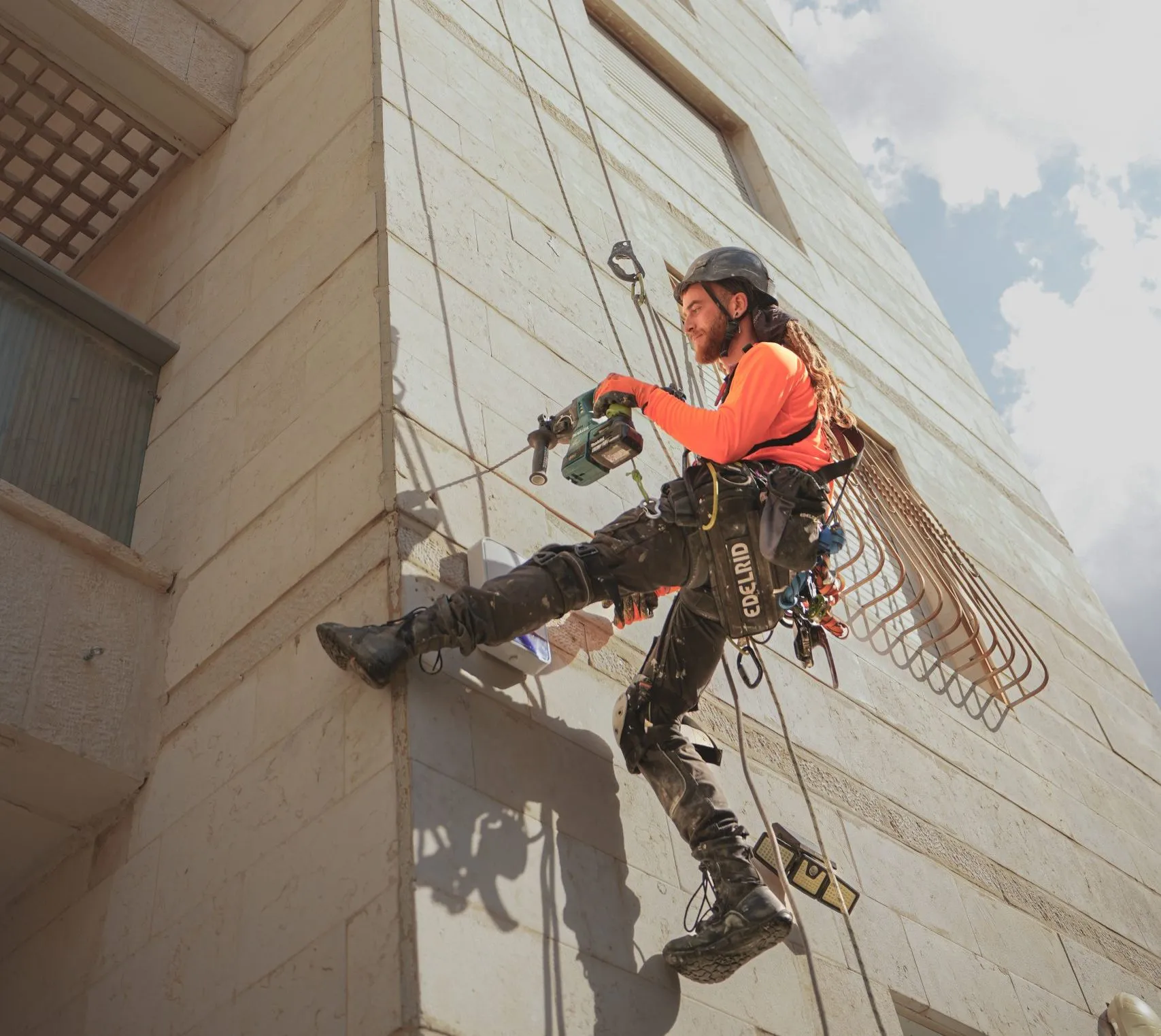
Read the article Annual Building Maintenance
A professional checklist for building committees: what to check every year on the envelope of a tall building, how to plan the budget and when to call a rope access company. A guide from Top Gova.
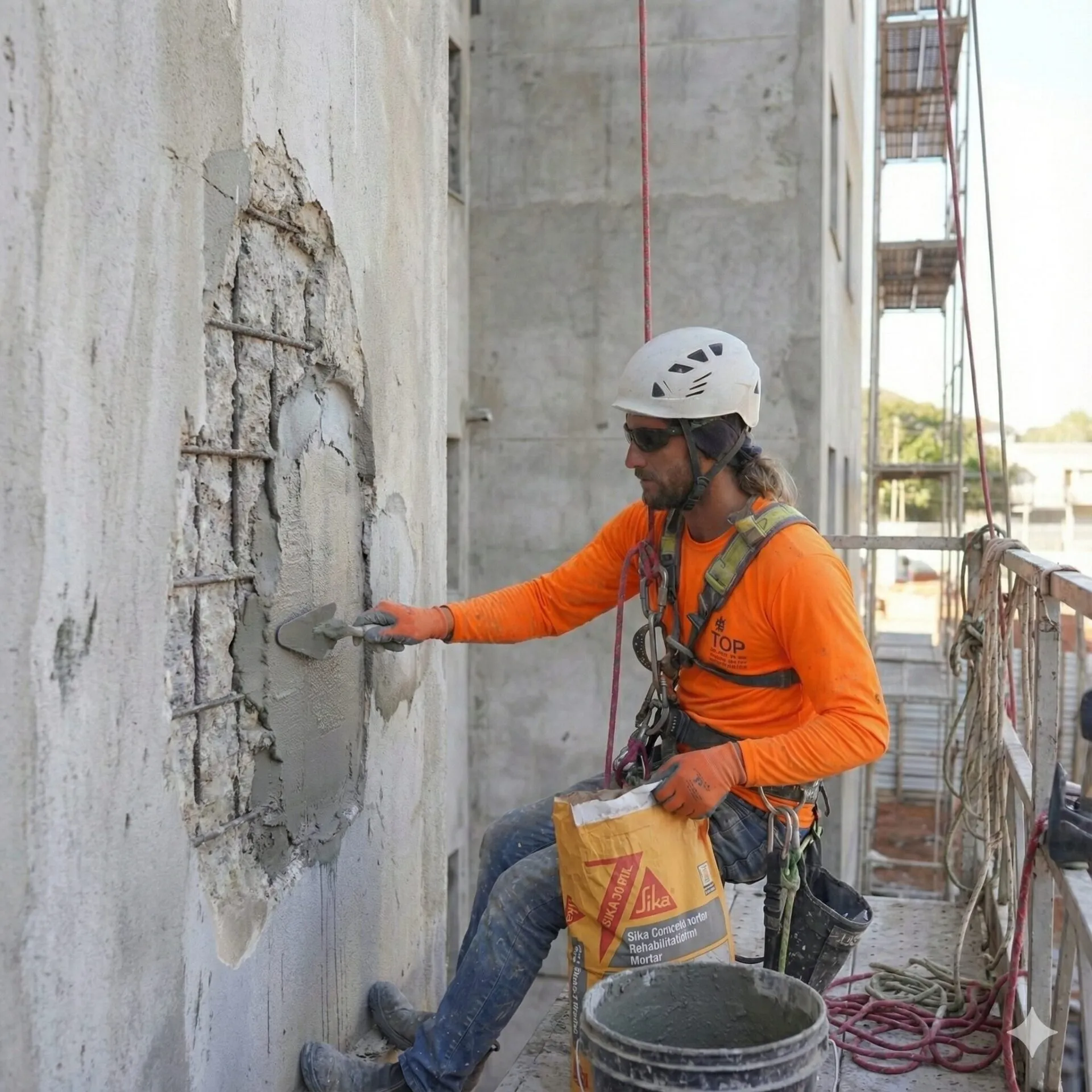
Read the article Parapet Wall Waterproofing
The parapet wall is the number one cause of damp on the top floor. Learn how to waterproof it properly with rope access and prevent damage to penthouse apartments.
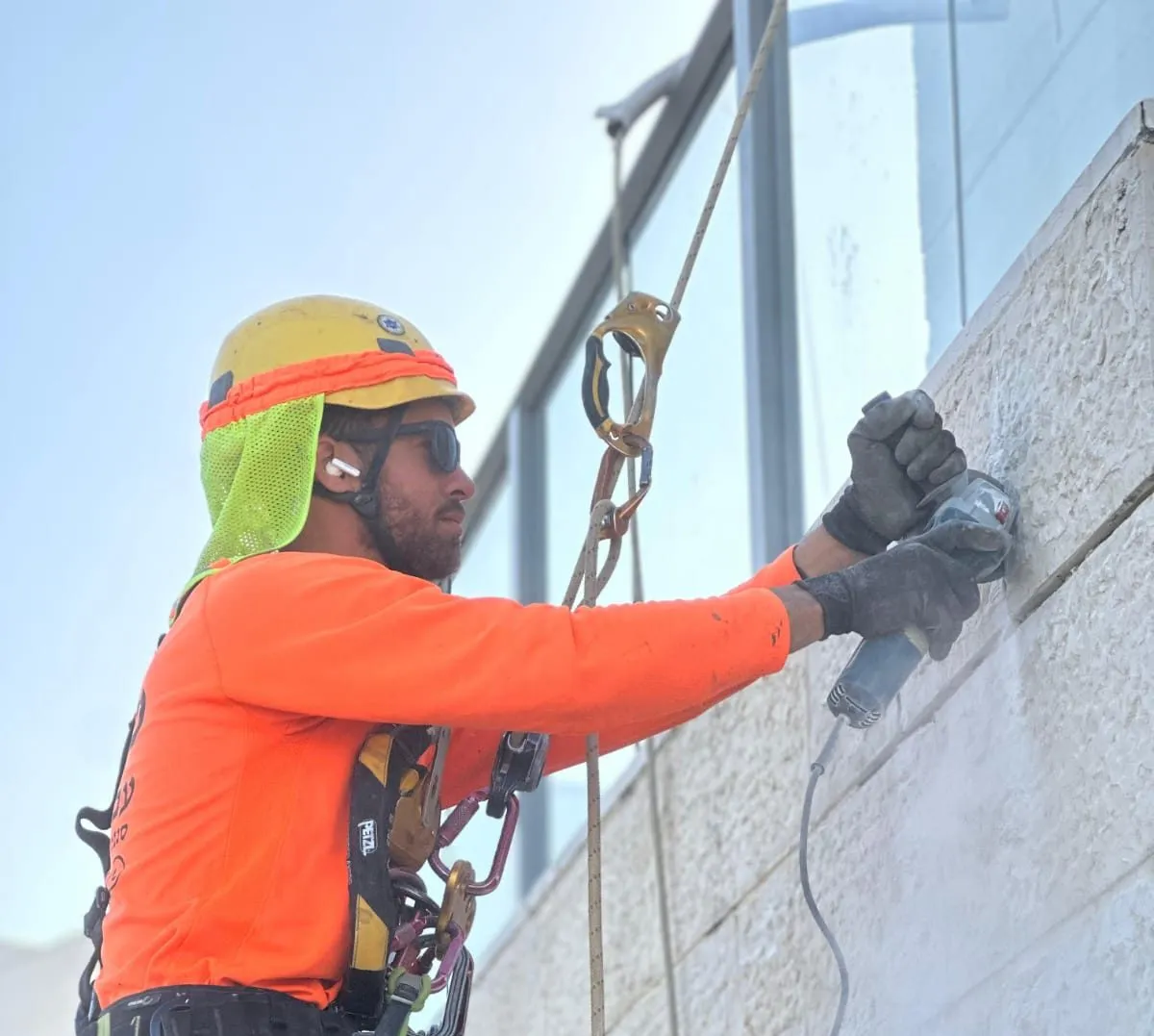
Read the article Efflorescence on Walls
Efflorescence on facades and exterior walls: the cause, how it differs from damp, and professional treatment at height. Get advice from Top Gova.