Contractor Insurance for Work at Height: What You Must Demand Before Signing
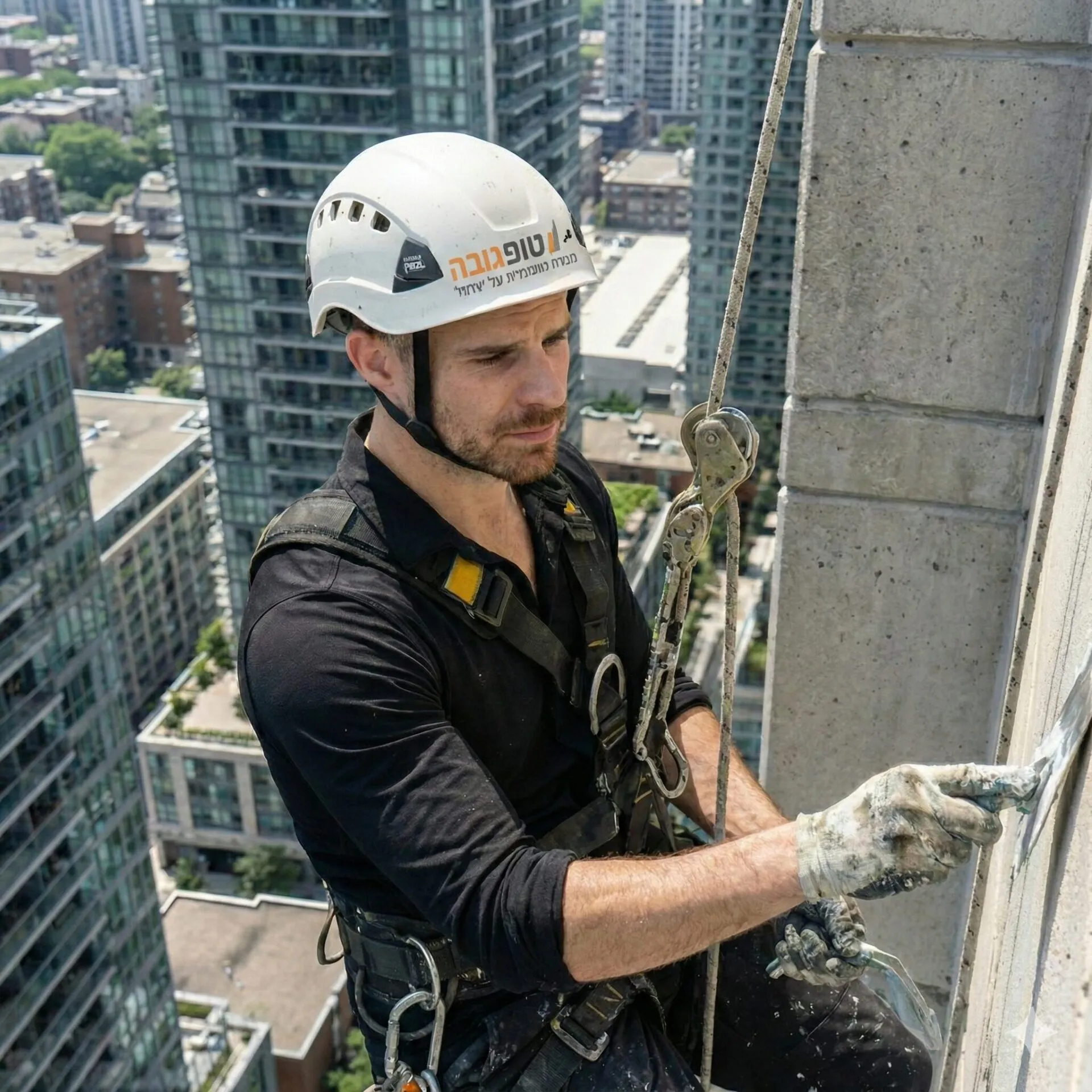
Why is contractor insurance important in work at height?
Work at height is among the most dangerous work in construction. When workers descend on ropes dozens of meters up, when stones are dismantled and thrown down, and when chemicals are used for waterproofing and restoration, the risk of accidents is real. Suitable contractor insurance is not only a legal requirement, but also a safety net that protects everyone involved: the contractor, the workers, the client and the residents.
The problem is that many clients do not check the insurance thoroughly. They settle for asking “Do you have insurance?” and get a positive answer, without checking exactly what the insurance covers. And when something happens, they discover that the insurance does not suit the type of work, that it has expired, or that it does not cover work at height at all.
Types of insurance required
| Type of insurance | What is covered | Why it is essential |
|---|---|---|
| Third-party insurance | Damage to the property or person of a third party | Covers damage to residents, passers-by, vehicles |
| Employee insurance | Work accidents and bodily injuries | A legal obligation; covers injuries and loss of working capacity |
| Contractors’ (works) insurance | Damage to the work itself and to materials | Protects against damage to the project being carried out |
| Professional liability insurance | Professional errors and faulty planning | Protects against claims for workmanship defects |
| Equipment insurance | Rope access equipment, work tools | Ensures continuity of the work in the event of damage |
What should you check in the policy?
When you receive a quote from a contractor for work at height, ask to see the actual insurance certificate, not just a confirmation that insurance exists. Check that the policy explicitly covers work at height and rope access. Ordinary contractors’ insurance does not always cover work with ropes, and if this is not stated in the policy, the cover is not valid.
Make sure the sums insured are sufficient. A third-party policy should cover sums of at least several million shekels, because an element falling from height can cause significant damage. Also check that there are no odd exclusions that remove specific types of work from the cover.
The client’s liability
Many people do not know it, but the client, whether a building committee, a management company or a developer, may bear liability in the event of an accident if they did not make sure the contractor was properly insured. The court examines whether the client took reasonable precautions, and checking the insurance is considered a basic measure.
So go into the details. Ask to see the policy, check that it is valid, make sure it covers rope access work, and keep a copy in the project file.
Warning signs: when not to sign
There are several signs that should set off a red light. If the contractor refuses to show a policy, if the insurance looks unusually cheap, if the policy does not explicitly state “work at height” or “rope access”, or if the contractor asks you to sign a waiver of liability, do not sign. A properly professional company will not be embarrassed to show all its documents.
When choosing a work-at-height company, insurance is one of the first criteria to check, even before the price.
In summary
Contractor insurance for work at height is not a formality; it is real protection for everyone. Take the time to check, ask and make sure everything is in order before starting. Information on insurance and consumer rights can be found on the website of the Capital Market, Insurance and Savings Authority.
At Top Gova we are fully and comprehensively insured, including specific cover for rope access work, third-party insurance for high sums, and full employee insurance. We are happy to show all the documents to our customers, because transparency is part of professionalism.
Thank you! We received your request and will get back to you soon.
More articles you may find interesting
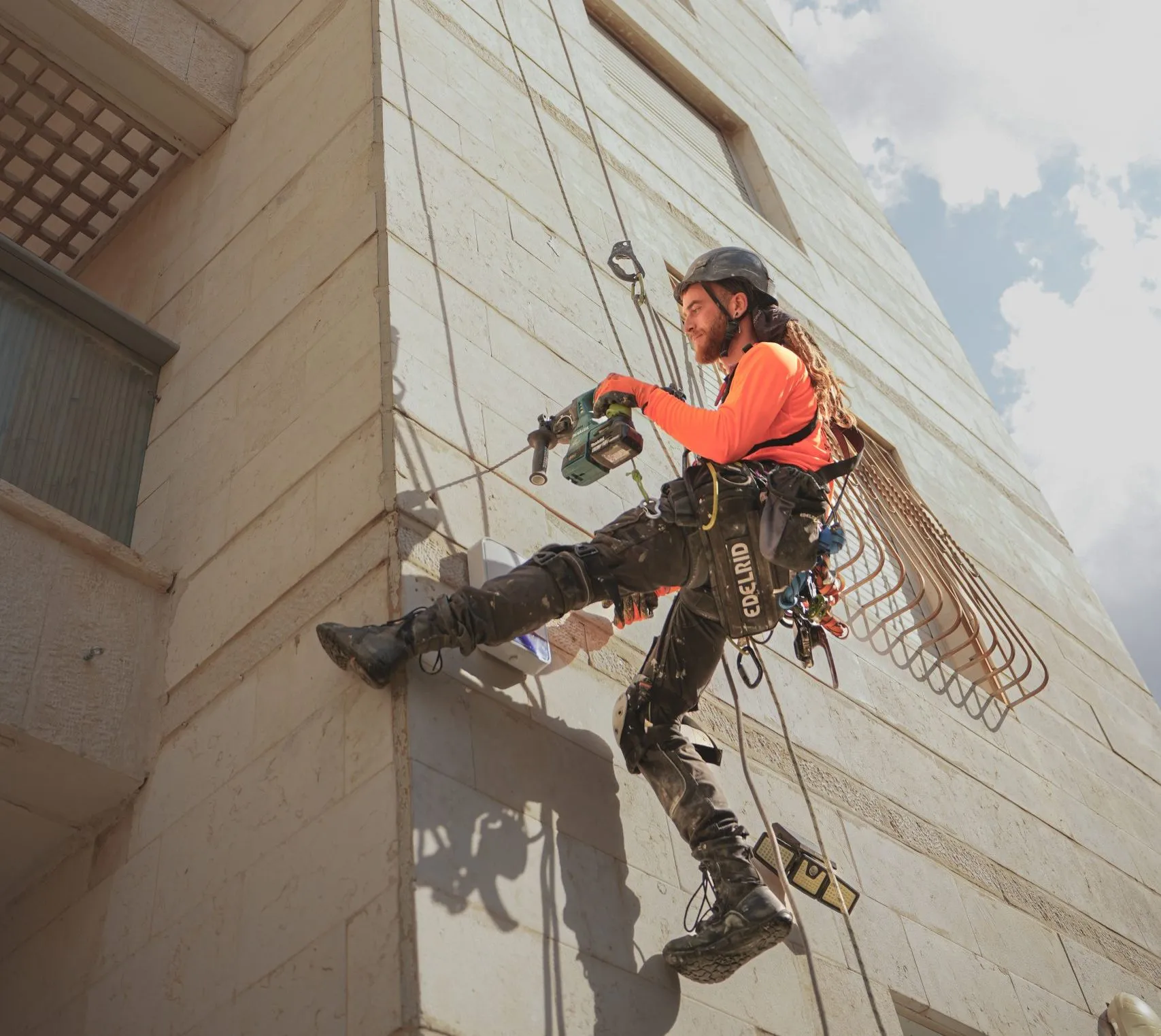
Read the article Annual Building Maintenance
A professional checklist for building committees: what to check every year on the envelope of a tall building, how to plan the budget and when to call a rope access company. A guide from Top Gova.
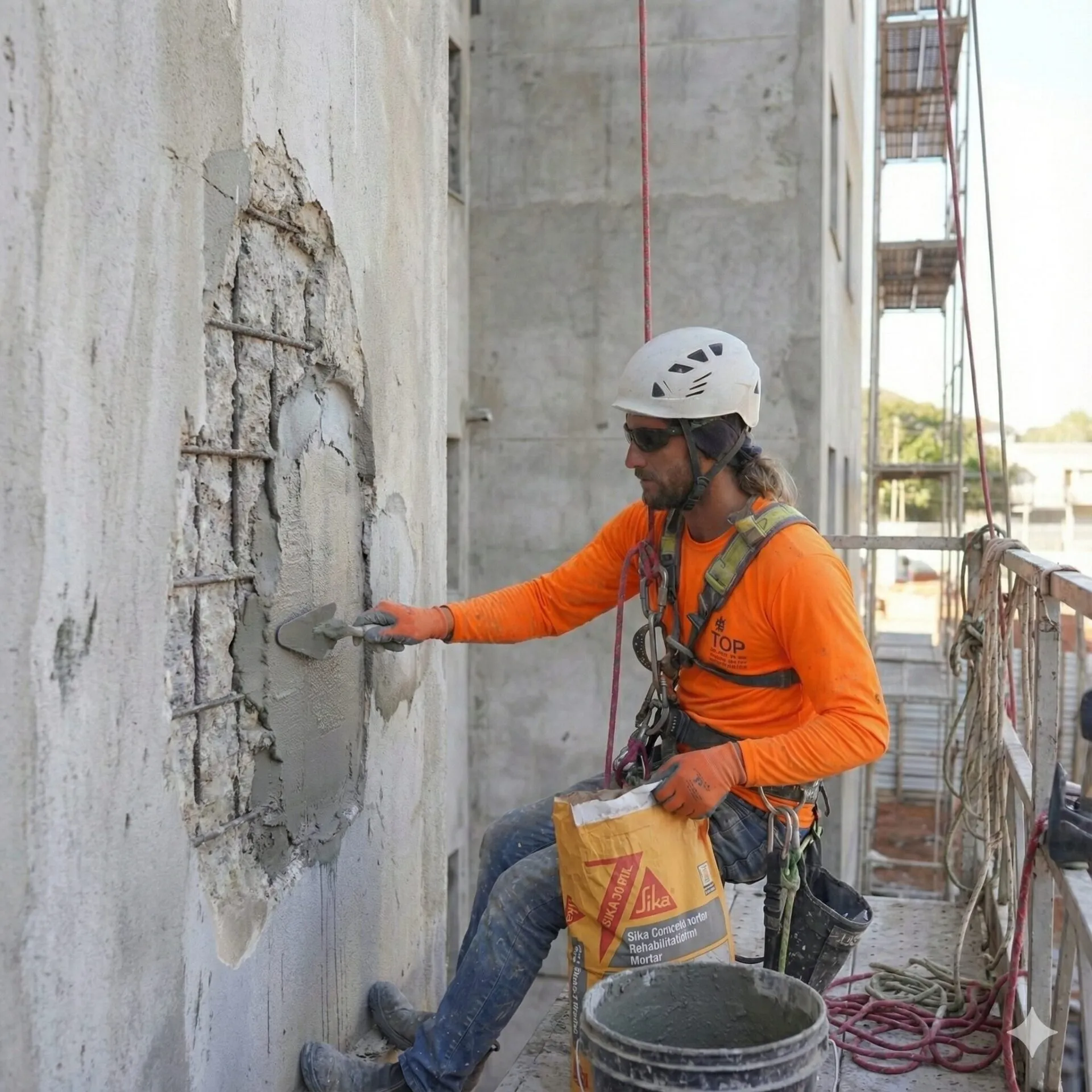
Read the article Parapet Wall Waterproofing
The parapet wall is the number one cause of damp on the top floor. Learn how to waterproof it properly with rope access and prevent damage to penthouse apartments.
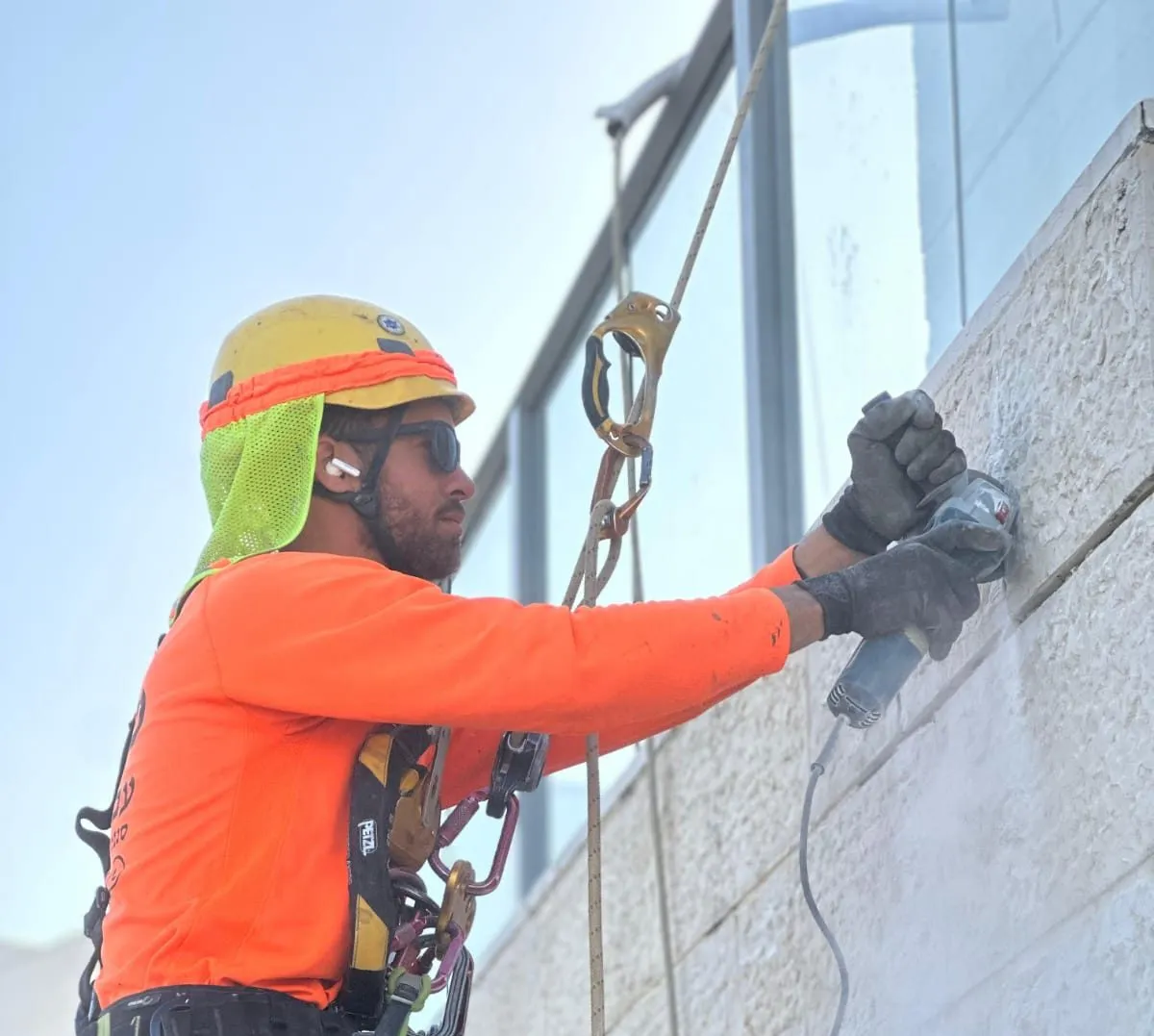
Read the article Efflorescence on Walls
Efflorescence on facades and exterior walls: the cause, how it differs from damp, and professional treatment at height. Get advice from Top Gova.