Warning Signs of Rebar Corrosion: How to Spot the Problem Before the Concrete Bursts
A small rust stain on the exterior wall looks like a cosmetic matter. In practice, it is usually the first sign of a process eating away at the building’s frame from the inside. Corrosion of reinforcing steel in concrete is one of the main causes of falling facades, of balconies that endanger passersby and of safety orders from the municipality. In this article we explain how to identify the problem at an early stage, which terms are worth knowing, and what the stages of proper treatment are.
The information here is based on field work on hundreds of facades in Israel. The goal is to give you, as residents or as a building committee, practical tools for an initial diagnosis before you order an engineering inspection.
Why does corrosion start inside concrete at all?
Fresh concrete creates an alkaline layer (high pH) around the steel that protects it from oxidation. This layer is called passivity. Over the years, two main processes damage this protective envelope:
- Carbonation: carbon dioxide from the air seeps into the concrete, lowers its alkalinity, and the steel stops being protected.
- Chloride penetration: mainly in coastal areas, salt reaches the steel through pores or cracks and causes rapid oxidation.
Once the steel is exposed to oxygen and moisture, it rusts. The rust takes up two to four times the volume of the original steel, and that is what eventually causes the surrounding concrete layer to burst.
Five signs that should set off a red light
- Brown-orange rust stains that appear on the wall with no external source of damp. The stain comes from inside, through the steel.
- Parallel horizontal cracks running along a beam or a column: usually the result of steel that has swollen and pushed the concrete outward.
- Concrete pieces crumbling or falling (spalling): mainly on the undersides of balconies, canopies and railings.
- Steel visible to the eye: an advanced stage that requires immediate treatment.
- Large pores, voids and gravel pockets in the concrete: a phenomenon called segregation, which makes it easier for water and salts to penetrate.
Why early treatment matters
Once the cross-section of the steel is reduced by 10% because of rust, the structural capacity of the element is significantly impaired. A balcony damaged over years can become a danger to life. When the municipality spots these signs from the street, it issues a repair order requiring the building committee to act within a short period.
The cost of early diagnosis and repair is around thousands of shekels. The cost of a full facade restoration after a local collapse reaches tens to hundreds of thousands of shekels, sometimes with an insurance claim as well.
How proper restoration is done: the work stages
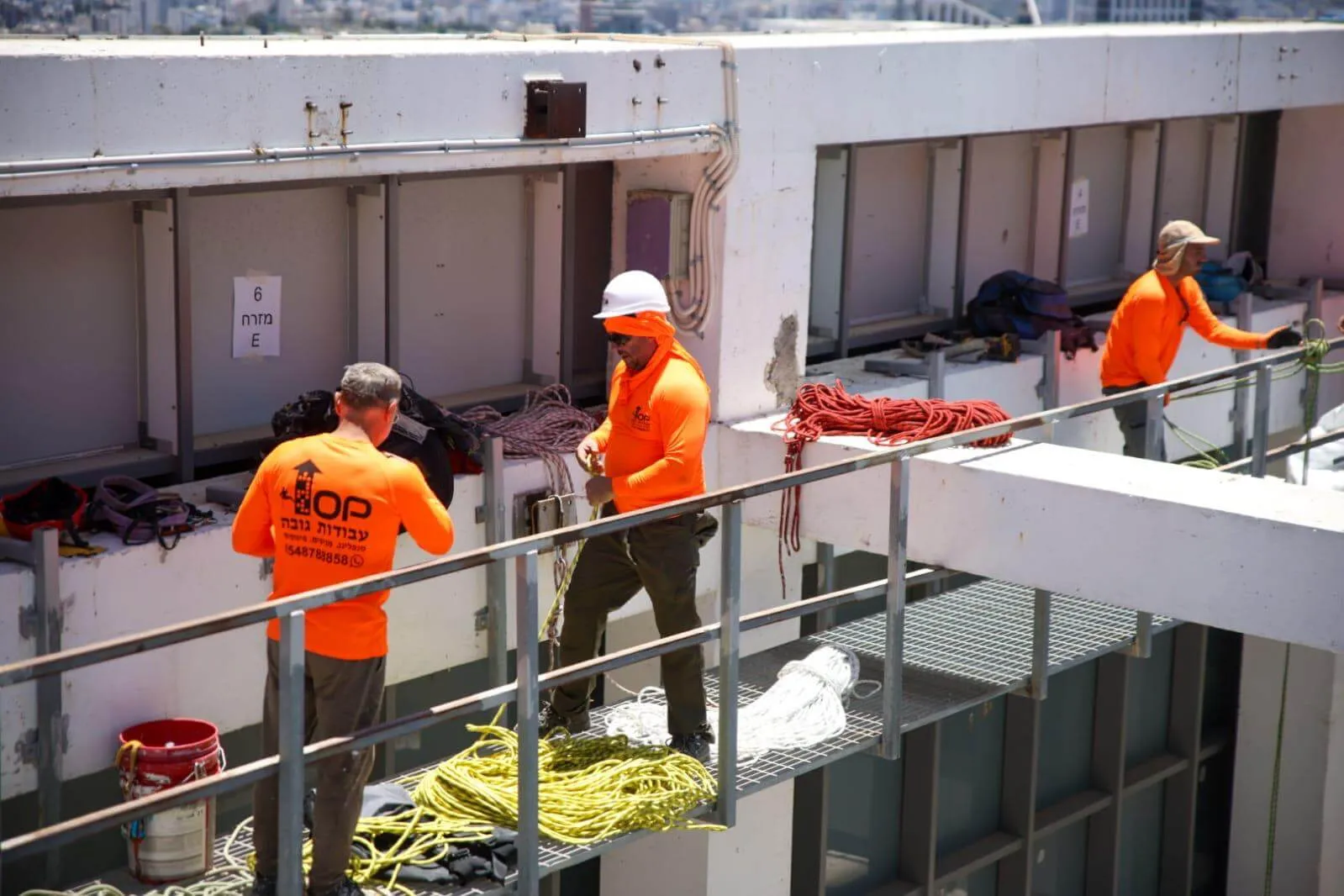
Professional rope access concrete restoration is carried out by a certified rope access team and follows a precise sequence:
- Chiseling around the damaged steel until fully sound concrete is reached.
- Cleaning the steel to grade ST2 or ST3 with an electric brush, until the rust is completely removed.
- Applying an anti-corrosion primer to the steel (for example Sika MonoTop 910 N or equivalent) to prevent renewed oxidation.
- Restoring the concrete cross-section with a fiber-reinforced polymer repair mortar, layer after layer, with good mechanical anchoring to the original concrete.
- Applying a protective waterproofing layer to the surface to prevent future penetration of chlorides and carbon dioxide.
It is recommended to use standard-compliant materials approved by the Standards Institution. More information on the chemistry of concrete and corrosion can be found in
the Wikipedia entry on corrosion of reinforcing steel, which details the full chemical process.
Your next step as a building committee
If you have spotted one of the signs described, don’t wait for the next rainy season. Order a visual inspection from a company with proven experience in rope access waterproofing and facade restoration. Such an inspection includes mapping every point of damage, a step-by-step treatment plan and a transparent price quote. A properly treated facade can last for decades: you just need to spot the warning in time.
Thank you! We received your request and will get back to you soon.
More articles you may find interesting
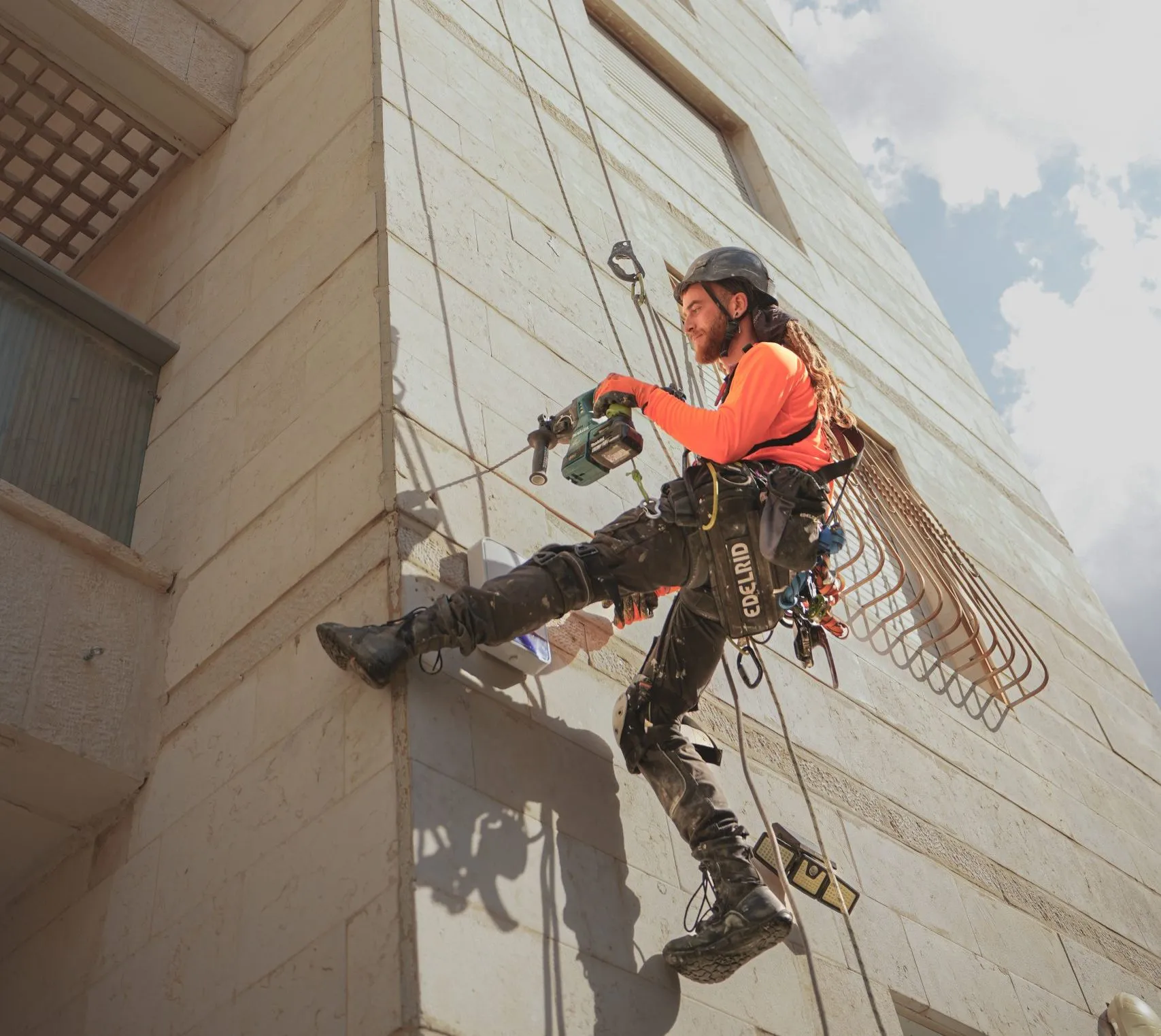
Read the article Annual Building Maintenance
A professional checklist for building committees: what to check every year on the envelope of a tall building, how to plan the budget and when to call a rope access company. A guide from Top Gova.
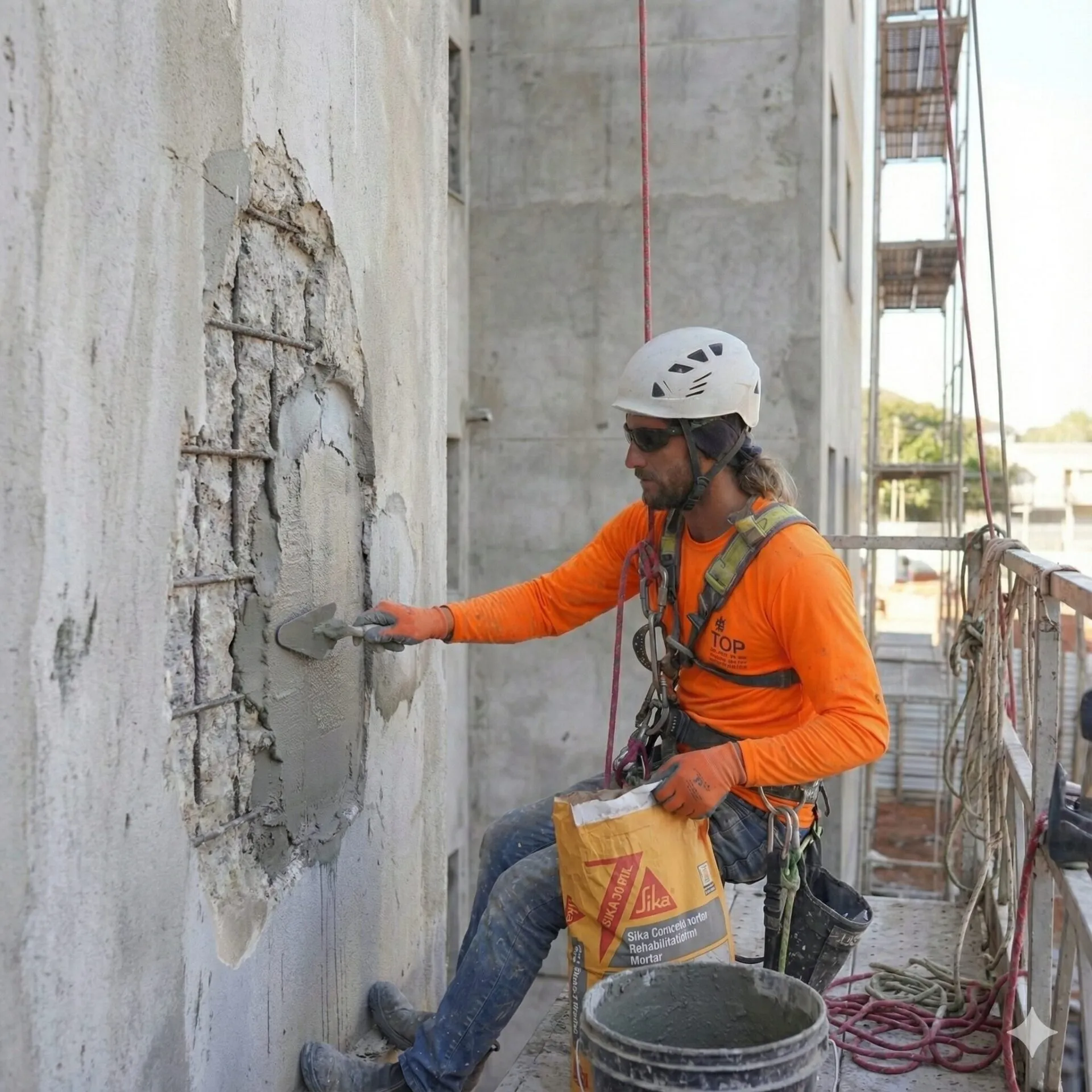
Read the article Parapet Wall Waterproofing
The parapet wall is the number one cause of damp on the top floor. Learn how to waterproof it properly with rope access and prevent damage to penthouse apartments.
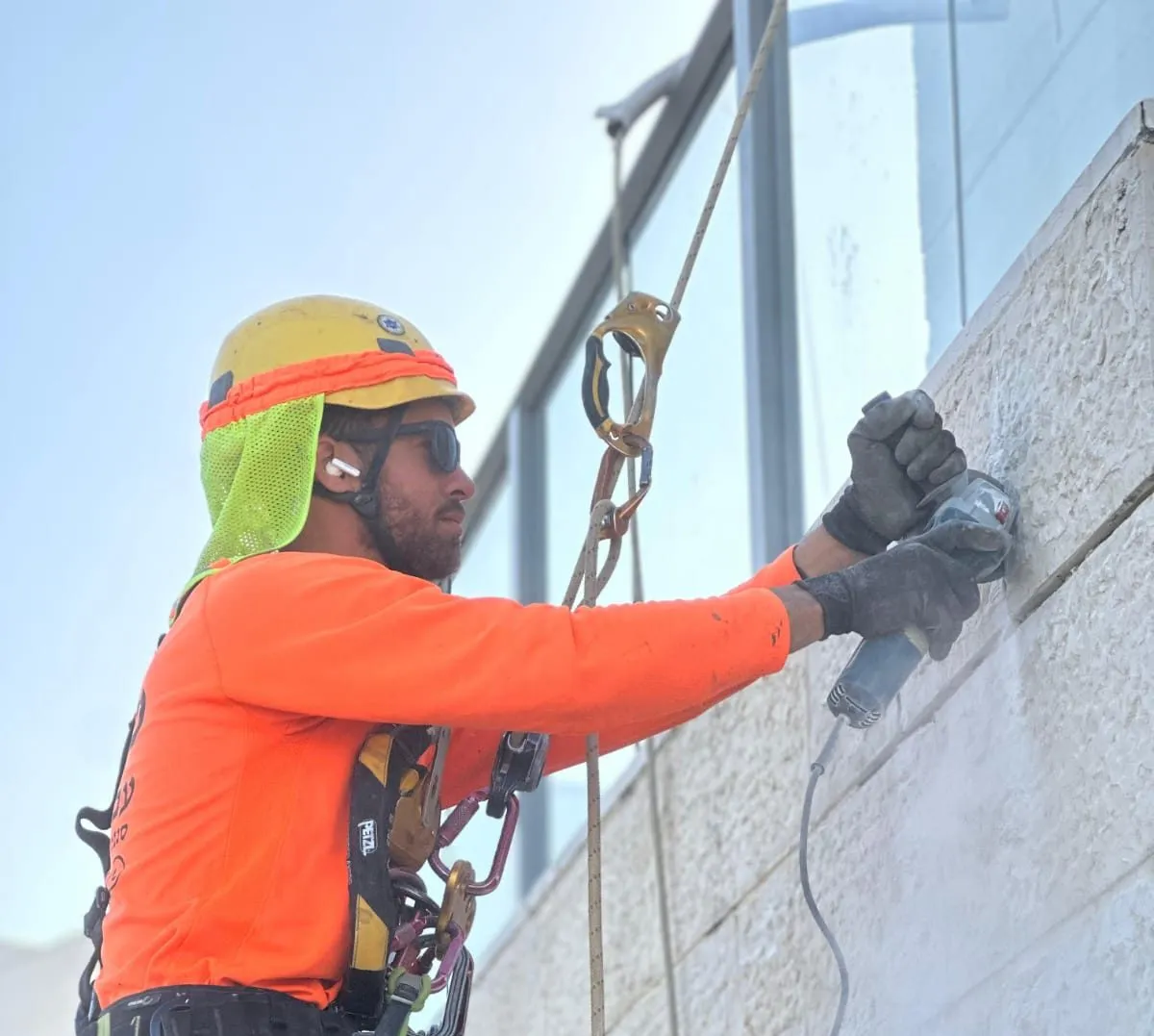
Read the article Efflorescence on Walls
Efflorescence on facades and exterior walls: the cause, how it differs from damp, and professional treatment at height. Get advice from Top Gova.