Damp on a High Floor
Damp on a high floor? Why rope access waterproofing is (almost) the only solution for external walls
The Israeli winter arrives all at once. One day of heavy rain is enough to bring back the nightmare of many residents of shared buildings: a dark damp stain spreading in the corner of the ceiling, at the joint between the wall and the window, or right in the middle of the living room wall. You try painting, you try interior sealants, but the stain comes back again and again.
The reason is simple but frustrating: the water does not come from inside the home, it comes from outside. In tall buildings, the envelope walls take direct hits of rain and strong winds that drive water in through microscopic cracks. When it is the 5th, 12th or 20th floor, a ladder will not help and scaffolding is an expensive, cumbersome business. This is exactly where the most effective solution in the construction industry today comes in: rope access waterproofing.
In this article we will explain why water gets in specifically on high floors, why an interior repair is throwing money away, and how the Top Gova rope access teams solve the problem at its root.
The common mistake: why doesn’t waterproofing from the inside work?
Many of our customers try to solve the problem themselves. They buy a putty knife and sealant, peel off the paint inside the apartment and apply a new layer. It looks good for two weeks, and then the paint swells and peels again.
The reason is physical: external walls absorb water like a sponge. The water looks for the easiest way out. When the wall is sealed from the inside (what is called “negative-side waterproofing”), we are actually trapping the water inside the block or the concrete. The water keeps building up inside the wall, creates pressure, and in the end “bursts” the new repair as well. The only solution that stops the damp is preventing the water from getting in in the first place, and that must be done from the outside of the building using rope access waterproofing.
The advantages of rope access waterproofing in shared buildings
When there is a leak on a high floor, access is the central challenge. In the past, scaffolding would be erected, a process that takes many days, blocks the parking and makes the work thousands of shekels more expensive. Rope access waterproofing changed the rules of the game:
- Surgical precision in identifying the problem
A crack that causes a leak can be as thin as a hair (a hairline crack). A crane operator standing in a lifting basket at a distance from the wall will struggle to see it. A Top Gova rope-access technician, by contrast, is in physical contact with the wall. They descend slowly, scan every centimeter by eye and check the stability of the cladding tiles or the plaster.
- Treating hidden joints and cracks
Buildings move all the time because of temperature changes (expansion and contraction). These movements create cracks at the joints between elements (expansion joints). Rope access waterproofing allows the technician to reach hidden points, corners and joints between balconies that no other tool reaches comfortably.
- Speed and efficiency
Found damp? We can come. There is no need for municipal permits to put up scaffolding or for complex logistics. The technicians set up on the roof, descend to the spot and carry out the waterproofing on the same day.
Which materials are used in waterproofing external walls?
Rope access waterproofing is not just reaching the height; it is also using the right materials that will last in the scorching Israeli sun and the pouring rain. At Top Gova we match the material to the type of cladding:
- For plaster and roughcast walls: we use flexible polymer materials that can “bridge” cracks. If the building moves slightly, the material stretches and does not tear.
- For walls clad in stone and marble: the problem is usually in the “pointing” (the filling between the stones). We rake out the old material and fill with a sealing grout or advanced polyurethane materials (such as Sikaflex) that have tremendous adhesion to stone.
- For curtain walls and windows: here the problem is usually silicone that has dried out. We remove the old seal and apply neutral sealants that are resistant to UV radiation.
The work process at Top Gova: this is how it is done right
When we arrive at a rope access waterproofing project, we do not “smear and leave”. There are work stages that are critical to success:
- Cleaning and preparing the surface: sealant does not stick to dust or algae. The first stage is thorough cleaning of the area (sometimes by pressure washing).
- Opening cracks: if there is a crack in the wall, we open it and deepen it slightly with a diamond disc or a screwdriver, so that the sealant has depth and “body” to grip.
- Applying primer: a bonding agent that ensures perfect adhesion.
- Applying the sealant: filling the crack or the joint and an aesthetic finish so that the repair cannot be seen from the ground.
Don’t wait for the mold to spread
Damp in walls is not just an aesthetic problem; it is a health and structural hazard. The water rusts the reinforcing steel inside the concrete and causes the plaster to break up and fall (a serious safety hazard). Rope access waterproofing is the fastest, safest and most cost-effective solution for protecting your building’s envelope.
Top Gova puts at your disposal certified, insured and professional rope access teams, with the experience of hundreds of successful projects all over the country.
Do you have damp in an external wall? Don’t waste time on temporary solutions. Contact us today for a price quote for rope access waterproofing that will keep you dry in the coming winter.
Thank you! We received your request and will get back to you soon.
More articles you may find interesting
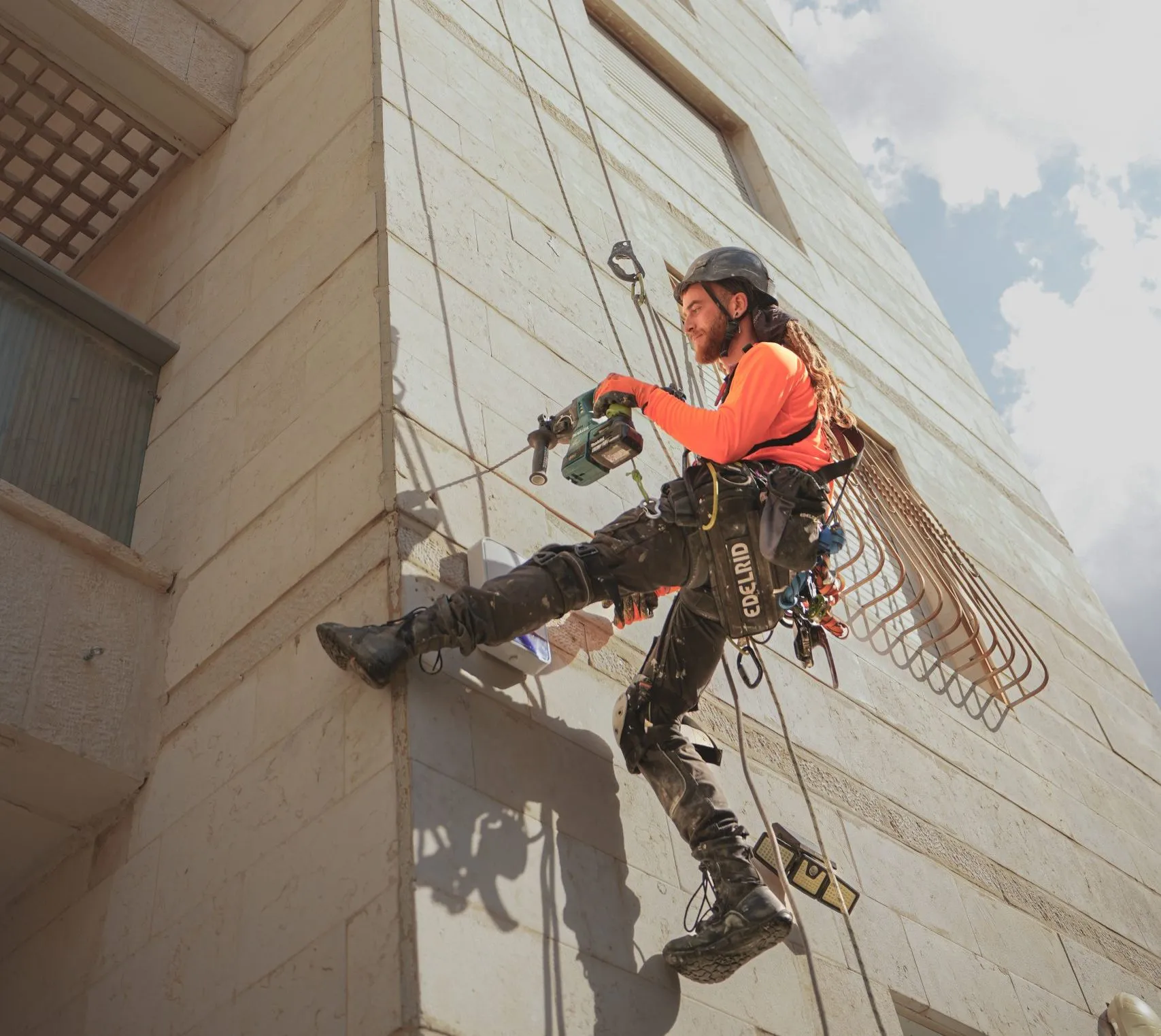
Read the article Annual Building Maintenance
A professional checklist for building committees: what to check every year on the envelope of a tall building, how to plan the budget and when to call a rope access company. A guide from Top Gova.
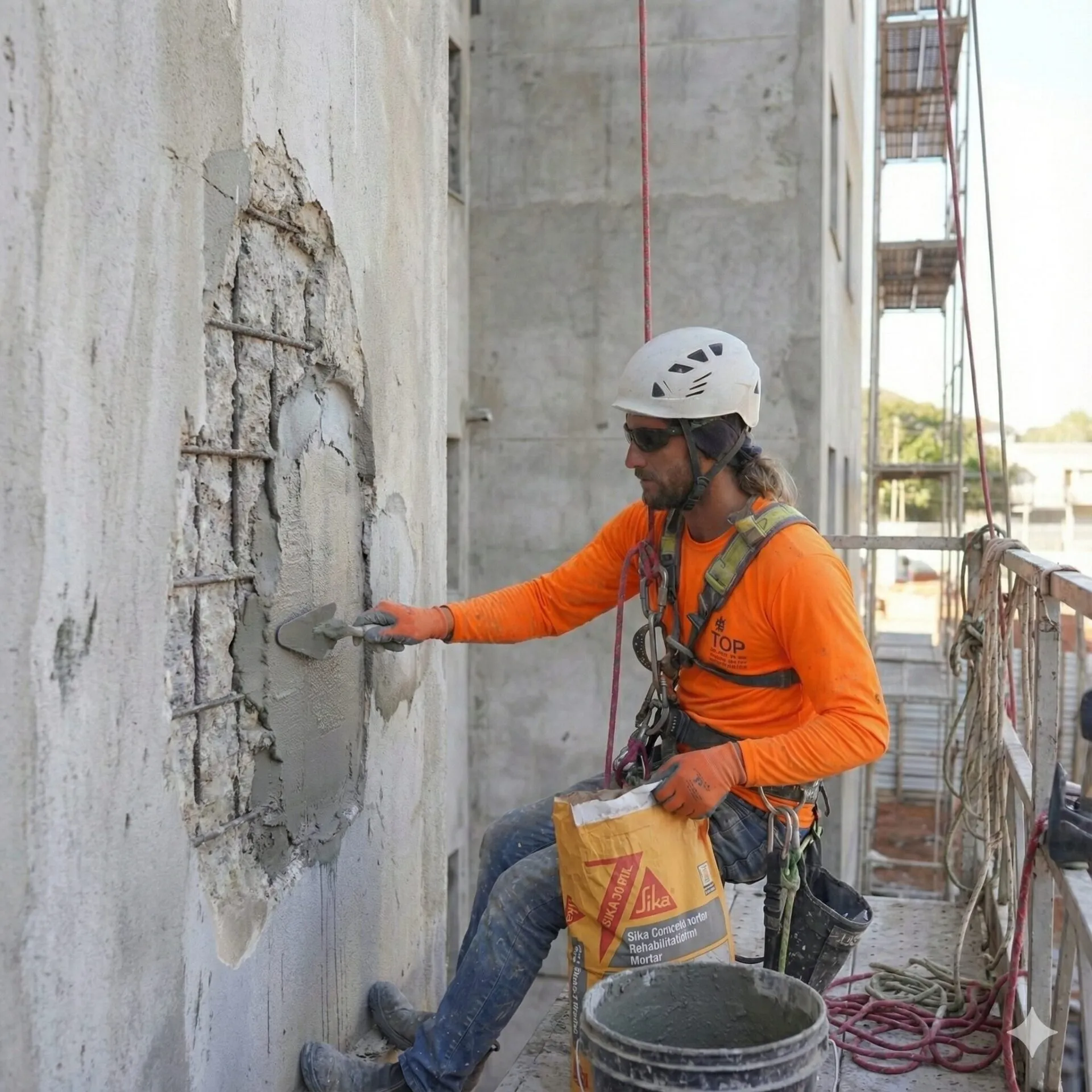
Read the article Parapet Wall Waterproofing
The parapet wall is the number one cause of damp on the top floor. Learn how to waterproof it properly with rope access and prevent damage to penthouse apartments.
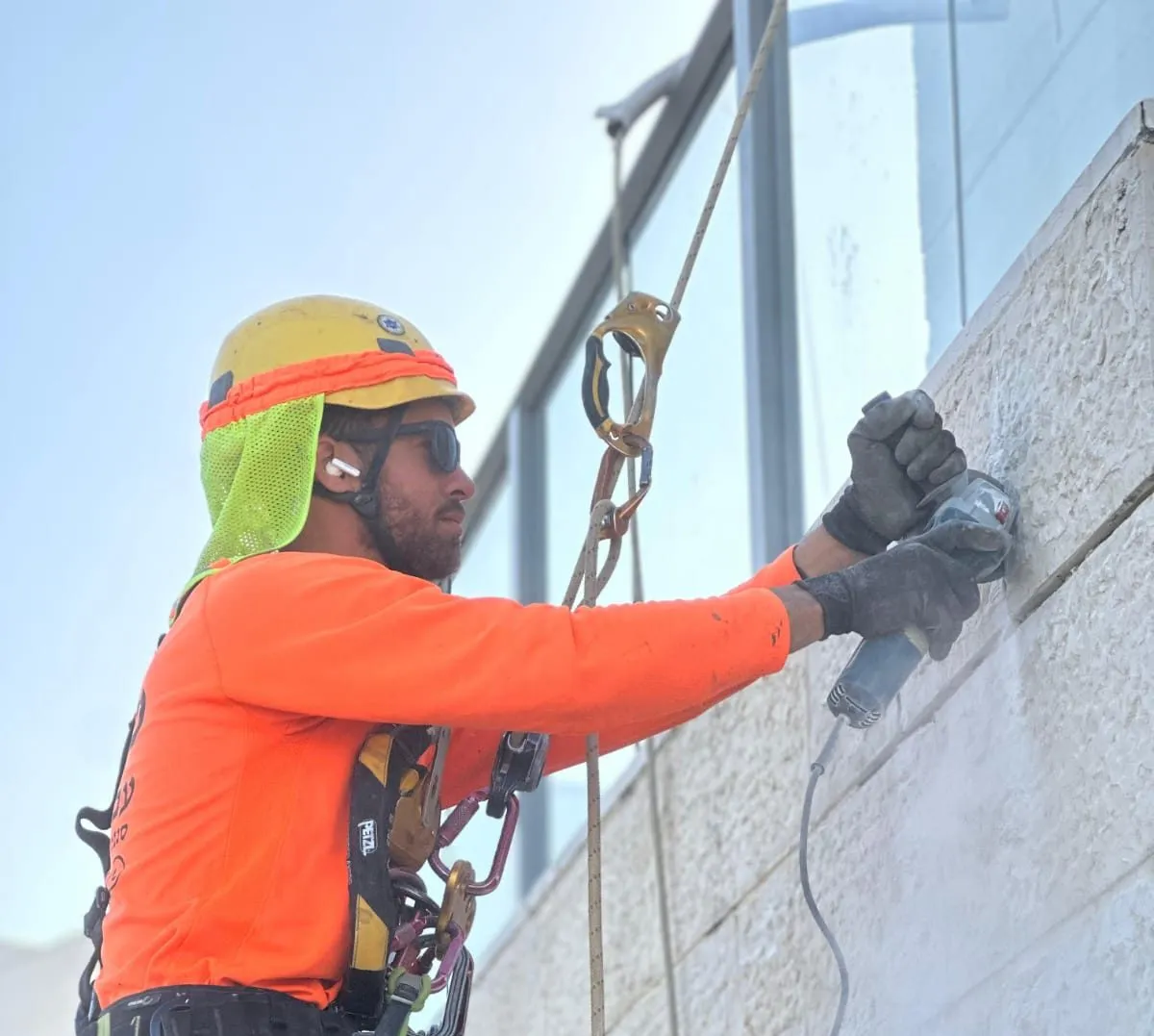
Read the article Efflorescence on Walls
Efflorescence on facades and exterior walls: the cause, how it differs from damp, and professional treatment at height. Get advice from Top Gova.