Detecting Damp in a Wall
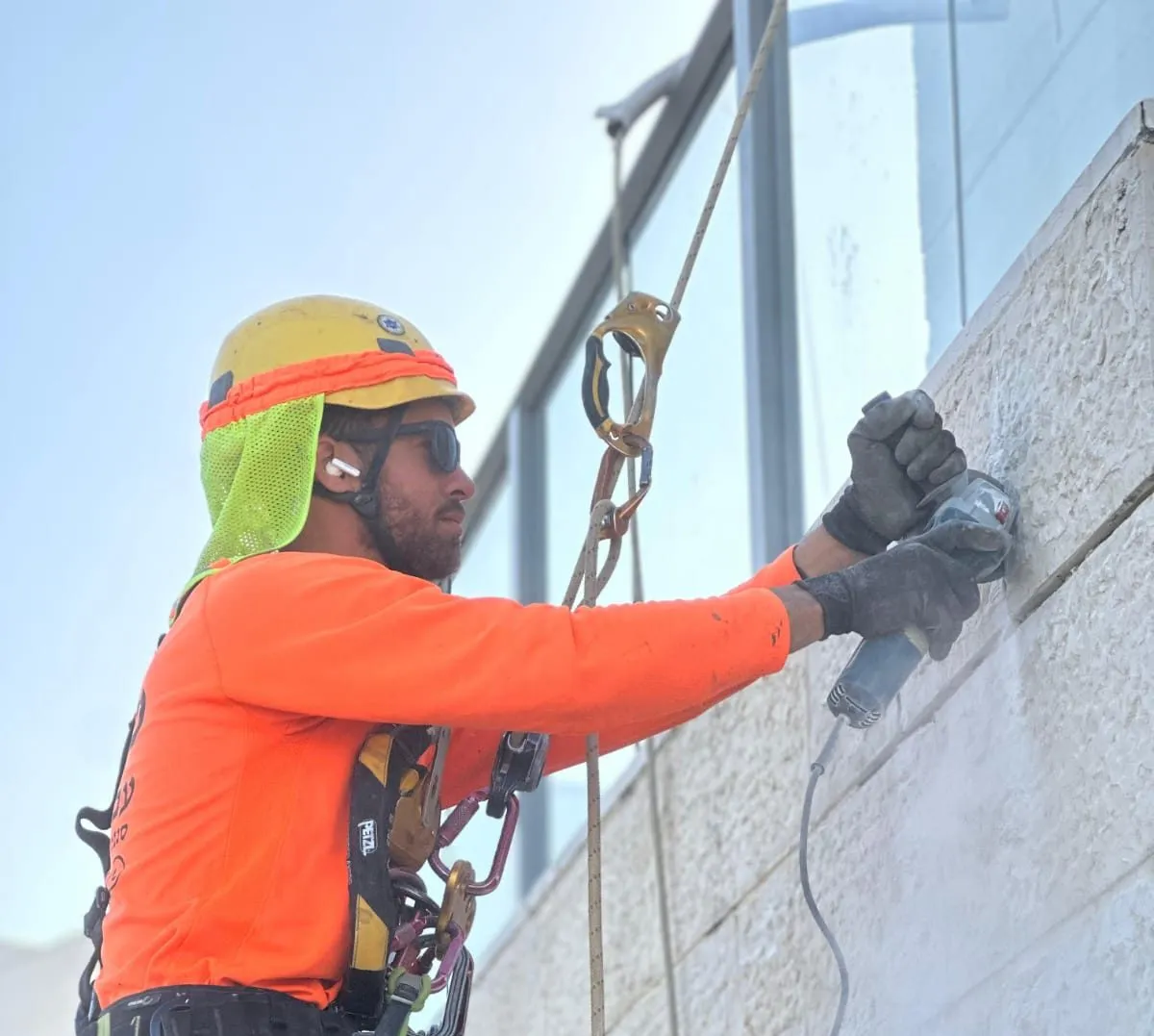
Detecting damp in a wall: when is it a burst pipe, and when do you need a rope access waterproofing expert?
Discovering a damp stain spreading across the wall in the living room or bedroom is a frustrating and stressful experience. The plaster swells, the paint peels, and a musty smell starts to fill the air. Most people’s first instinct is to immediately google “detecting damp in a wall” or call the nearest plumber.
But just before you call in a professional and pay hundreds of shekels for a visit, it is important to stop and understand: not all damp comes from a burst pipe. Very often, the problem is not inside the home at all, but in the building’s exterior envelope.
How will you know whether you need a leak detector and a plumber, or actually a rope access facade waterproofing team? We have prepared the complete checklist to put things in order and save you time and money.
When is the problem internal? (When to call a plumber / leak detector)
Damp caused by a failure in the plumbing system (a burst fresh-water pipe, or a leaking gray-water or sewage pipe) has several clear signs. Here is when you should look for a solution inside the home:
- Where the stain is: the damp appears on entirely internal walls (for example, a wall separating the kitchen from the living room), or on walls shared with bathrooms and toilets.
- Timing: the stain appears or gets worse at the height of summer, with no connection at all to rain outside.
- How fast it spreads: with a burst pressure pipe (fresh water), the stain will spread very quickly, and sometimes you will even see actual dripping or significant damp under the floor tiles (wet baseboards).
- The water meter test: if you have closed all the faucets in the home (including the washing machine and the toilet cistern) and the main dial on your water meter is still turning, you have an internal leak in the pipes.
When is the problem external? (When to call a rope access waterproofing team)
If your problem does not come from the home’s pipes, rainwater or moisture is most likely penetrating through the building’s envelope walls. Damp in an exterior wall requires the intervention of work-at-height experts. Here are the signs that this is your situation:
- A direct link to winter: the damp appears, spreads and darkens only after rainy days, and tends to dry out (or at least stop spreading) on sunny days.
- A telling location: the stains appear only on envelope walls (the walls that border the outside), around window frames, or on the ceilings of top floors (a leak from the roof).
- The shape of the stain: usually yellowish-brown stains, accompanied by significant swelling of the plaster and sometimes by “salt bloom” (a white powder on the wall: evidence of water dissolving the concrete’s salts on its way in).
- Cracks visible from outside: if you look at the building’s exterior wall and see cracks, missing stone cladding or crumbled grout, that is most likely the water’s path of entry.
How is damp detected in an exterior wall?
While a plumber uses a thermal camera inside the home, our team at ‘Top Gova’ goes directly to the source of the problem. Water obeys the laws of physics: it always looks for the easiest path down and in.
- Rope access facade scanning: our rope-access technicians descend from the roof and scan the exterior wall opposite the point of damp inside the apartment.
- Locating the failures: we look for hairline cracks in the concrete, waterproofing failures around windows (old sealant that has dried out and come away from the aluminum), missing grout between marble tiles, or swelling in the exterior plaster.
- A water spray test (if needed): in complex cases where the source of penetration is hidden, we carry out a controlled water spray on the exterior walls to simulate rain and confirm the exact point of entry.
We found the problem: how do we stop it?
It is important to understand: you must not repair the wall from inside before sealing it from outside! Applying filler and paint to a wall that is still absorbing water from outside means the damp will simply come back next winter (and ruin your wall all over again).
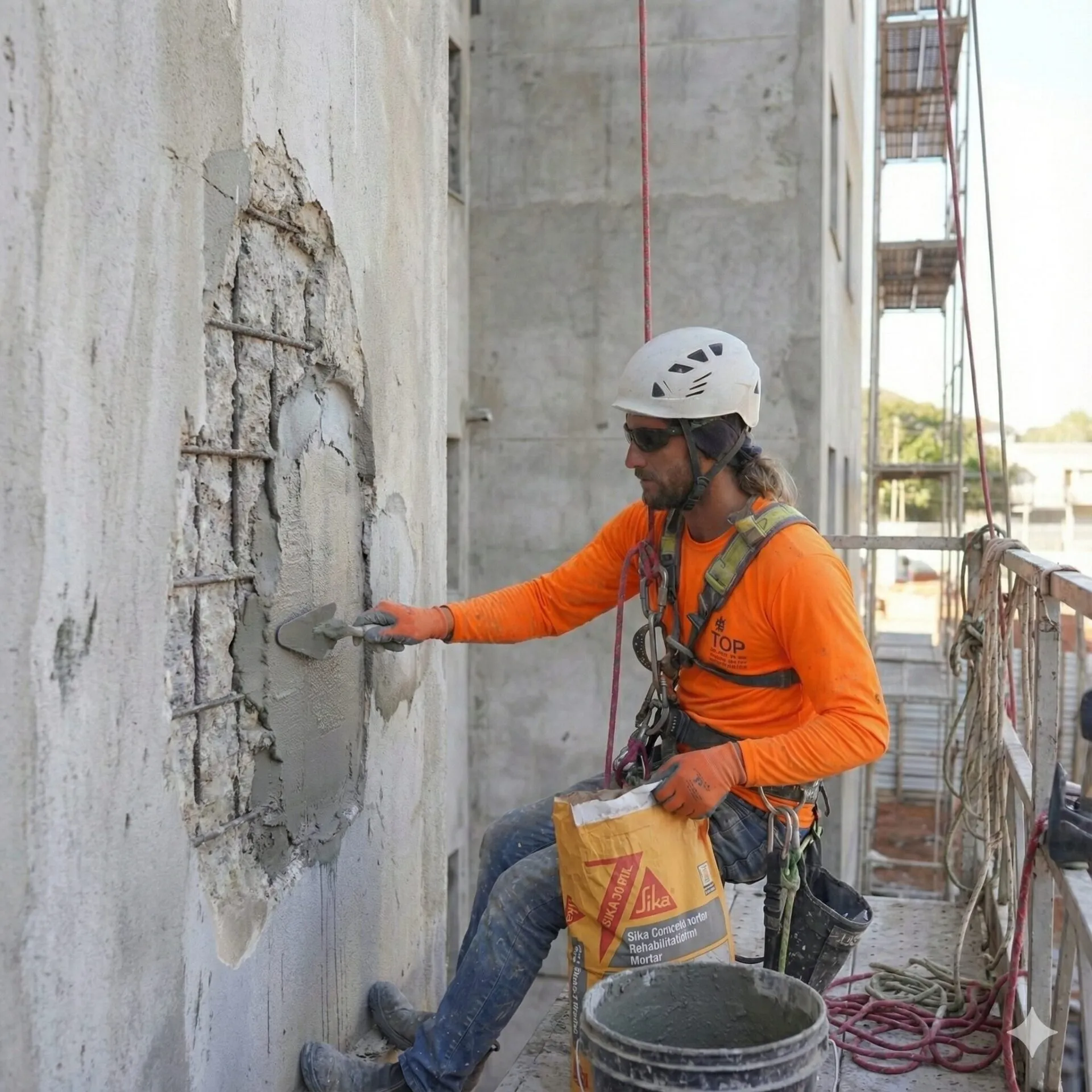
The professional solution requires precise exterior waterproofing. Our rope access team will open the problematic cracks in the building’s facade, clean them thoroughly, and seal them with advanced, flexible polyurethane materials (such as Sika materials) that withstand the building’s movements and the weather.
Suffering from damp in the exterior wall every winter all over again? It is time to solve the problem at the root. At ‘Top Gova’ we specialize in detecting and sealing damp failures in the building envelope using rope access. Contact us to arrange a professional scan, and give yourself a dry, quiet winter.
Thank you! We received your request and will get back to you soon.
More articles you may find interesting

Read the article Annual Building Maintenance
A professional checklist for building committees: what to check every year on the envelope of a tall building, how to plan the budget and when to call a rope access company. A guide from Top Gova.
Read the article Parapet Wall Waterproofing
The parapet wall is the number one cause of damp on the top floor. Learn how to waterproof it properly with rope access and prevent damage to penthouse apartments.
Read the article Efflorescence on Walls
Efflorescence on facades and exterior walls: the cause, how it differs from damp, and professional treatment at height. Get advice from Top Gova.