Waterproofing Expansion Joints in Towers: Why It Fails and How to Do It Right
What an expansion joint actually is and why it exists
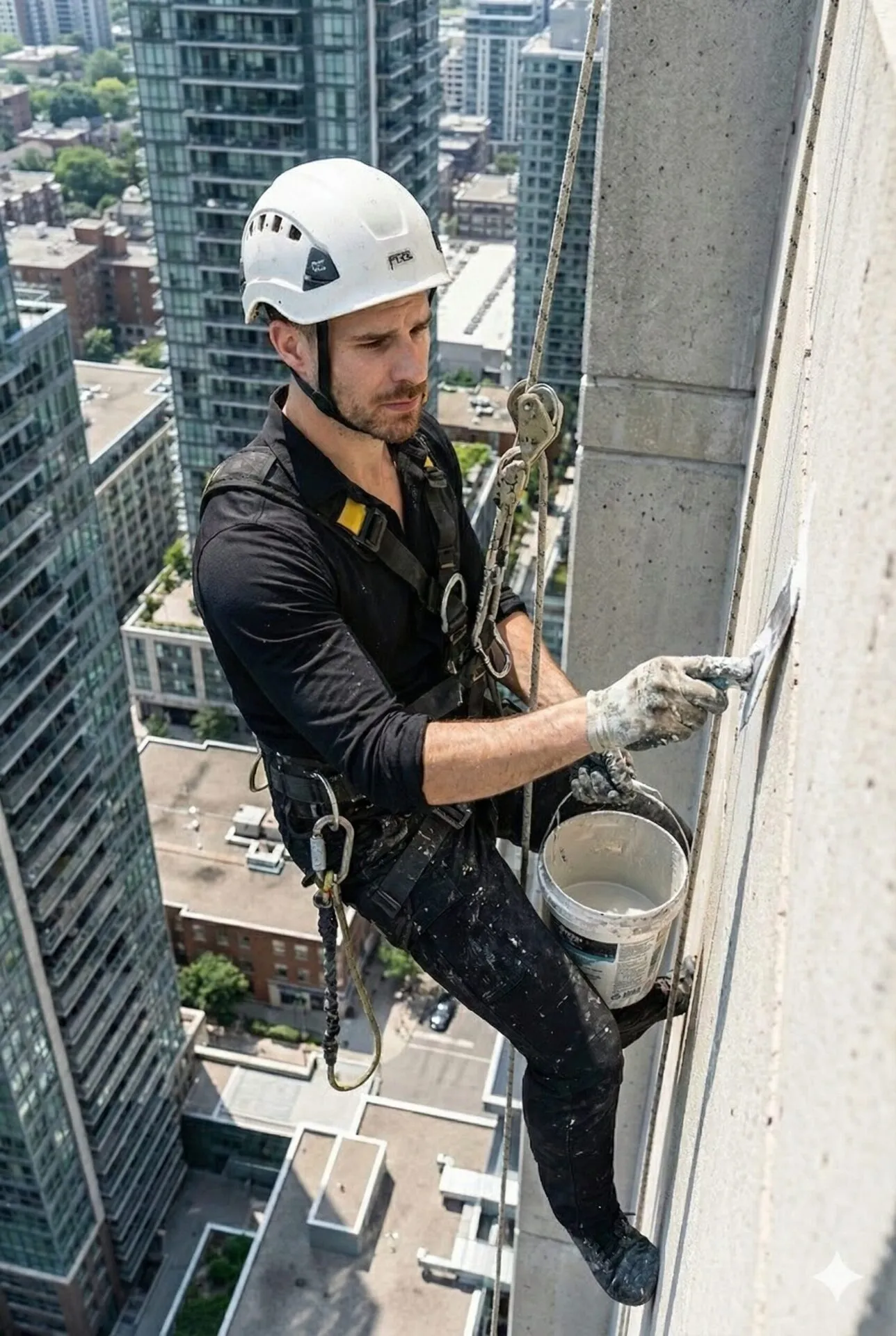
A reinforced concrete building does not stand still. It moves. In summer the concrete expands, in winter it contracts. In tall towers this movement adds up to real centimeters. So that the movement does not create uncontrolled cracks, the designer introduces expansion joints (Expansion Joints): planned gaps that cross the structure and allow it to breathe. The joint is a built-in weak point: it is open by nature, and without proper waterproofing it becomes a direct pipe for water into the structure.
In most towers in Israel built before 2005, the joints were treated with basic methods that did not hold up. The result: recurring damp, mold in apartments, and the frustration of residents who pay again and again for repairs that do not work.
Why joint waterproofing fails: three main reasons
Using a rigid material
An expansion joint is meant to move. Filling it with a rigid material such as epoxy or ordinary cement is a basic mistake. The rigid material cracks as soon as the joint starts working, and allows immediate water penetration. Despite this, many contractors still fill joints with plaster or filler, a solution that lasts only a few months.
Three-sided adhesion
When the sealant adheres to all three faces of the groove (the two sides and the bottom), it cannot stretch freely. Every movement creates a tear. The engineering solution is to use a foam backer rod (Backer Rod) that prevents adhesion to the bottom and allows the material to work in two directions only.
No ongoing maintenance
Even excellent waterproofing wears out. UV radiation, accumulated dirt and cyclical movements wear down the material. Without periodic inspection and preventive renewal, a joint that was treated excellently will fail after 8-12 years. A building committee that plans maintenance work at height and rope access prevents expensive damage later on.
Types of professional solutions for joint waterproofing
Elastomeric polyurethane mastic
The most common solution for joints up to 25 mm wide. A material such as Sikaflex PRO-3 or an equivalent provides an elongation of at least 25%, excellent adhesion to concrete and water resistance. The application includes cutting the groove to a uniform shape, cleaning, a dedicated primer, inserting a foam backer rod, and filling with mastic. The preparation stages are no less important than the material itself.
A metal expansion profile with a membrane
In wide joints (over 30 mm) or joints with significant movement, an aluminum or stainless steel profile with a welded flexible membrane is used. The profile is mechanically anchored to both sides of the joint and allows free movement. This is the most durable solution, but also the most expensive, and it requires specific experience in application.
An elastomeric sealing band (Band)
A flexible band that is bonded over the face of the joint from outside, in a method similar to regular rope access waterproofing but adapted to movement. It suits joints in facades where deep cutting is not possible.
What a professional work process looks like
- An advance survey of all the joints in the structure: mapping width, depth and current condition.
- Complete removal of the old sealant down to bare concrete.
- Cleaning the groove with compressed air and removing residue.
- Applying a dedicated concrete primer (according to the material manufacturer’s instructions).
- Inserting a foam backer rod of the right diameter: 25% larger than the width of the groove.
- Filling with elastomeric mastic in an hourglass shape (slightly concave): neither flat nor protruding.
- A quality check and photographic documentation.
Further professional information on the behavior of expansion joints in concrete can be found in the Wikipedia entry on expansion joints.
When treatment is needed
If you see signs of damp near a joint, sealant that has cracked or peeled, or a joint that is completely open, do not wait. Every rainy season that passes with a damaged joint drives water deep into the structure, and creates concrete restoration damage that costs ten times as much as preventive waterproofing. Turn to a company with specific experience in tower joints: this is work that requires engineering knowledge, not just the ability to abseil.
Thank you! We received your request and will get back to you soon.
More articles you may find interesting
Read the article Annual Building Maintenance
A professional checklist for building committees: what to check every year on the envelope of a tall building, how to plan the budget and when to call a rope access company. A guide from Top Gova.
Read the article Parapet Wall Waterproofing
The parapet wall is the number one cause of damp on the top floor. Learn how to waterproof it properly with rope access and prevent damage to penthouse apartments.
Read the article Efflorescence on Walls
Efflorescence on facades and exterior walls: the cause, how it differs from damp, and professional treatment at height. Get advice from Top Gova.