The Price of Work at Height
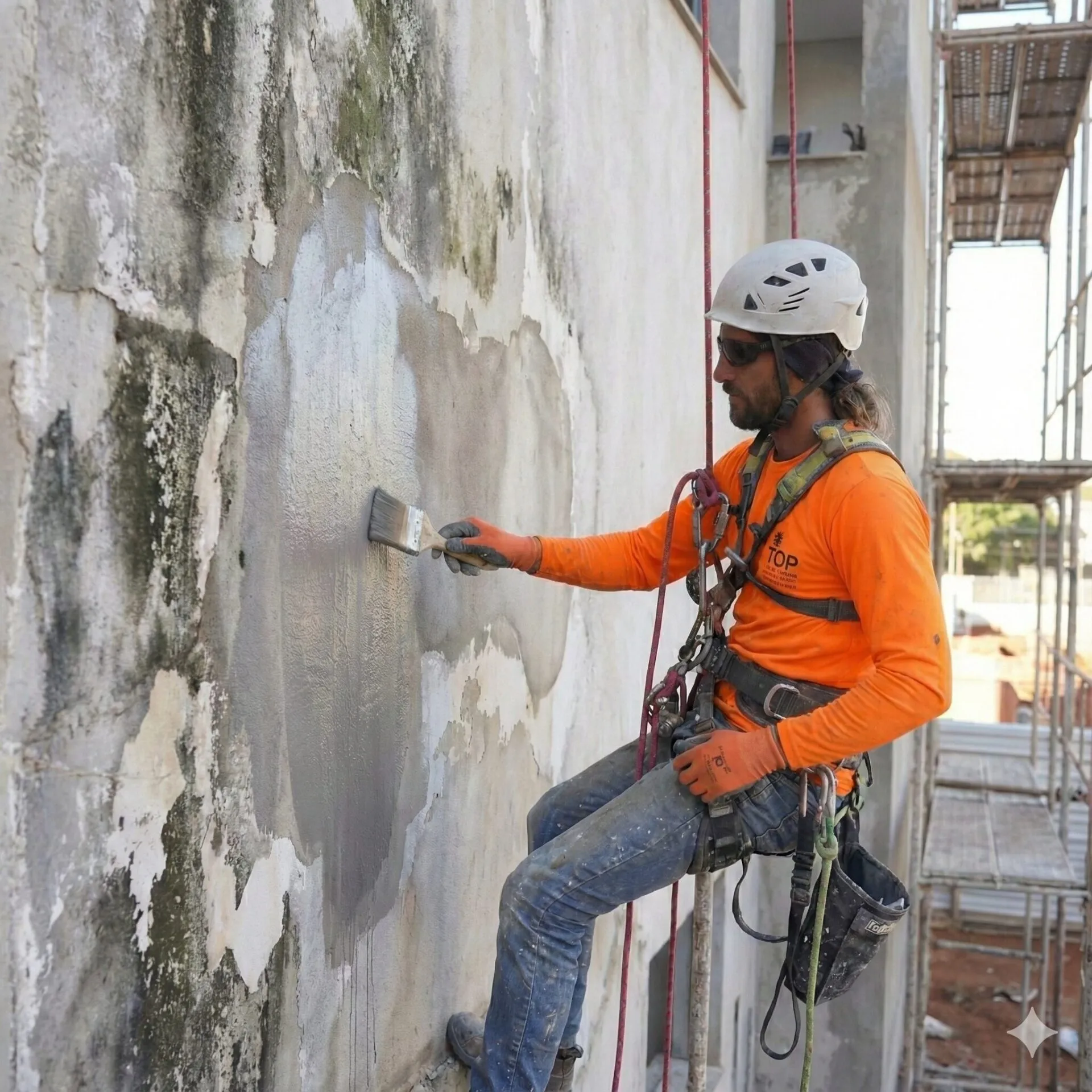
The price of work at height: the transparent guide to pricing rope access projects
In the field of restoration and maintenance, the question “how much does it cost per meter” is the most common question, but also the most misleading. Unlike buying an off-the-shelf product, the price of work at height is derived from a complex technical specification that varies dramatically from building to building. A quote that is too cheap over the phone is usually a warning sign of a lack of understanding of the scope of the work, or worse, of an intention to take safety shortcuts. The following article breaks down the real cost components and explains what you are paying for.
1. The setup cost (Setup Cost)
Every work at height project, whether it is the repair of a single crack on the eighth floor or the restoration of an entire facade, includes a fixed base cost. This cost reflects the team’s working hours in getting to the site, deploying the safety systems on the roof, checking the anchor points and setting up a “lifeline” (if there is no standard railing). Therefore, the smaller the scope of the work (local repairs), the higher the relative price per meter. In large projects, the setup cost is spread out (“absorbed”) in the overall price and makes the deal more worthwhile.
2. The complexity of access and anchoring
The factor that most affects the pricing of a working hour is accessibility.
- Flat roofs with a concrete parapet: allow quick anchoring and immediate descent (lower costs).
- Old tiled roofs / roofs without a parapet: require the installation of temporary or permanent anchoring systems, a process that lengthens the working time and makes the project more expensive.
- Negative or complex descent: work under projecting balconies, inside narrow shafts (laundry enclosures) or above fragile elements (glass canopies) requires special equipment and work at a slow, controlled pace.
3. The technical specification of the materials
This item holds the largest gaps between the quotes on the market. Many contractors lower the price of work at height by using basic acrylic sealants or non-standard cement materials for concrete restoration. At ‘Top Gova’ the pricing is based on materials with proven durability for many years, such as Sika polyurethane systems or advanced hybrid materials. A quality material costs three times as much as a cheap one, but it prevents the need for a repeat repair after the first winter.
4. The insurance premium
This is the “transparent” component nobody talks about until disaster strikes. Insurance for work at height (including employer’s liability and third-party liability with high limits of liability) is a very expensive business for the contractor. A quote suspiciously lower than the average market price usually indicates a contractor who saves on insurance or employs workers without a valid rope access certificate. In the event of an accident, the criminal and civil liability may roll onto the doorstep of the building committee and the clients. Our price includes your peace of mind and full insurance cover.
Summary: how do you compare quotes?
Do not settle for the bottom line. When you compare quotes, ask to see the bill of quantities (the materials specification), the rope-access technicians’ certificates and the insurance policy.
Do you need an accurate, professional price estimate? The ‘Top Gova’ team is available for a site visit and diagnosis with no obligation.
Thank you! We received your request and will get back to you soon.
More articles you may find interesting
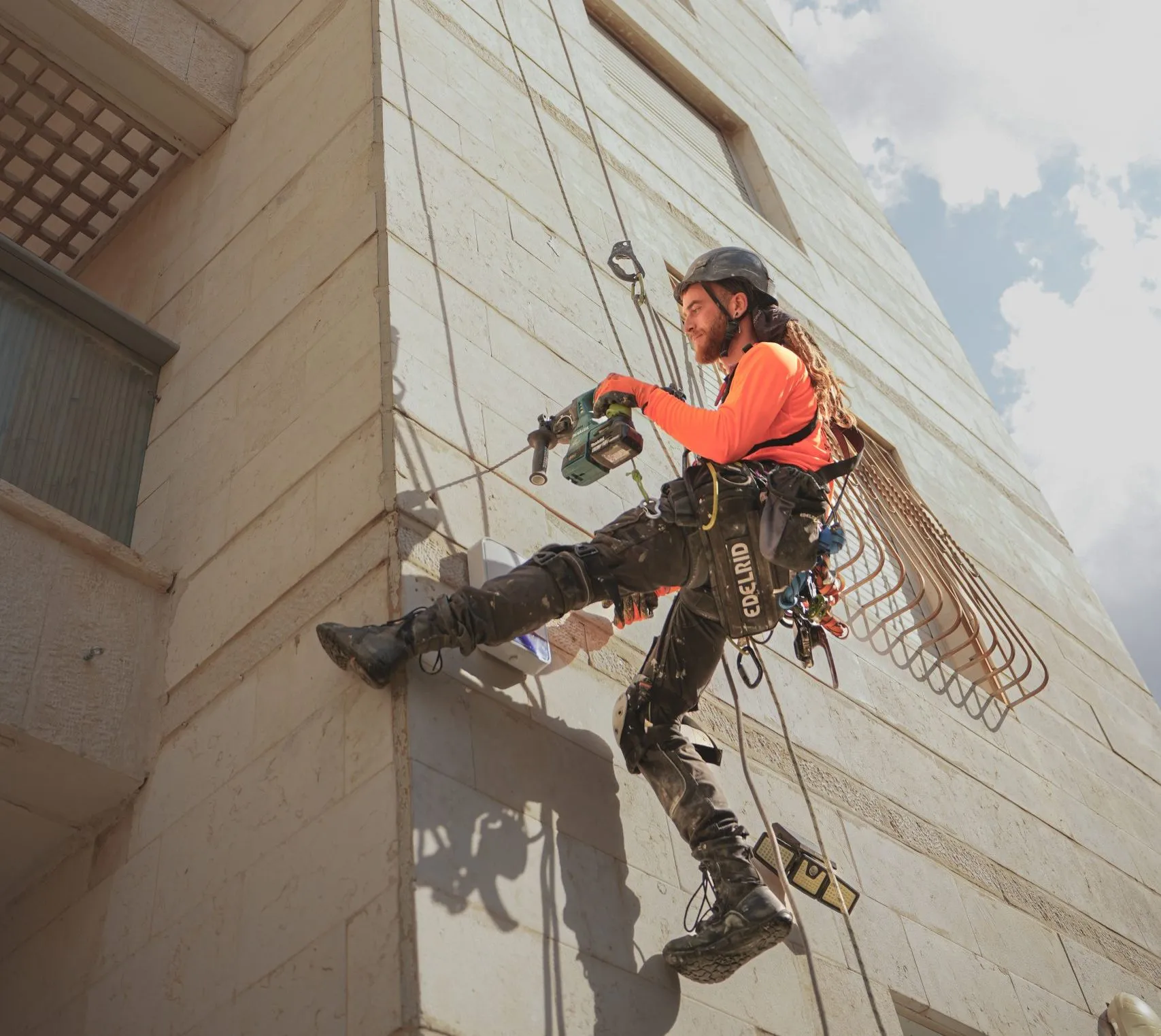
Read the article Annual Building Maintenance
A professional checklist for building committees: what to check every year on the envelope of a tall building, how to plan the budget and when to call a rope access company. A guide from Top Gova.
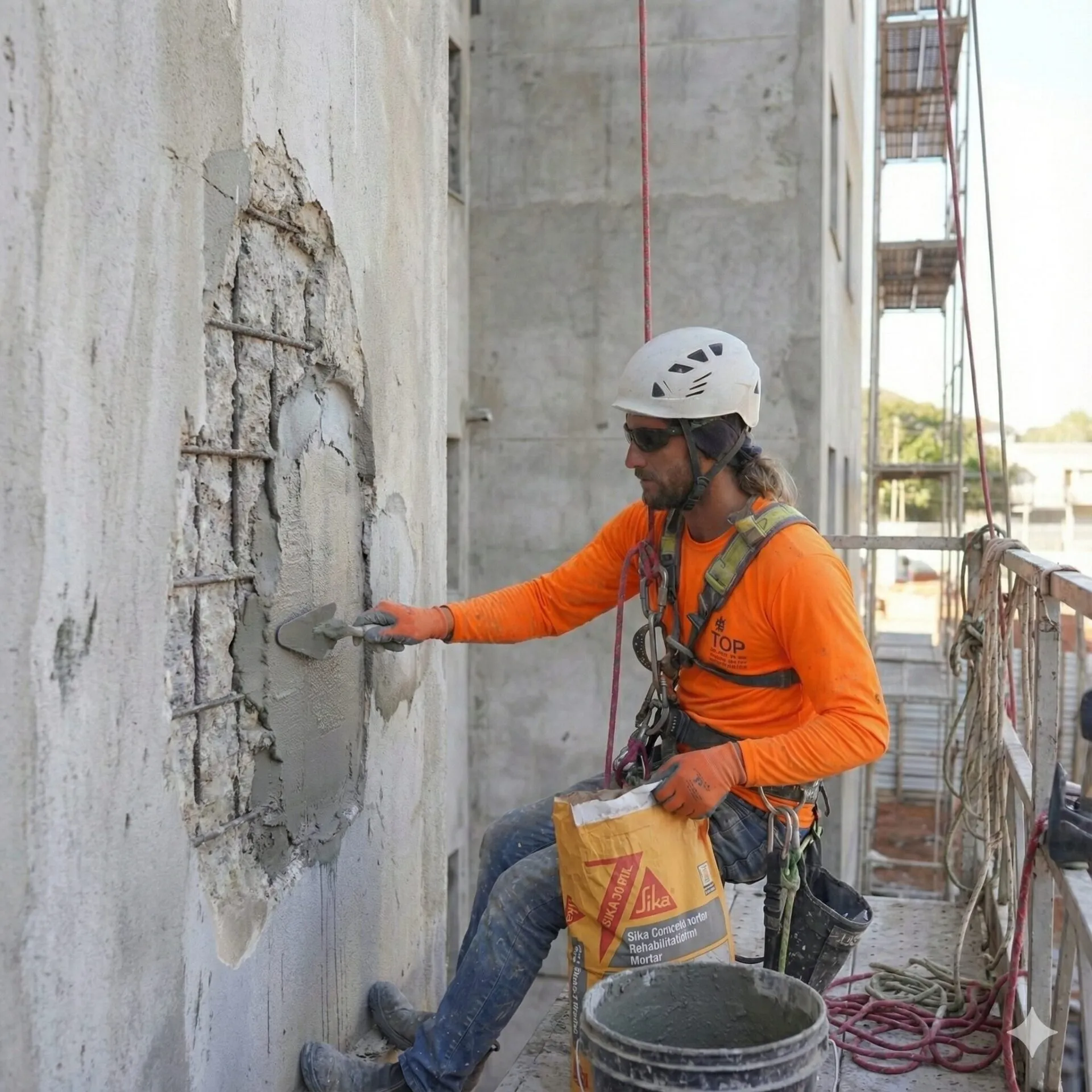
Read the article Parapet Wall Waterproofing
The parapet wall is the number one cause of damp on the top floor. Learn how to waterproof it properly with rope access and prevent damage to penthouse apartments.
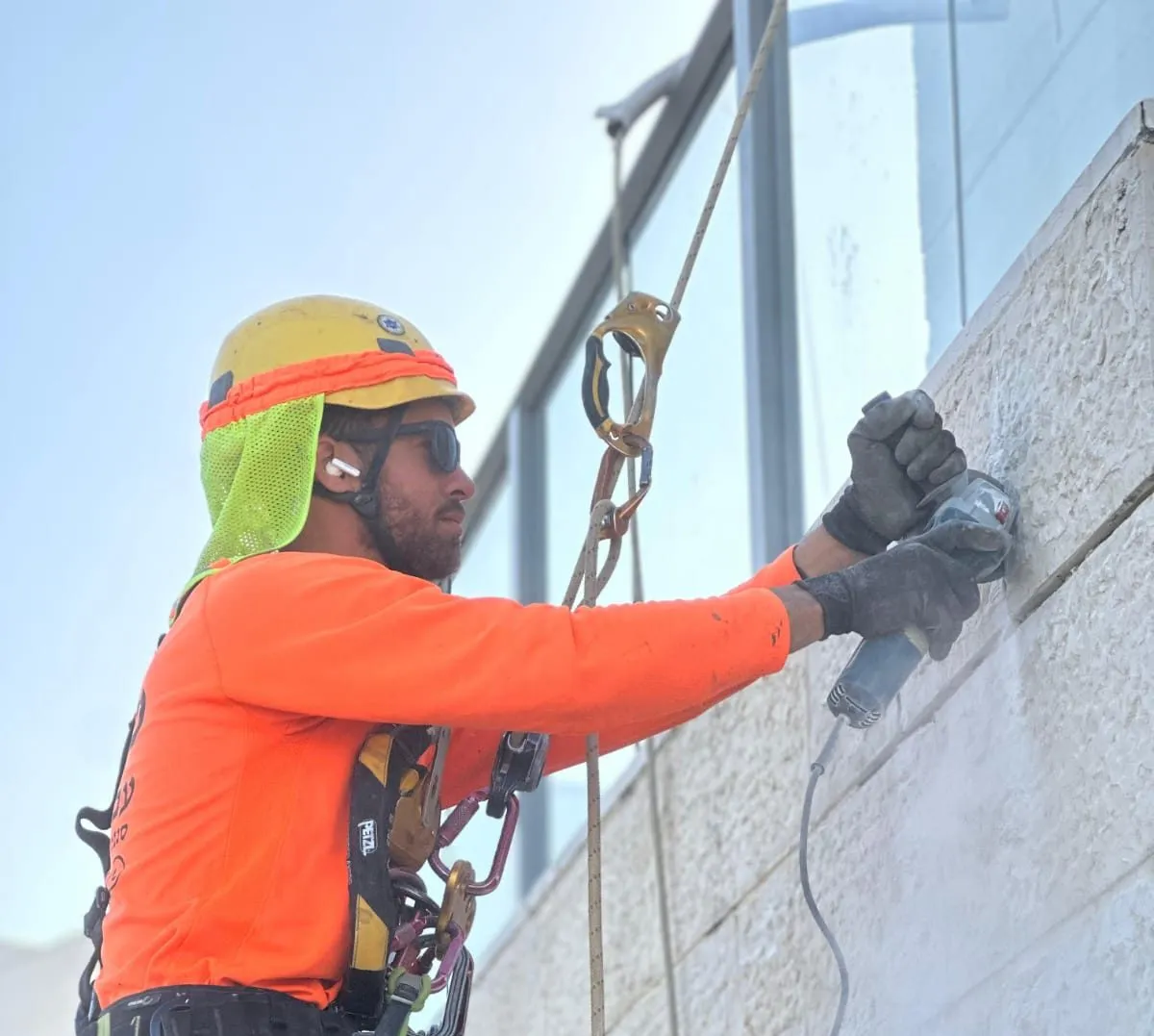
Read the article Efflorescence on Walls
Efflorescence on facades and exterior walls: the cause, how it differs from damp, and professional treatment at height. Get advice from Top Gova.