Recurring Damp After Waterproofing: Seven Reasons the Previous Contractor Failed
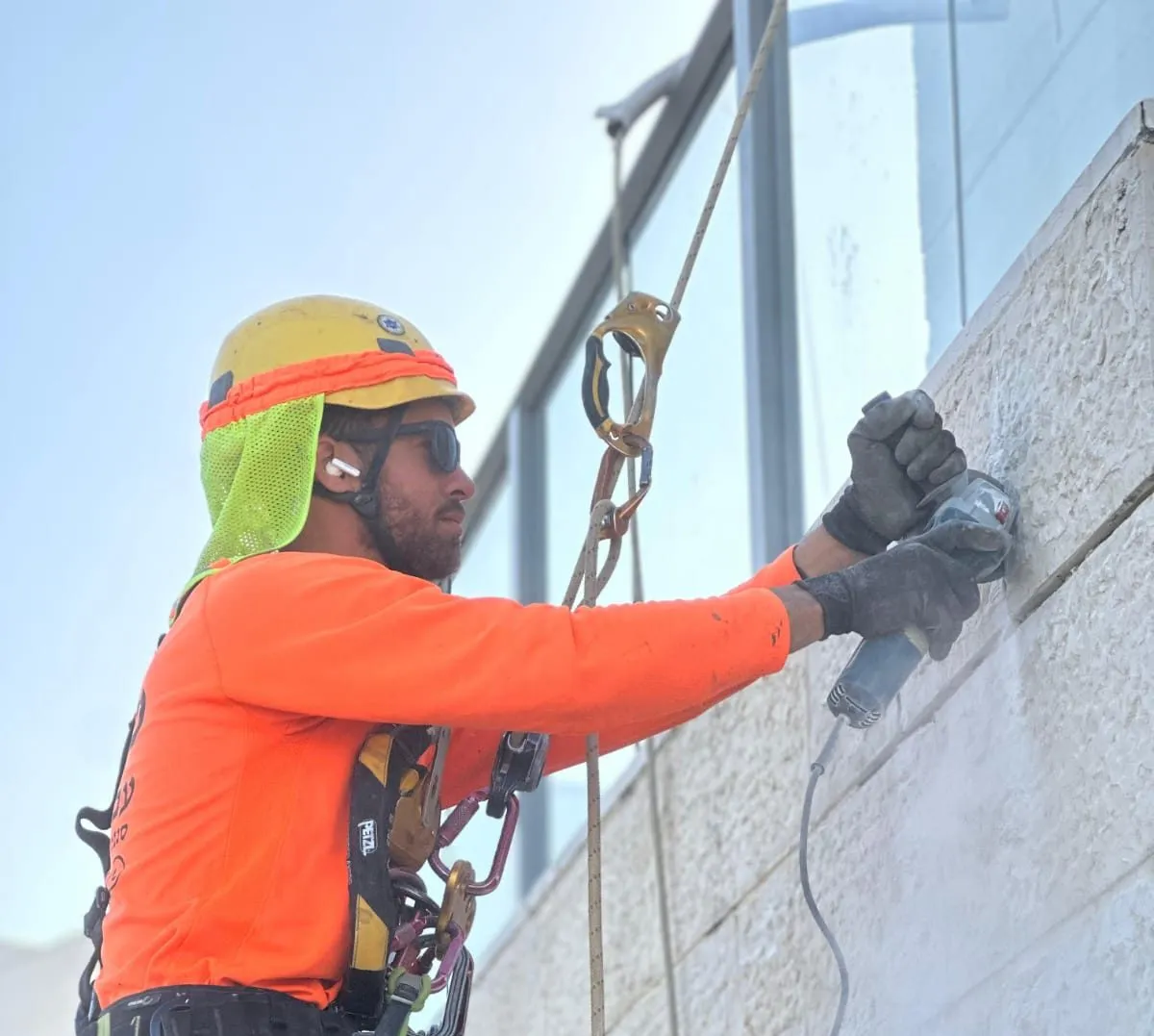
You paid the contractor, he worked on the facade for a week, and then, after the first winter, the stain came back on the inside wall in exactly the same place. This is not bad luck. It is almost always the failure of one stage in the work process. After dozens of projects repairing waterproofing work that did not hold, we can divide the reasons into seven clear categories. If you recognize the signs, you will also know how to find out what the next treatment should be.
1. A superficial initial diagnosis
Damp on an inside wall does not always come from the wall opposite it. Water can seep from a neighbor’s balcony upstairs, from a hidden drainage pipe, or through an expansion joint three meters from the stain. A contractor who does spot waterproofing without mapping the possible sources is in fact treating the symptom, not the problem.
2. Skipping the chiseling and cleaning stage
Waterproofing is not paint. You cannot apply waterproofing material to a dirty wall, to crumbling lime or to segregated concrete and expect it to bond. The preparation stage (chiseling out damaged material, cleaning with a steel brush or water blasting, and removing oils) determines more than 50% of the work’s success. A contractor who arrives, brushes it on and is gone in 3 days almost certainly skipped the preparation.
3. Not using a primer
A primer is a transition layer that creates good adhesion between the concrete and the waterproofing material. Every material system has its own dedicated primer. Skipping it saves half a day’s work and a few hundred shekels, but guarantees that the waterproofing will peel within a year or two. With standard rope access waterproofing products, the material’s manufacturer specifies unequivocally which primer to use.
4. Ignoring capillary (rising) damp
In older buildings, water can rise from the ground through the foundations or through wall joints, in a phenomenon called capillary rise. Waterproofing the exterior wall does not prevent it. The right solution is injecting a hydrophobic material into the wall (a chemical barrier) that creates a chemical block. If the problem is capillary and an exterior polyurethane is applied over it, the damp will simply rise higher, above the waterproofing.
5. Wrong treatment of an active crack
An active crack is one that keeps moving, because of thermal expansion, structural movement or vibrations. If it is filled with a rigid material, it will crack again within months. Active cracks require a highly flexible solution: an elastic elastomeric material over a foam backer rod that lets the material stretch. Diagnosing the type of crack is a stage many contractors skip.
6. Not treating expansion joints
Towers and long buildings have planned expansion joints that compensate for changes in temperature. Sealing such a joint requires a special profile: an expansion profile with an inner filler, or a metal profile with a membrane. Smearing filler superficially over such a joint is almost always a quick failure.
7. Non-standard temperature and humidity during application
Every waterproofing material has a window of working conditions defined by the manufacturer. Polyurethane does not like high humidity. Acrylic does not like low temperatures. If the contractor worked on a rainy day “because he was in a hurry to finish”, the material did not cure properly and its mechanical properties are impaired. A record of the weather on the day of work is a document worth asking for at the end of the job.
How to tell that the next job will hold
- A detailed initial diagnosis that looks at the building as a system, not just at the specific wall.
- A written work specification that includes a preparation stage, a primer, the main material and a protective layer.
- Materials from well-known manufacturers approved by the Standards Institution.
- A written warranty of 5 to 10 years: a company that is not willing to give a warranty is not confident in its own work.
Further technical background on the mechanisms of damp penetration in concrete can be found in
the Wikipedia article on concrete impermeability, which covers the engineering properties.
The conclusion for anyone considering a repair
If the damp keeps coming back, the problem has not solved itself. The longer you wait, the deeper the damage penetrates into the concrete, reaches the reinforcing steel and starts a process that calls for rope access concrete restoration. It is better to carry out a new professional diagnosis, with a company willing to descend on ropes and map all the sources of damp before recommending a treatment. One correct investment saves tens of thousands of shekels in repeated repairs.
Thank you! We received your request and will get back to you soon.
More articles you may find interesting
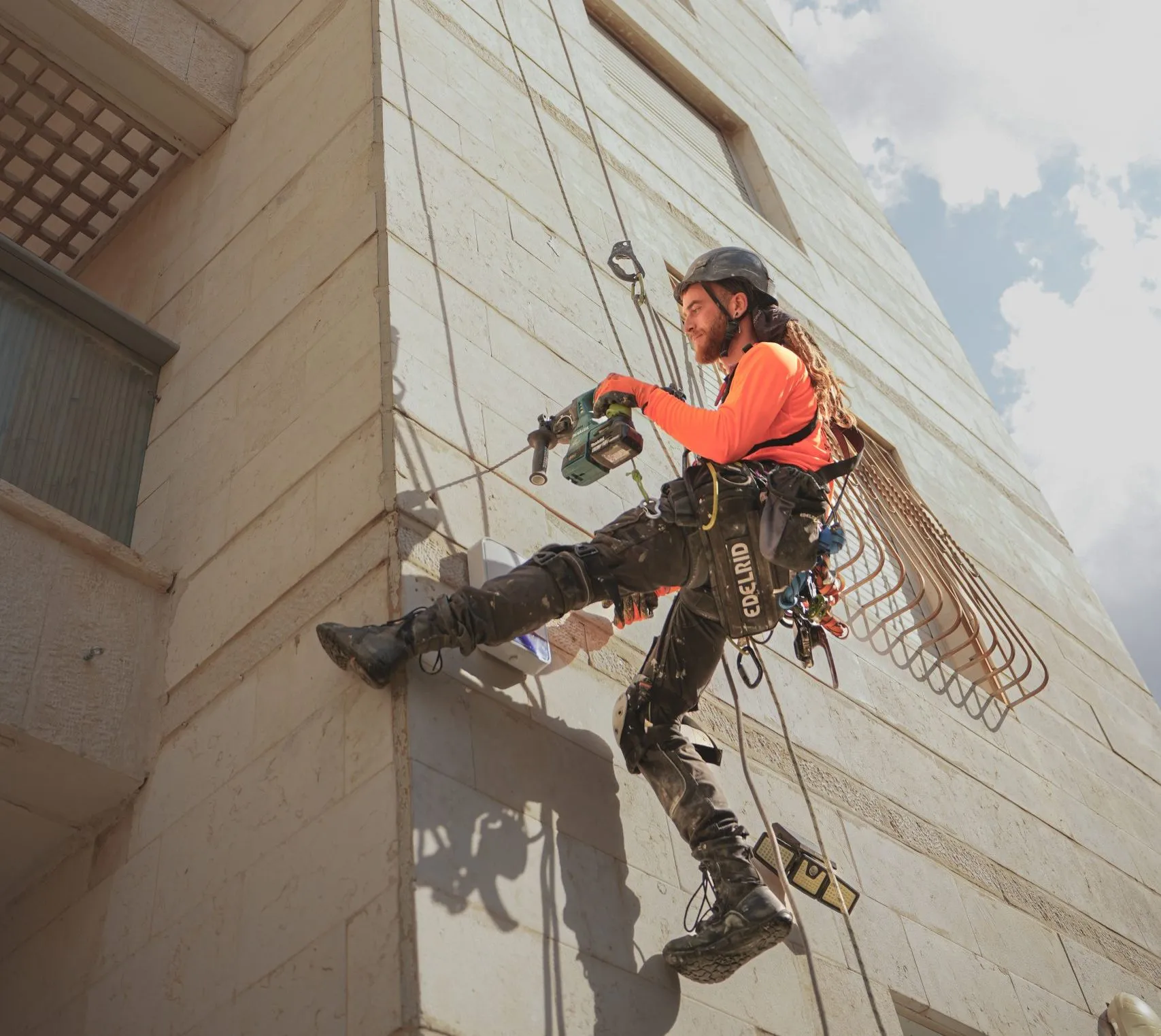
Read the article Annual Building Maintenance
A professional checklist for building committees: what to check every year on the envelope of a tall building, how to plan the budget and when to call a rope access company. A guide from Top Gova.
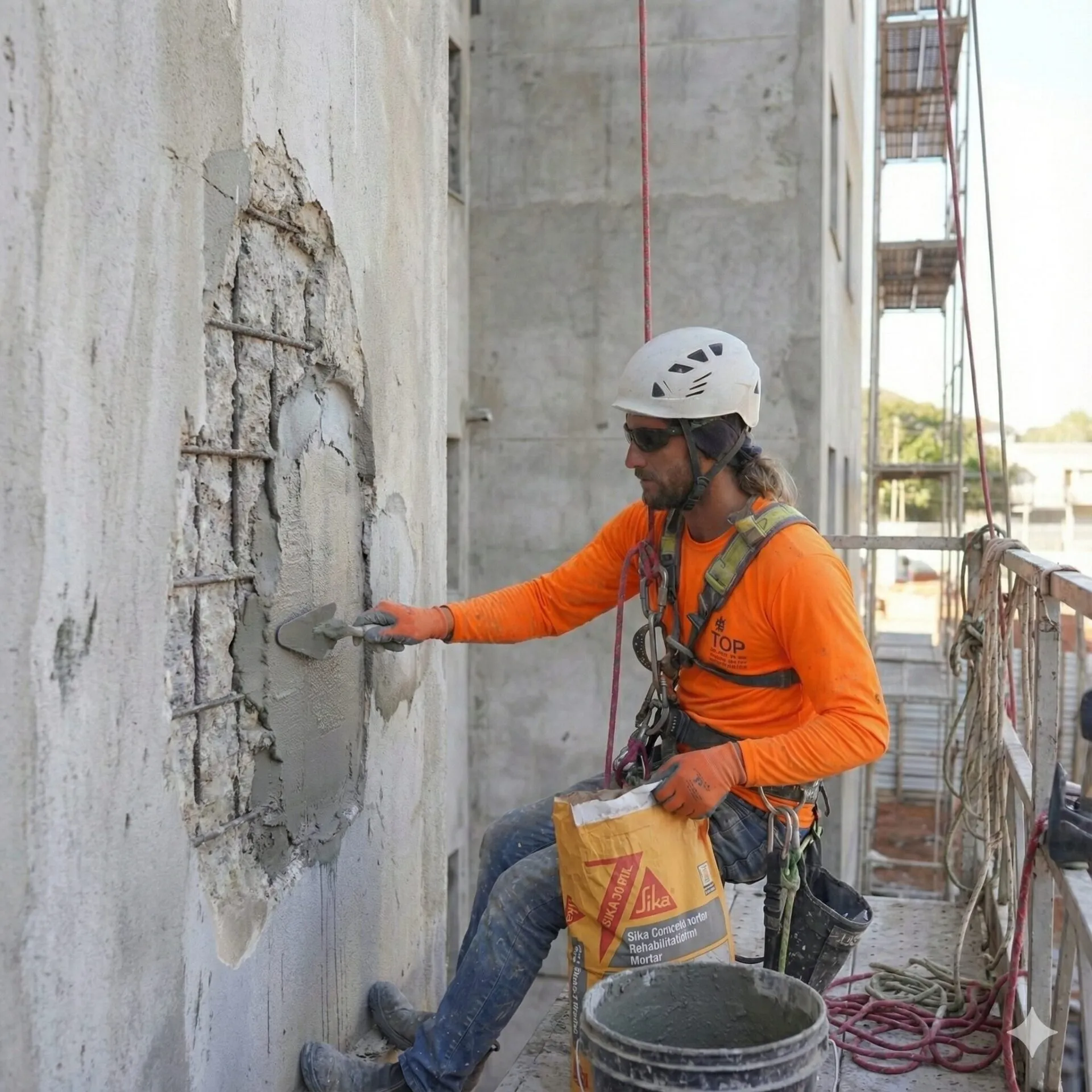
Read the article Parapet Wall Waterproofing
The parapet wall is the number one cause of damp on the top floor. Learn how to waterproof it properly with rope access and prevent damage to penthouse apartments.
Read the article Efflorescence on Walls
Efflorescence on facades and exterior walls: the cause, how it differs from damp, and professional treatment at height. Get advice from Top Gova.