Repairing a Wall After Damp
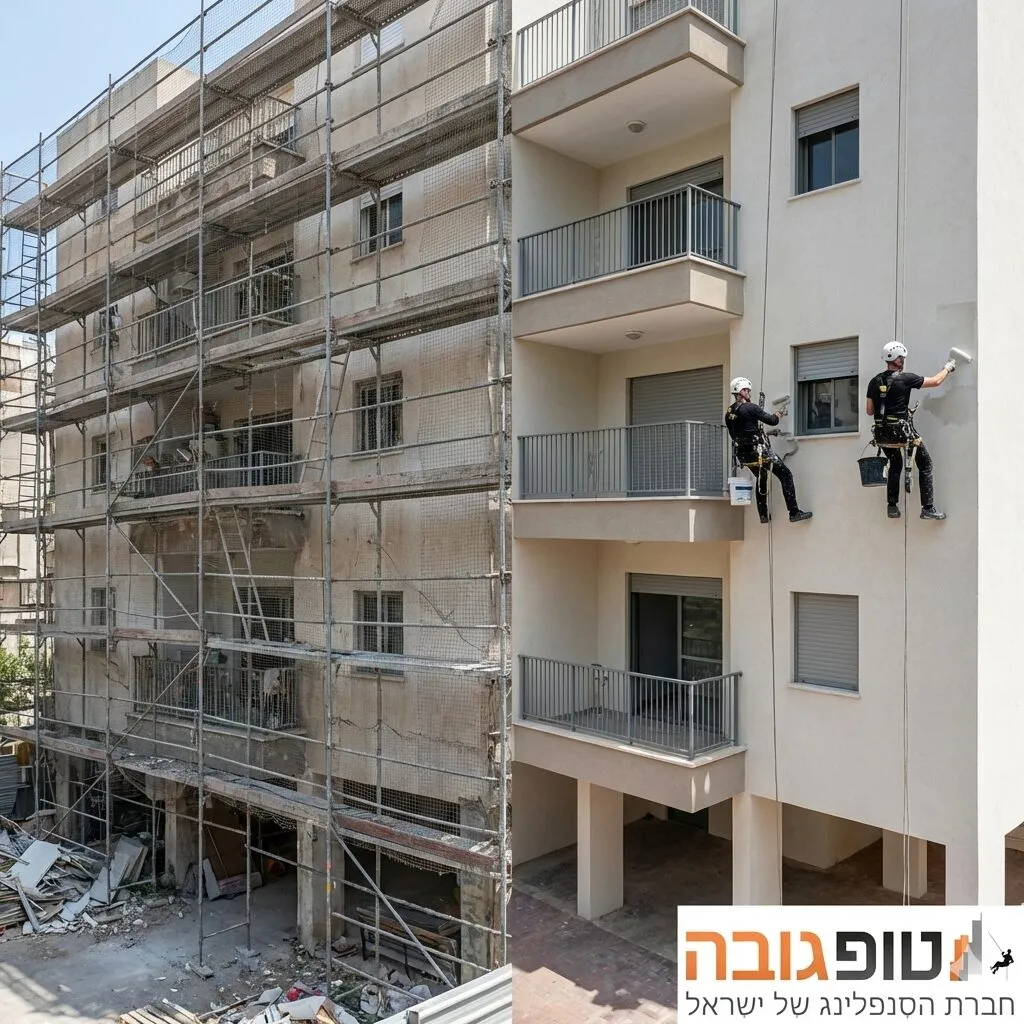
Repairing a wall after damp: the complete guide (and why most people do it backwards)
The wall has peeled, the baseboard has swollen, and the musty smell is already unbearable. You decide it is time to deal with it, and search Google for “repairing a wall after damp”. Your natural instinct says: call a handyman to scrape off the black, spread American filler, and repaint in brilliant white.
Stop.
If you do that now, you are simply throwing money away. An interior cosmetic repair is the last stage of the process, not the first. In this article we will explain why a hasty interior repair is a mistake, what the necessary stages are for solving the problem at its root, and how to make sure the damp never comes back.
The iron rule: do not trap water inside the wall
When damp appears on an interior wall (especially an exterior wall facing the street), the problem does not start in your living room. It starts with a tiny crack in the building’s facade, a failure in the sealing around the window, or grout that has crumbled between the exterior cladding tiles. The water got in, was absorbed into the concrete or the blocks, and made its way to the inner side of your apartment.
If you now spread filler and sealing paint from inside the apartment, you have not stopped the water getting in. The water will keep penetrating from outside, but now, instead of evaporating into the room and making a small stain, it will be trapped inside the wall behind the new coat of paint. The result?
- The pressure inside the wall will rise, and the water will simply break out at another point, higher or wider.
- The trapped water will start to eat away at the reinforcing steel inside the wall, which will lead to rusting and crumbling of the concrete (segregation).
The right guide: 3 stages for repairing a wall after damp
For the repair to last, you must work in the right, engineering order of operations:
Stage 1: exterior waterproofing at the root (our job)
The first and most critical stage is cutting off the water source from the outside. This is not a painter’s job, but one for experts in work at height. At ‘Top Gova’, our rope access team descends along the building envelope and pinpoints exactly the point of failure that is causing the damp in your apartment. We open the cracks, clean them, and seal them with flexible, advanced polyurethane sealants (by Sika or equivalent). This surgical sealing ensures that not a single drop of water penetrates inside any more.
Stage 2: patience. The drying stage.
After the wall has been sealed from the outside, the real test begins: waiting. Your wall is currently soaked with water like a sponge. Before going on to repair it, you must let it dry completely. How long does it take? It depends on the season and on how severe the damp is. Sometimes two weeks of sunny days are enough, and sometimes it can take as long as two months. The best way is to ventilate the room as much as possible (and simply let the stain dry).
Stage 3: the interior cosmetic repair
Only when you are 100% sure the wall is completely dry can you call in a painter (or do it yourself):
- Peeling and scraping: scrape off all the peeling paint, the loose plaster and the white salt bloom, until you reach a stable, strong layer of the wall.
- Cleaning mold: if there is mold, it must be cleaned with a diluted bleach solution or a dedicated fungicide.
- Filling and smoothing: apply a suitable filler (skim plaster, joint compound or filler, depending on the depth of the peeling) and smooth it.
- Primer and paint: wait for the filler to dry completely, apply a bonding primer, and finally paint with a high-quality acrylic paint.
In summary: do not start from the end
Repairing a wall after damp requires a strategy, not just filler. If you rush to repair from the inside, you will find yourself repairing again next winter. Let professionals deal with the problem from the outside, and only then restore the wall from the inside.
Is the wall peeling and is there stubborn damp that will not go away? Do not rush to paint! Contact ‘Top Gova’ to locate and seal the problem from the outer facade using rope access, and secure yourself a dry wall for years.
Thank you! We received your request and will get back to you soon.
More articles you may find interesting
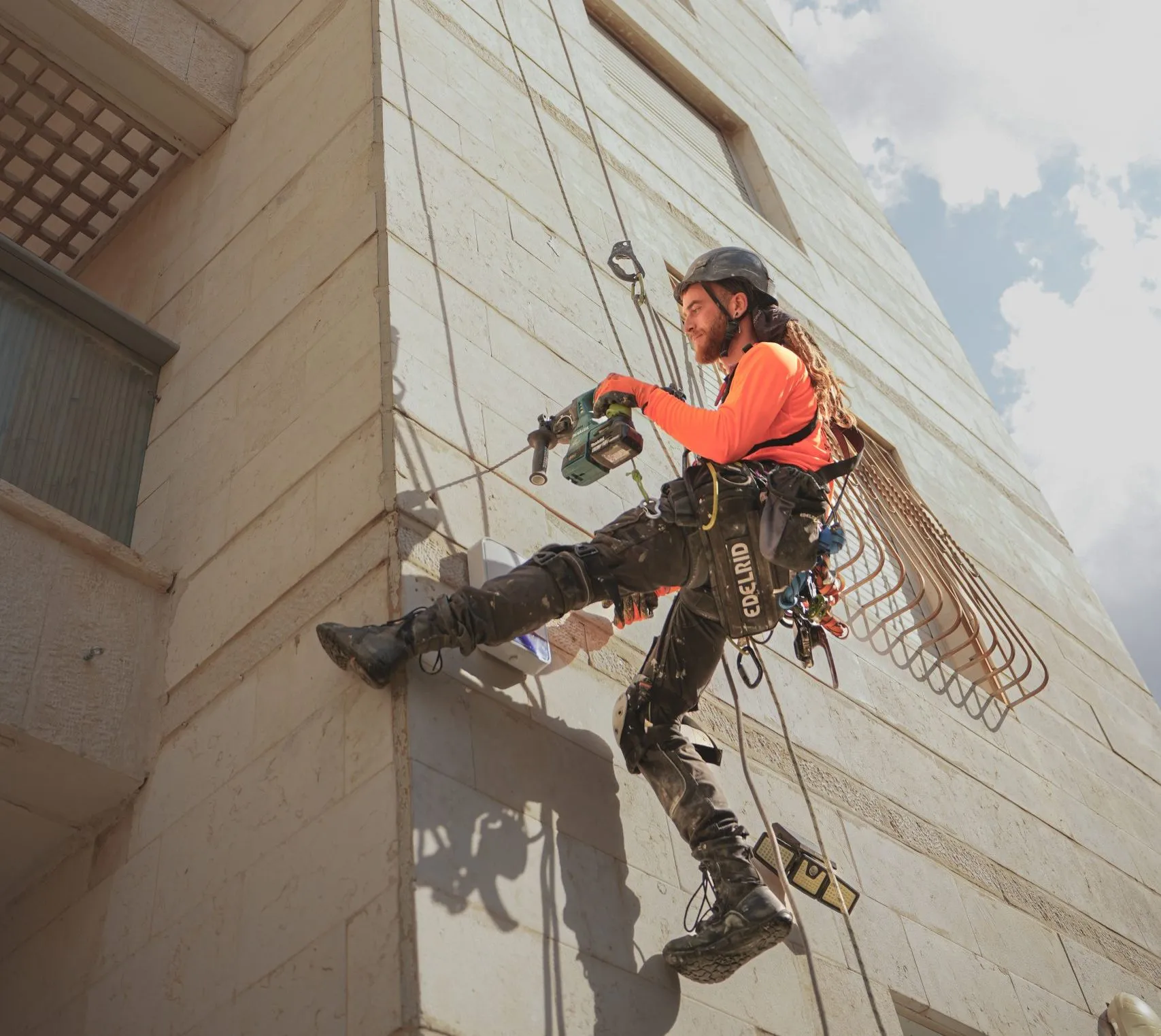
Read the article Annual Building Maintenance
A professional checklist for building committees: what to check every year on the envelope of a tall building, how to plan the budget and when to call a rope access company. A guide from Top Gova.
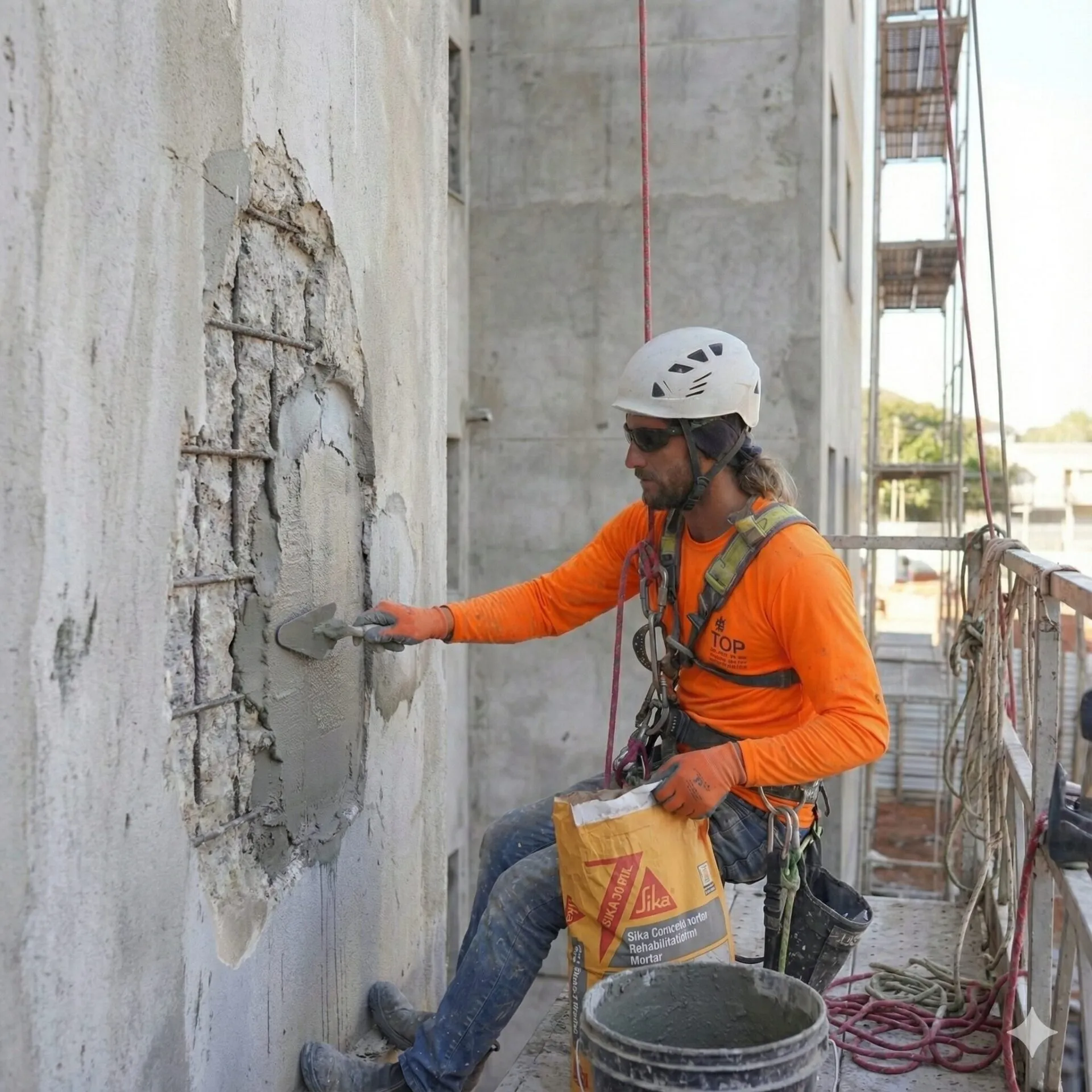
Read the article Parapet Wall Waterproofing
The parapet wall is the number one cause of damp on the top floor. Learn how to waterproof it properly with rope access and prevent damage to penthouse apartments.
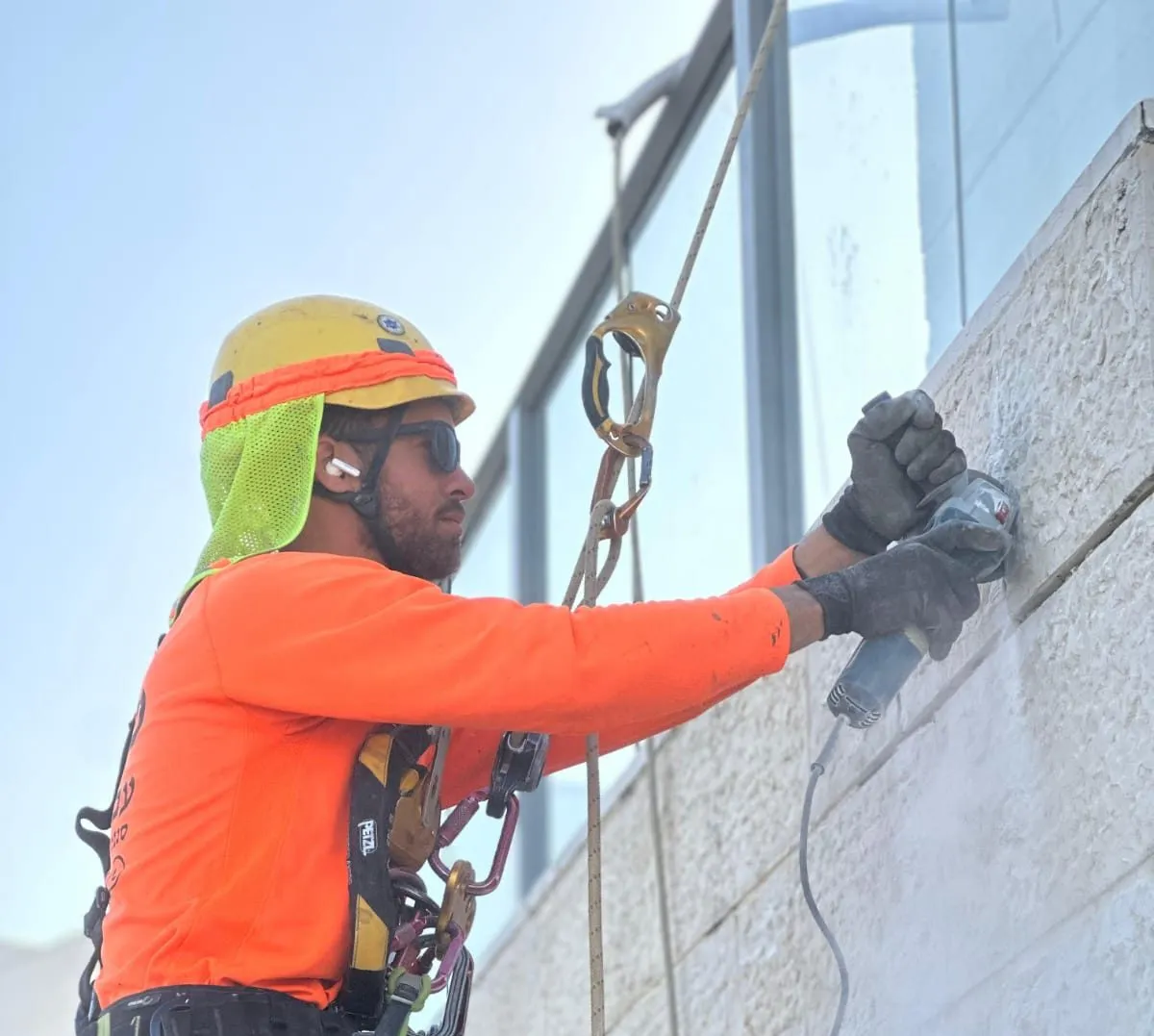
Read the article Efflorescence on Walls
Efflorescence on facades and exterior walls: the cause, how it differs from damp, and professional treatment at height. Get advice from Top Gova.