Restoring Crumbling Concrete
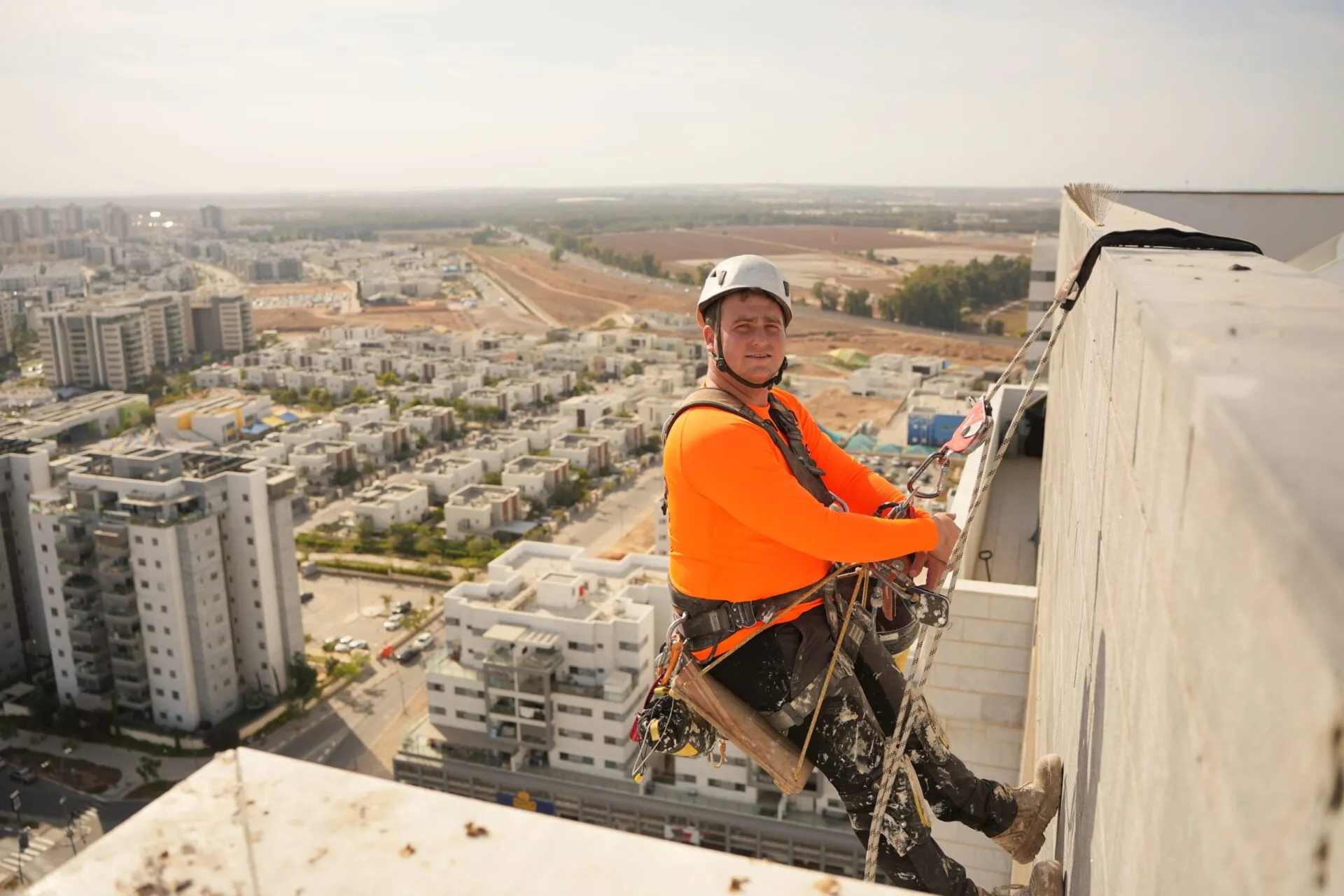
Restoring crumbling concrete: the ticking time bomb on your building’s wall (and how to defuse it properly)
In our minds, concrete is the strongest and most durable material there is. It is the base our home rests on, the columns that hold up the building and the facade that protects us. But even concrete is not immune forever. If you have stepped out onto the balcony or looked at your building’s facade and seen deep cracks, chunks of concrete falling, or worse, rusty, exposed reinforcing bars, you should know: your building is signaling distress.
This phenomenon, known in the trade as “segregation” (or concrete crumbling), is not just a cosmetic problem that makes the building ugly. It is a safety and structural hazard of the first order. In the following article we explain why concrete crumbles, what dangers this holds, and why the only way to repair it is with rope access experts and dedicated restoration materials (such as “Sika” products).
Why does our concrete start to crumble?
To understand the problem, you need to look inside the building’s “skeleton”. Reinforced concrete is a winning combination: a strong concrete casting with steel bars (reinforcing steel) embedded in it, which give the structure the flexibility and strength it needs.
In good condition, the concrete protects the steel from the weather. But over the years, the concrete absorbs moisture, rainwater and carbon dioxide. Once moisture and oxygen penetrate deep into the concrete and reach the steel bars, a process of corrosion (rusting) begins.
When steel rusts, its volume swells and can grow up to 4 times its original size! This enormous swelling exerts huge pressure from inside the wall outward. The concrete cannot withstand this internal pressure, so it cracks, bursts, and falls out. The result: crumbling concrete and rusty, exposed steel that keeps deteriorating at an ever faster rate.
The dangers of neglecting crumbling concrete
Ignoring the problem will not make it go away; it will only make it worse and create significant risks:
- Danger to the lives of passersby: a chunk of concrete that breaks off the fifth floor and falls on the sidewalk, on a parked car or, heaven forbid, on a person is a certain disaster. The criminal and civil liability in such a case falls entirely on the building committee and the apartment owners.
- Weakening of the building’s frame: the reinforcing steel is the building’s backbone. Rusty steel loses its structural strength and leaves the building (or the balcony) far more vulnerable. A local authority that identifies a building in this state may issue it a “dangerous building” order.
Cosmetic repair versus engineering restoration: why ordinary cement won’t help
The most expensive and dangerous mistake building committees make is to hire a “handyman” who smears some ordinary cement over the exposed concrete and paints over it. This is a “band-aid” doomed to complete failure. The rust will keep eating the steel beneath the new cement, and in less than a year the concrete will burst again.
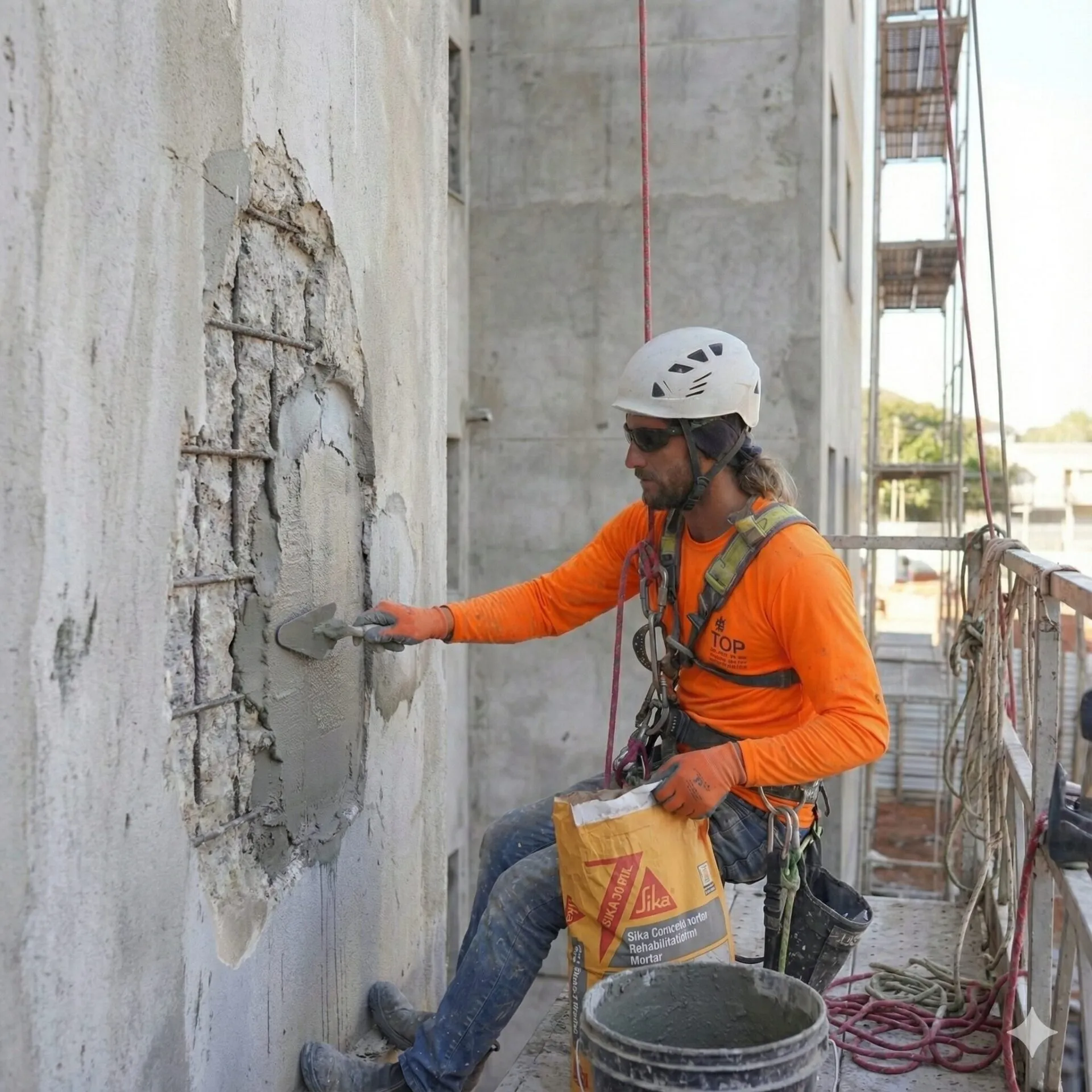
Real concrete restoration requires precise “surgery” and the use of advanced polymer materials. At ‘Top Gova’, we work to the strictest standards and use restoration systems from the leading brands, first and foremost the global Sika (Sika) products:
- Chiseling and exposure: using a jackhammer, we cut away all the loose concrete around the rusty steel, until we reach completely sound concrete.
- Cleaning the rust: thorough mechanical cleaning of the steel bars of all corrosion residues until clean metal is reached.
- Applying a rust converter and primer: coating the steel with dedicated materials (such as Sika MonoTop 910) that stop the rusting process completely and form a strong bonding layer for the new concrete.
- Rebuilding the concrete: instead of ordinary cement, we use an advanced polymer-modified restoration mortar (such as Sika Rep / Sika MonoTop), an especially strong material that bonds perfectly and does not shrink or crack as it dries.
- Waterproofing and finish: applying waterproofing materials and smoothing the wall, to prevent future water penetration in the same area.
Why carry out concrete restoration with rope access?
The building’s weak points (the undersides of balconies, strengthening beams, the corners of the structure) are usually at heights that are hard to reach. Instead of investing tens of thousands of shekels and turning the building into a construction site for months with heavy scaffolding, the smart solution is rope access (descending the envelope).
A skilled team descending on ropes can reach every crack and every crumbling concrete column precisely, carry out the exact treatment, and finish the work quickly, efficiently, and with considerable savings on setup costs.
Is the concrete on the facade crumbling? Is the steel exposed? Don’t wait for it to fall on someone’s head. Contact ‘Top Gova’ today for a site visit and assessment. Our experts will come to carry out professional concrete restoration safely, restoring the building’s strength and beauty, with a full warranty.
Thank you! We received your request and will get back to you soon.
More articles you may find interesting
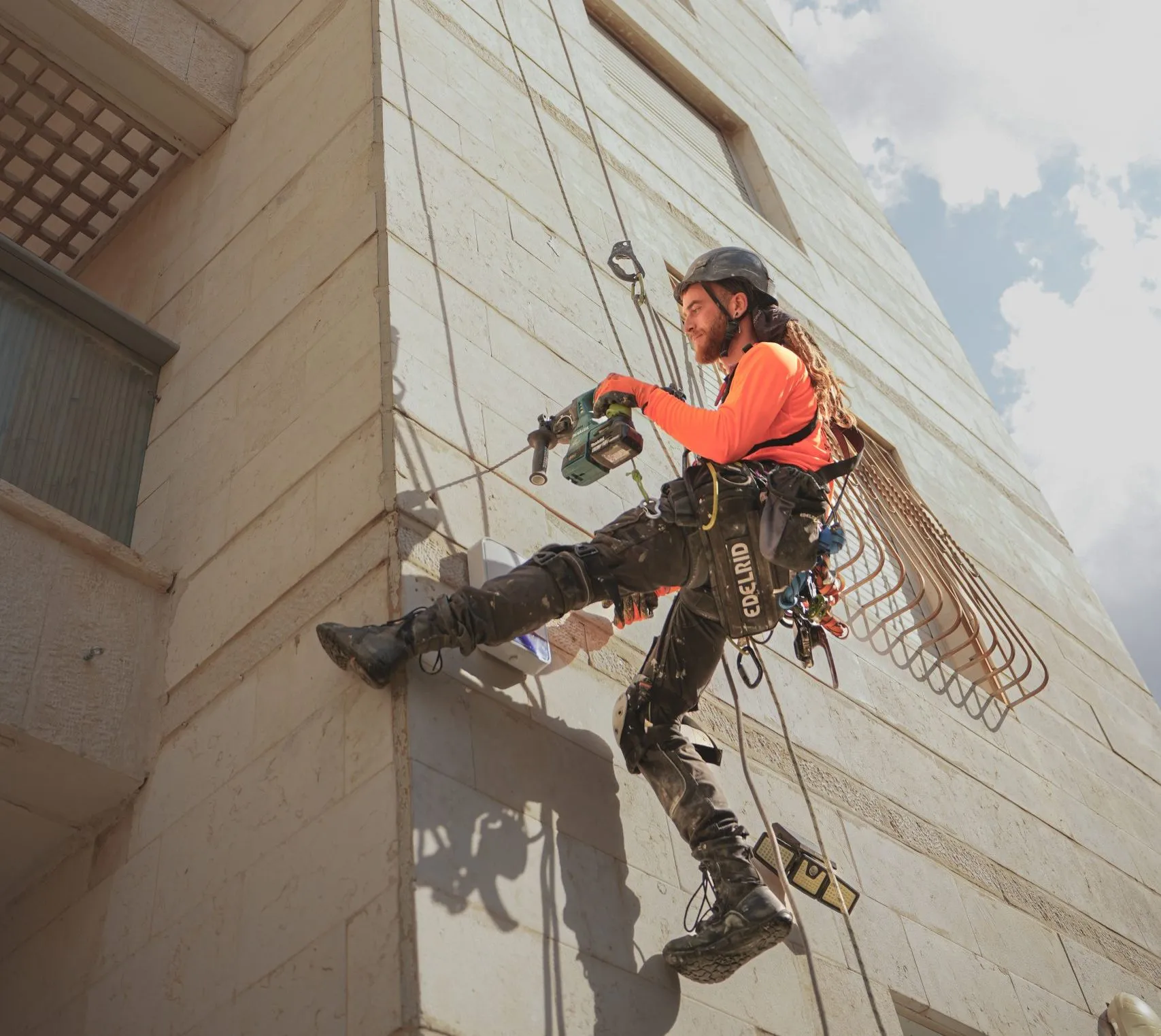
Read the article Annual Building Maintenance
A professional checklist for building committees: what to check every year on the envelope of a tall building, how to plan the budget and when to call a rope access company. A guide from Top Gova.
Read the article Parapet Wall Waterproofing
The parapet wall is the number one cause of damp on the top floor. Learn how to waterproof it properly with rope access and prevent damage to penthouse apartments.
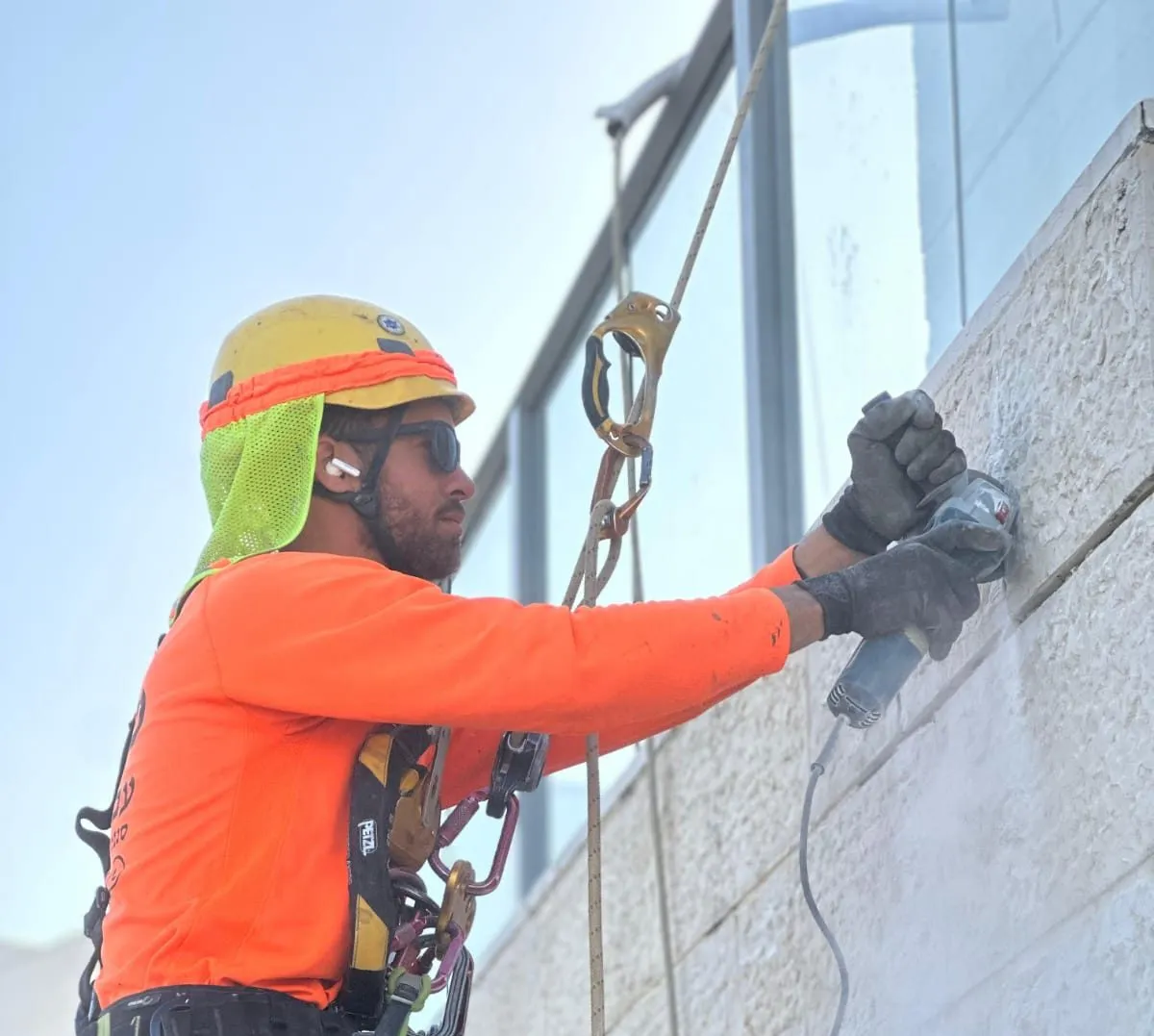
Read the article Efflorescence on Walls
Efflorescence on facades and exterior walls: the cause, how it differs from damp, and professional treatment at height. Get advice from Top Gova.