Restoring Old Buildings
Restoring old buildings: the complete guide to preserving, strengthening and saving your architectural gem
Old buildings have a soul. They carry history, rare architectural charm and design details that are almost never seen in today’s modern, industrial construction. Whether it is a Bauhaus building in central Tel Aviv, a classic Jerusalem stone building, or a residential building from the 1960s and 1970s, they hold enormous emotional and real estate value.
Time, however, is not kind to building materials. Decades of exposure to the scorching sun, rain, humidity, urban air pollution and natural ground movement leave their mark on the building envelope. What starts as a small crack or a damp stain can develop into a serious safety hazard, and can even lead the local authority to issue a “dangerous building” order. Restoring old buildings is not just another cosmetic renovation; it is an engineering and artistic process made up of many stages, meant to give the building back its stable strength and its original beauty.
Why do the walls of old buildings fail?
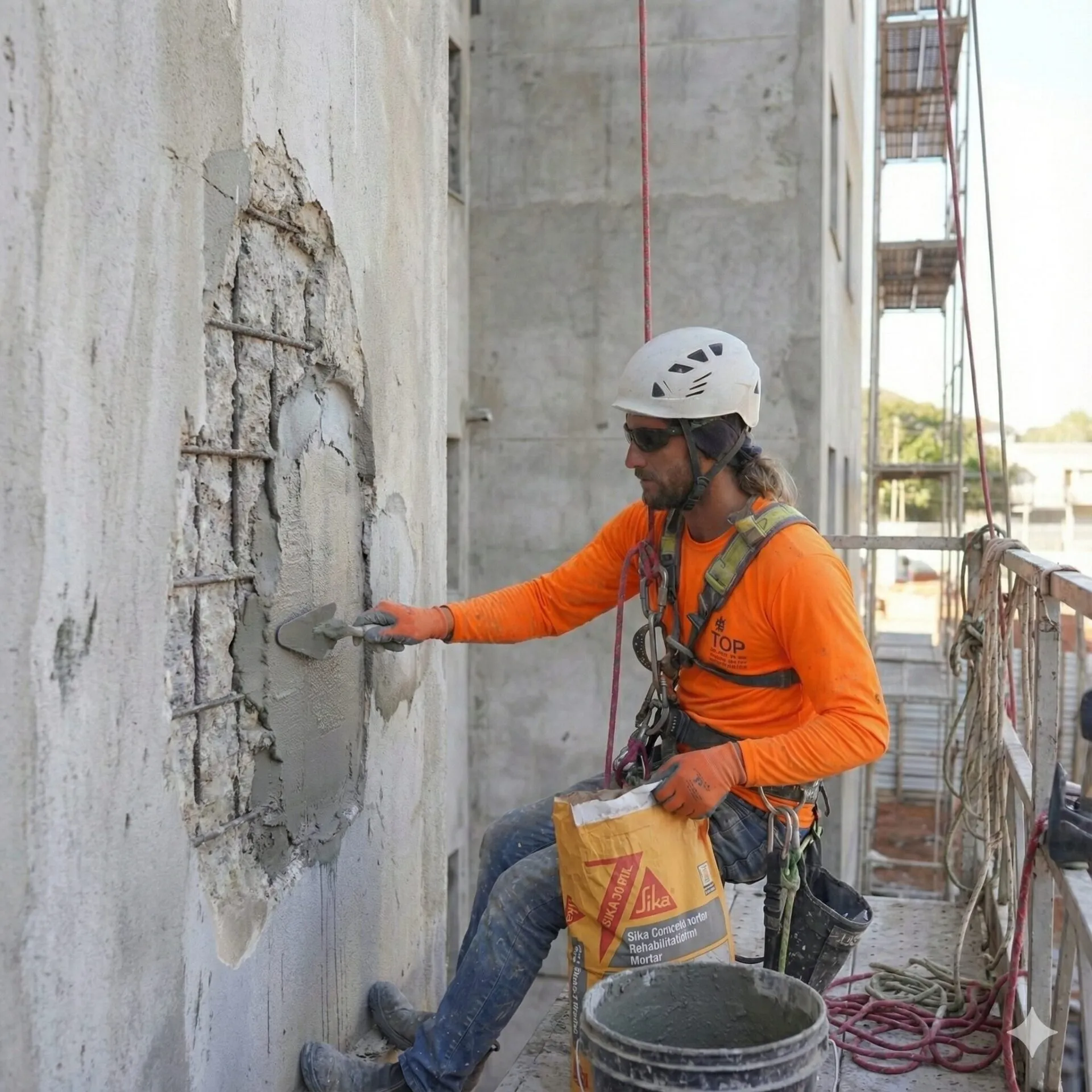
To understand the restoration process, you first need to understand the “diseases” that older buildings suffer from. The most common and most dangerous problem is called “corrosion of the reinforcing steel” (segregation). Concrete is by its very nature a porous material. Over the years, water and carbon dioxide penetrate through these pores and reach the steel mesh embedded in the concrete. When the steel rusts, its volume grows significantly. This internal pressure simply bursts the concrete from the inside, causing chunks of concrete to fall and exposing the rusty steel to the open air, a process that accelerates the destruction.
In addition to concrete, stone cladding and plaster also tend to come loose. In buildings constructed decades ago, the techniques for anchoring tiles to the wall were rather basic (usually based on mortar alone, without the mechanical fixing that is standard today). Temperature changes, trapped moisture and minor earthquakes cause a loss of adhesion, and the result is tiles, mosaics or pieces of plaster dropping onto the sidewalk.
The challenge: why can’t you simply use scaffolding?
The first instinct of many contractors is to wrap the building in massive scaffolding. But when it comes to restoring old buildings, this is usually a critical mistake, for three main reasons:
- A danger to the integrity of the structure: Historic or very old buildings are fragile and sensitive. Attaching heavy steel scaffolding to the walls can damage delicate ornaments, create new holes in the envelope and impose a load the old wall was not built to carry.
- Enormous disruption to residents: Scaffolding blocks the sunlight, prevents windows from being opened, is an aesthetic nuisance and even invites break-ins and theft.
- Disproportionate costs: Erecting scaffolding requires permits from the municipality, payment of fees and a long working time that takes a huge share of the building committee’s renovation budget.
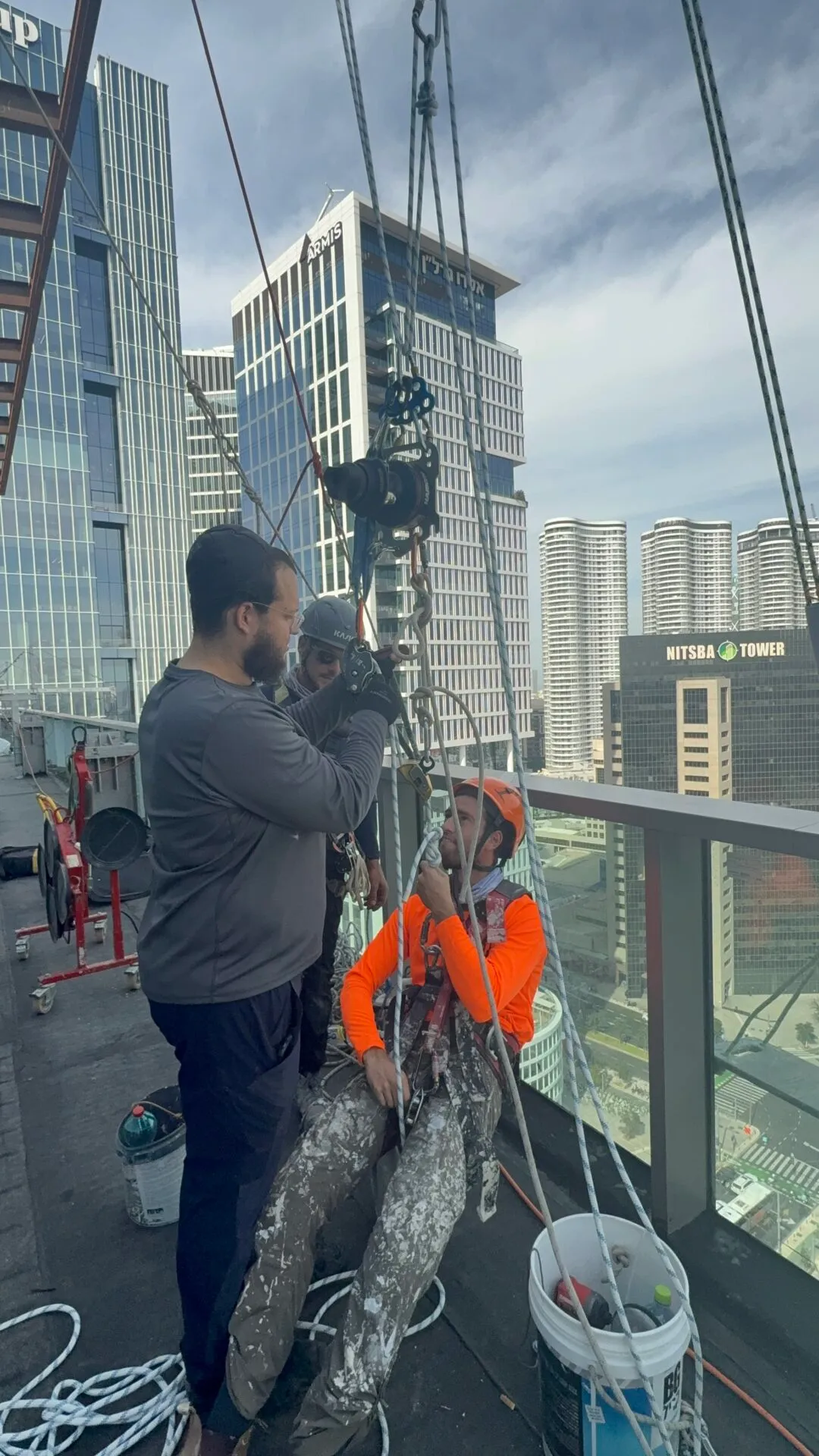
This is exactly where the enormous advantage of rope access building restoration (envelope rappelling) comes in. A team of skilled technicians can reach any point on the building with “tweezer” or “surgical” precision. The technicians put no weight on the facade, do not interfere with the residents’ daily life, and make it possible to focus the budget on the work itself and on quality materials, rather than on steel poles standing in the street.
The technical specification: what does restoring old buildings include?
A professional restoration project of an old building involves many disciplines. At Top Gova, we put together an action plan tailored specifically to the condition of the building, which includes, among other things:
- Restoring and strengthening old concrete and treating corrosion The process begins with chiseling and breaking away all the loose concrete until sound concrete is reached. Then we expose the reinforcing steel and clean it completely of rust using a grinding disc or steel brushes. The steel is coated with a rust converter and a primer (such as advanced Sika materials) that stops the corrosion process. Only then do we rebuild the shape of the column or wall with a strong, non-shrinking polymer repair mortar.
- Waterproofing and repairing historic cracks Old buildings “move” and breathe. If we fill a crack with ordinary cement, it will open again next winter. The correct treatment requires opening the crack in a V shape, thorough cleaning, and applying flexible sealants (polyurethane mastic) that can flex with the building’s movements. Finally, a smoothing coat is applied that blends into the texture of the wall so that no “scars” are left on the facade.
- Restoring stone cladding, plaster and paint If the building is clad in stone, we carry out a tap test to find hollow or loose stones, and refix them with concealed stainless steel screws (mechanical tile strengthening). On buildings with historic plaster, we use special mixes that match the original material, to prevent incompatibility between materials and to keep an authentic look. The walls are then painted with flexible, breathable paint systems that protect against water penetration.
- Preserving historic elements and restoring architectural details Old buildings abound with cornices, decorative projections, reliefs and ornaments around the windows. These are the most sensitive areas and the first to crumble. Rope access teams trained in conservation know how to sculpt these elements again, strengthen them and make sure they pose no risk of falling.
- Gentle, ecological facade cleaning Car soot, mold, fungi and pigeon droppings build up over decades and make the building look ugly. On sensitive buildings, aggressive washing with excessively high water pressure cannot be used. We adapt the cleaning method, whether controlled-pressure washing, ecological degreasing agents, or gentle steam or laser cleaning in cases of particularly strict conservation.
The importance of materials: letting the building breathe
One of the common mistakes in restoring old buildings is using new-generation materials that are “too sealed” on old substrates. Walls of the past were built to absorb and release moisture. Sealing them completely with cheap plastic materials can trap the moisture inside the wall and lead to rapid internal crumbling. A professional contractor knows how to choose “breathable” materials (siloxane-based and others) that let water vapor escape while preventing raindrops from getting in.
In summary
Restoring old buildings is a job for professionals only. It requires a love of architecture, deep knowledge of the chemistry of building materials, and high technical skills in work at height. A project carried out correctly not only gives the building decades more of safe stability, but also raises the value of the apartments to an unprecedented degree.
At Top Gova we bring extensive experience, the best restoration materials in the world and a meticulous team of technicians who do not compromise on any detail. Worried that your building needs help? Contact us today for an inspection of the facades and a dedicated restoration plan that will bring back your building’s glory days.
Thank you! We received your request and will get back to you soon.
More articles you may find interesting

Read the article Annual Building Maintenance
A professional checklist for building committees: what to check every year on the envelope of a tall building, how to plan the budget and when to call a rope access company. A guide from Top Gova.
Read the article Parapet Wall Waterproofing
The parapet wall is the number one cause of damp on the top floor. Learn how to waterproof it properly with rope access and prevent damage to penthouse apartments.
Read the article Efflorescence on Walls
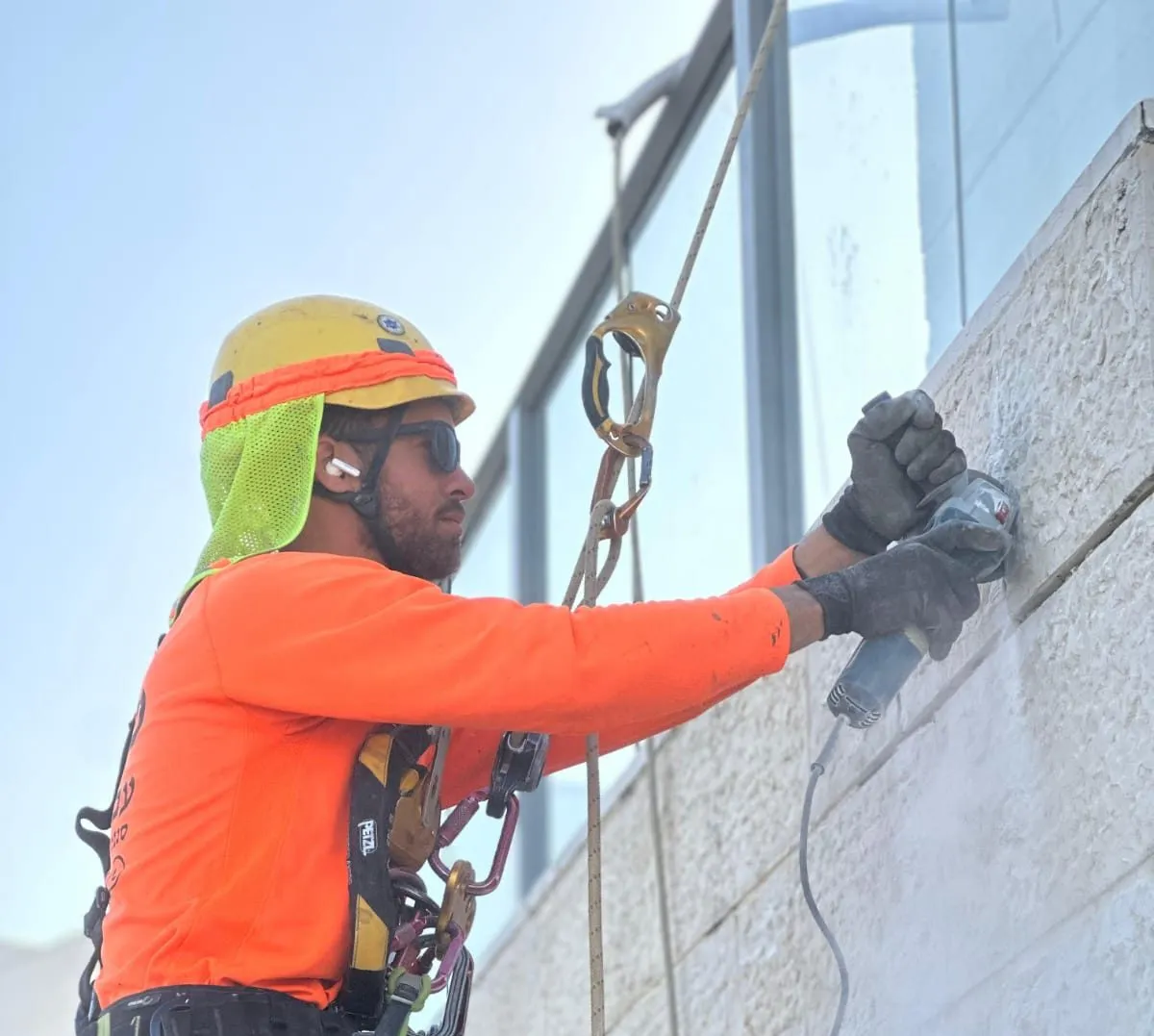
Efflorescence on facades and exterior walls: the cause, how it differs from damp, and professional treatment at height. Get advice from Top Gova.