Rope Access or Scaffolding
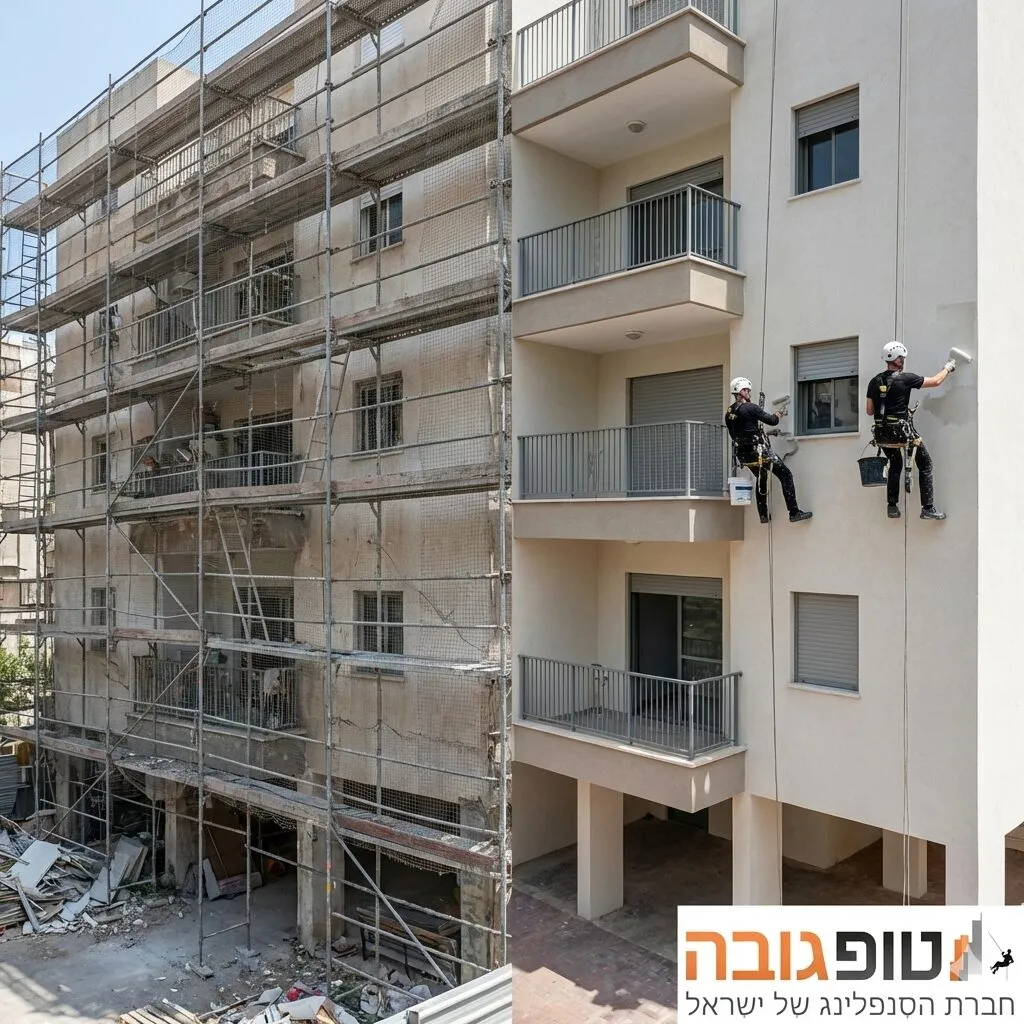
Rope access or scaffolding: which really pays off for renovating the building’s facade?
One of the biggest dilemmas every building committee or management company faces ahead of an exterior renovation is the question of access. You have received quotes and seen technical specifications, but the most confusing item remains the work method. On one side, the traditional method of erecting scaffolding that wraps the building. On the other, the modern, fast method of working on ropes (rope access).
The choice between rope access and scaffolding is not just a matter of price. It affects how long the renovation takes, the residents’ quality of life during the work, safety, and the final result too. At Top Gova we carry out projects with both methods, so we can give you an objective, professional picture that will help you decide what is right for your building. In this article we break down the advantages and disadvantages of each method, so you know exactly what you are paying for.
The financial component: where is your money invested?
When you look at a quote for a facade renovation, it is important to understand what you are paying for. With scaffolding, a very significant share of the budget (often around 30% and even more) goes on “dead logistics”. This means costs that do not contribute directly to renovating the wall, but serve only to make access to it possible. These costs include:
- Trucking the scaffolding to the site.
- Working days of the assembly and dismantling crews (which cost a lot of money).
- A safety engineer’s inspection before going up the scaffold (required by law).
- Monthly rent for the equipment itself.
With rope access, by contrast, these costs are cut almost to zero. Top Gova’s team of rope-access technicians arrives with the equipment in a vehicle, goes up to the roof, installs safe anchor points and starts working. The building committee’s money is invested purely in materials (concrete, finishing plaster, paint, primer) and in the professionals’ working hours on the wall. That is why, in the vast majority of cases, a quote for rope access will be significantly cheaper than an equivalent quote with scaffolding, without compromising on the quality of the materials.
Work time: who has patience for a construction site?
Time is a critical factor. Erecting scaffolding around an average building of 4-6 floors can take a whole week and even more. The same goes for dismantling it at the end of the project. That means two weeks of noise, obstructions and mess in the building’s yard, before anyone has even touched a paintbrush. With rope access, set-up time is measured in a few hours. We can start carrying out concrete repairs or waterproofing on the very first day we arrive. For residents suffering from active damp in winter, this speed is critical. Every day that passes without treatment is more damage to the apartment. The flexibility of rope access also lets us “jump” between different areas of the building and deal with urgent problems immediately, whereas scaffolding is a static, bulky structure that forces the work to follow the order in which it was erected.
The residents’ quality of life and personal security
This is perhaps the most painful item for residents in scaffolding projects. When a building is wrapped in scaffolding, it effectively becomes a cage.
- Light and air: The scaffolding, with its protective netting (jute nets), blocks sunlight and air from entering the apartments. The residents are forced to live in the shade for months.
- Privacy: Workers move around in front of the living-room and bedroom windows all day long. This forces the residents to live with the shutters down and the curtains drawn.
- Break-ins and theft: This is the biggest concern. A scaffold is essentially a huge, convenient ladder that lets any opportunistic thief climb easily to the upper floors and get in through the balcony or the window. Insurance companies are aware of this risk and sometimes raise premiums during a renovation.
With rope access, all these problems disappear. There is no blocking of light, the noise is significantly reduced, and at the end of the working day the ropes are gathered up to the roof. There is no way for a thief to climb, and the facade stays clean and open when the team is not working. The residents’ peace of mind is an advantage that is hard to put a price on, but it is worth a great deal.
The myth about the quality of the work: does rope access miss things?
There is an old claim that “on a scaffold you see the wall better”. Our experience at Top Gova shows that sometimes the opposite is true. A scaffold is a fixed structure with walkways at fixed intervals (usually every 2 meters of height). This means that sometimes the worker has to bend down very low or stretch up very high to reach a particular spot, which harms the precision and comfort of the work. A rope-access technician, by contrast, controls his height to the millimeter. He can position himself exactly in front of the crack, look it “in the whites of the eyes”, and carry out the repair at the optimal angle. The ability to move freely also gives access to hidden niches, cramped laundry enclosures and architectural elements that scaffolding struggles to reach.
When is scaffolding still a must?
At Top Gova we believe in transparency. Despite our love of ropes, there are cases in which we will actually recommend scaffolding to the client, or a combination of the two:
- Deep, massive restoration: If all of the building’s plaster is crumbling and the whole of it has to be stripped down to the block and thousands of meters re-plastered, working from scaffolding will be more efficient for moving huge quantities of material.
- Replacing heavy cladding stones: If very heavy stones have to be dismantled and reinstalled across the whole facade, scaffolding provides a convenient work surface for setting down the heavy equipment.
- Building additions: When balconies or safe rooms are added, there is no way around scaffolding for pouring the concrete.
That said, for 90% of routine maintenance cases (exterior painting, sealing cracks, spot concrete restoration, strengthening tiles and cleaning), rope access is the indisputably winning solution.
The bottom line: what is right for your building?
The choice between rope access and scaffolding should be based on the condition of the building and on your budget. If the goal is a visual renovation, waterproofing and maintenance, choosing rope access will save you tens of percent in costs and spare you months of living inside a closed construction site.
At Top Gova, we are not tied to one method. We are experts in solutions at height. When you contact us, we send a senior consultant to the site to examine the situation. If we see that the work requires scaffolding, we will tell you. But in most cases, we will be able to offer you a smart, fast and safe rope-access solution that will leave your building new and your residents satisfied.
Thank you! We received your request and will get back to you soon.
More articles you may find interesting
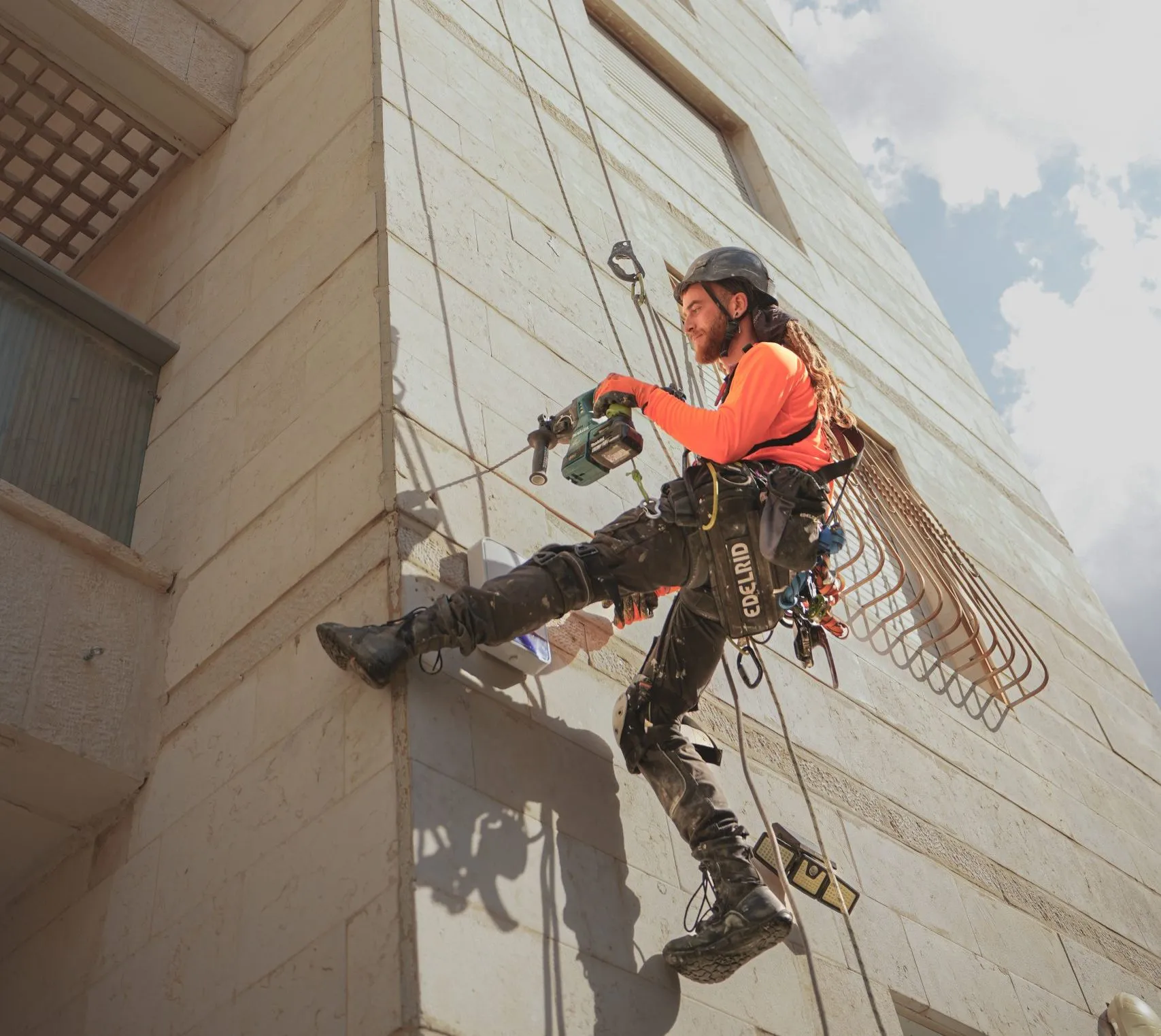
Read the article Annual Building Maintenance
A professional checklist for building committees: what to check every year on the envelope of a tall building, how to plan the budget and when to call a rope access company. A guide from Top Gova.
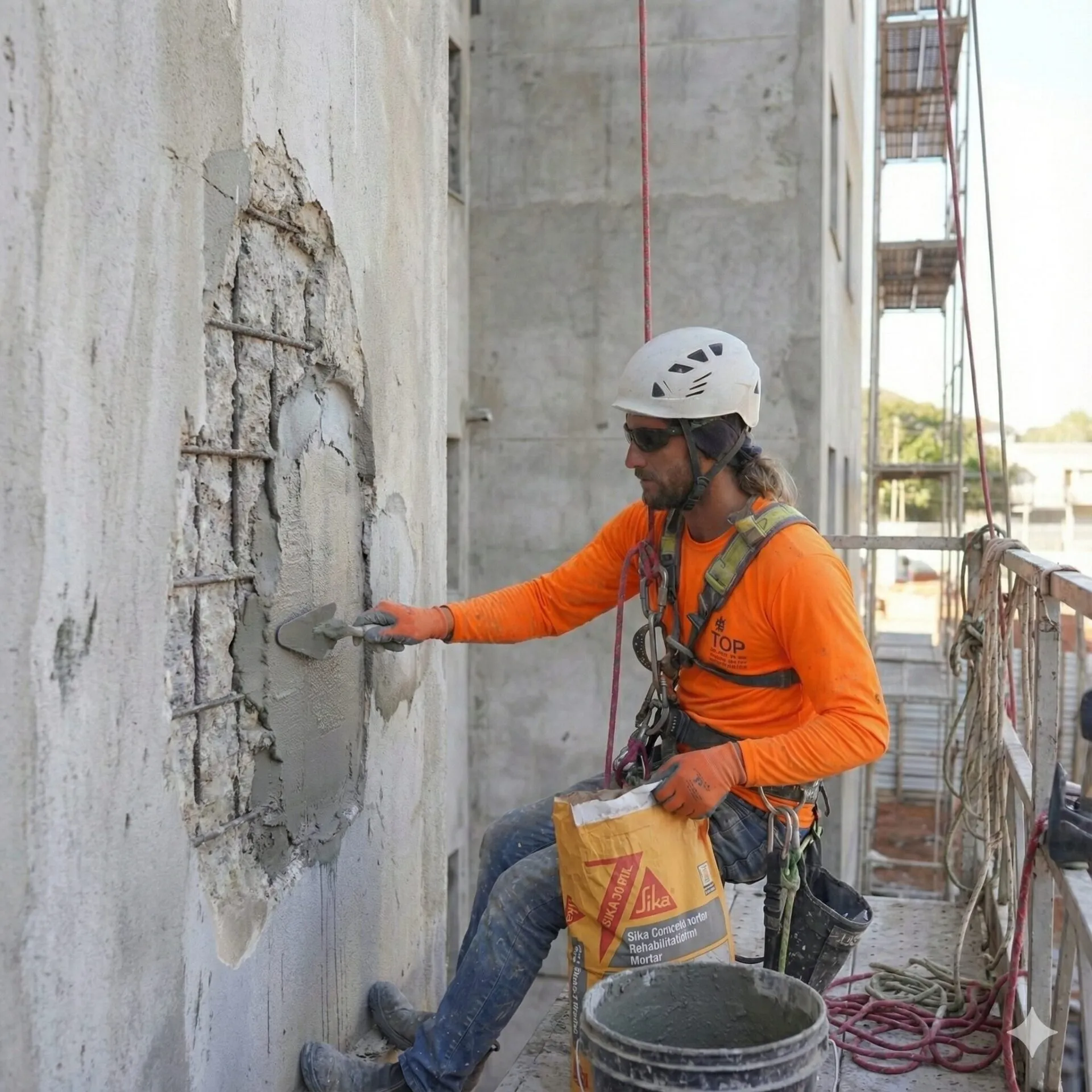
Read the article Parapet Wall Waterproofing
The parapet wall is the number one cause of damp on the top floor. Learn how to waterproof it properly with rope access and prevent damage to penthouse apartments.
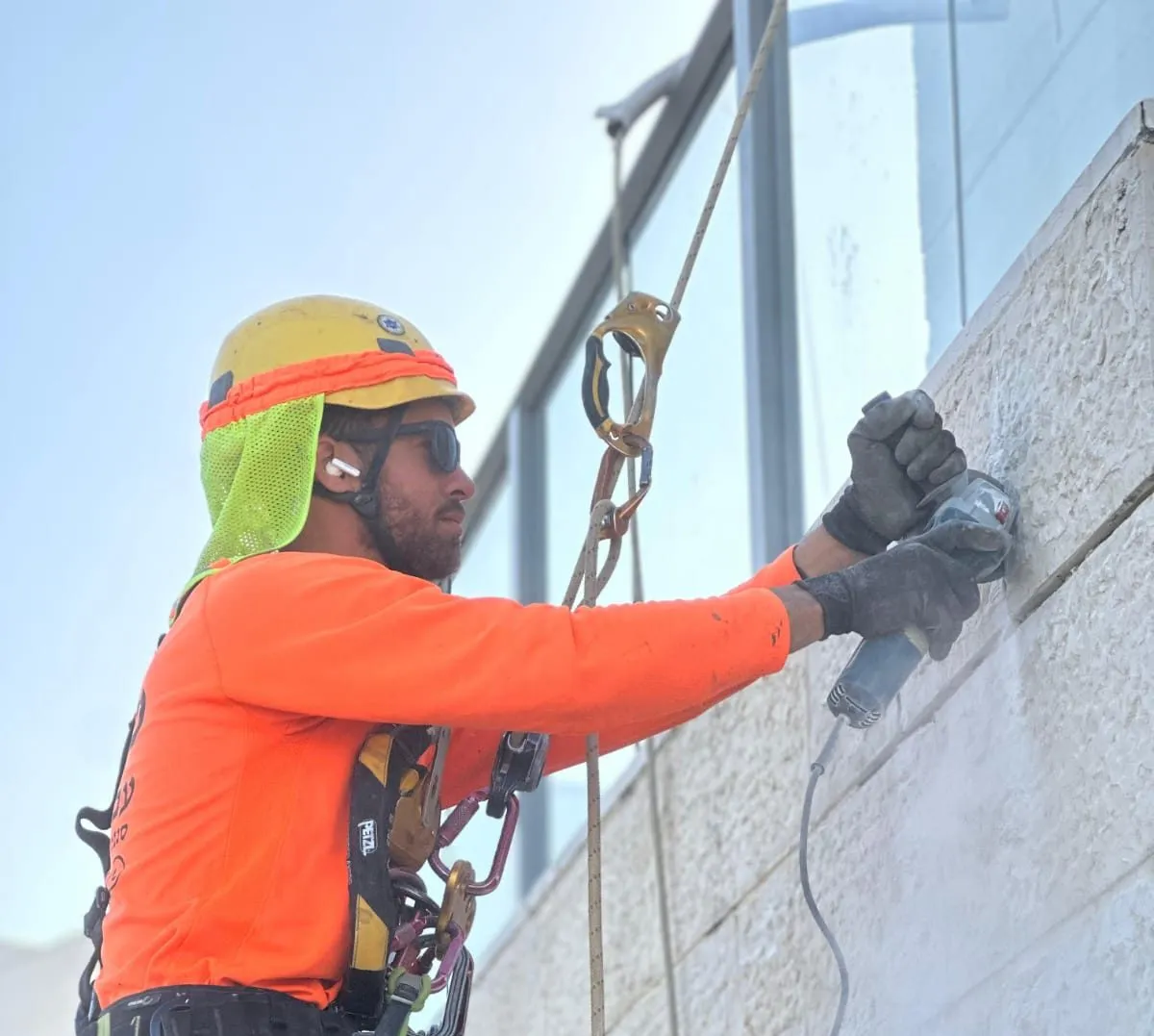
Read the article Efflorescence on Walls
Efflorescence on facades and exterior walls: the cause, how it differs from damp, and professional treatment at height. Get advice from Top Gova.