Salt Damage to the Facades of Buildings Near the Sea: Identification, Prevention and Repair
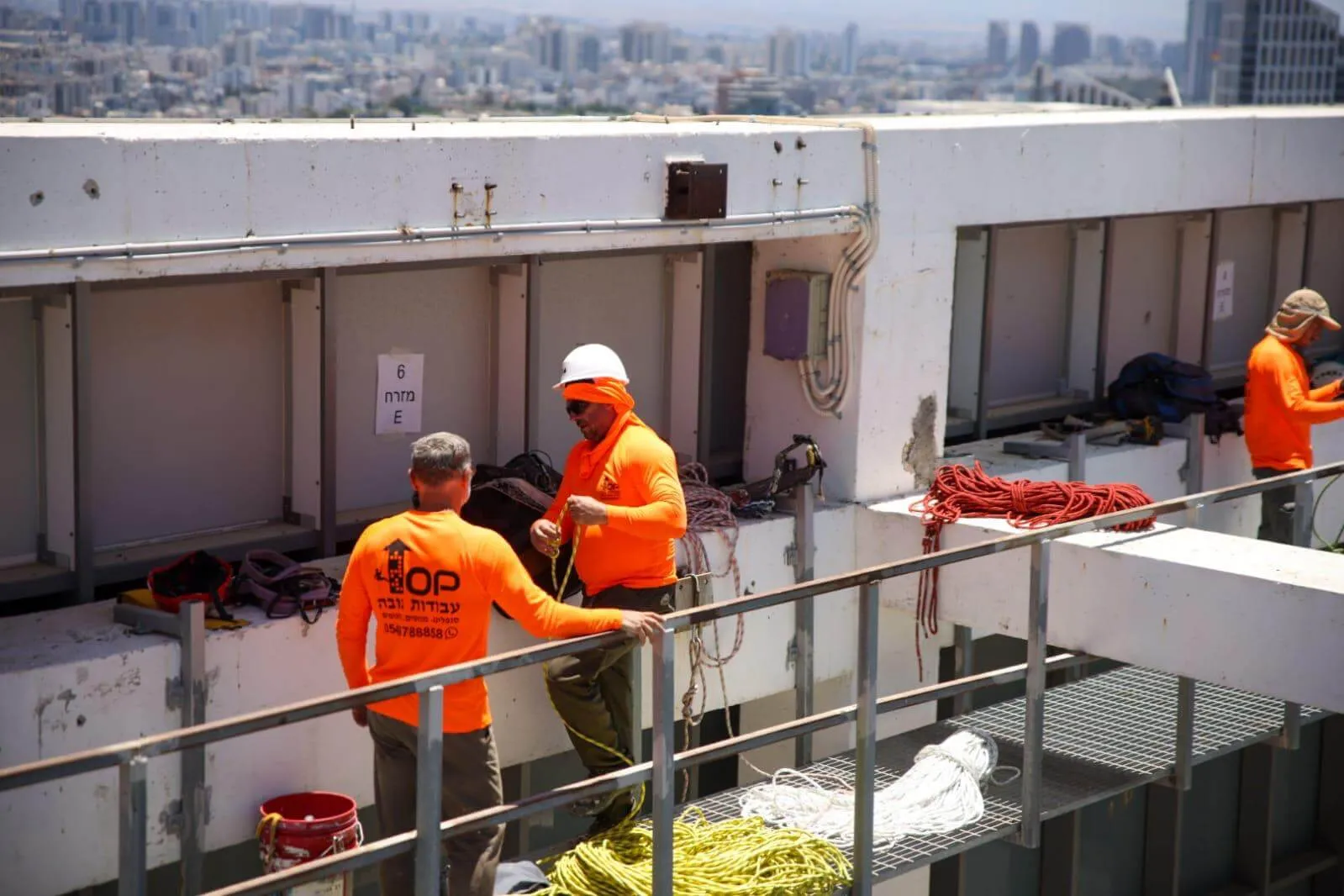
What is special about buildings near the sea
A building standing up to two kilometers from the coastline lives in a hostile environment. The sea air carries high concentrations of chlorides, salt ions that penetrate the concrete through its pores and cracks and reach the reinforcing steel. Once the chlorides reach the steel, they break down its basic protective layer (passivity) and set off accelerated corrosion that does not stop by itself.
While a building in the center of the country can live 30-40 years without signs of corrosion, a building in a coastal area begins to show signs after only 15-20 years. In areas such as Bat Yam, Herzliya, Netanya and Haifa, this is the daily reality of building committees.
What the damage looks like in practice
- Rust stains that appear through the plaster, especially on the underside of balconies and on exposed canopies.
- Concrete that crumbles and falls off in layers, a process called spalling, caused by the swelling of the rusting steel.
- White deposits on the surface of the wall (efflorescence), a sign of water carrying dissolved salts moving through the concrete.
- Accelerated wear of sealants: the salt breaks down polymer chains and shortens the life of every coating.
- Corrosion of external metal elements: railings, window frames, sheet metal.
Why old buildings near the sea are at higher risk
Construction in Israel until the 1990s was characterized by thin concrete cover over the steel (sometimes only 15-20 mm, instead of the 40 mm required in a coastal area). In addition, the concrete itself was sometimes of lower quality, with a high water-cement ratio that created many pores. The combination of thin cover, porous concrete and a chloride-rich atmosphere is a recipe for accelerated corrosion.
Comprehensive scientific information on the process of chloride penetration into concrete and the mechanisms of corrosion can be read in the Wikipedia entry on concrete degradation (Chloride Attack).
What to do: preventive maintenance
A hydrophobic (water-repellent) coating
Applying a silane or siloxane material to the surface of the exposed concrete. The material penetrates the first few millimeters and creates a layer that repels water but lets the concrete breathe. It does not change the external appearance. It is recommended to renew it every 5-7 years.
Full waterproofing of the facade
In exposed coastal areas, it is sometimes recommended to carry out full rope access waterproofing of the facade with an elastomeric material that both blocks chlorides and copes with cracks. Polyurethane with a UV protection layer is preferable.
Chloride testing
A laboratory test that measures the concentration of chlorides at different depths of the concrete. It shows whether the chlorides have already reached the steel or whether there is still time to prevent it. It is recommended as part of a building envelope survey before any decision on renovation.
Repairing existing damage
If corrosion has already begun, the solution is rope access concrete restoration: chiseling around the damaged steel, complete cleaning of the rust, applying an anti-corrosion primer (such as Sika MonoTop 910 N), restoring the concrete section with polymer mortar, and applying an external protective layer. In a coastal area it is especially important to use materials with high resistance to chlorides and to state this in the work specification.
How often to inspect
A building in a coastal area should be inspected every 3 years, compared with 5 years for a building in the center of the country. Visual mapping by an experienced rope access team can identify problems at an early stage, when the repair is still cheap and simple. Waiting until the concrete starts to fall turns a small maintenance project into a full facade restoration costing hundreds of thousands of shekels.
Thank you! We received your request and will get back to you soon.
More articles you may find interesting
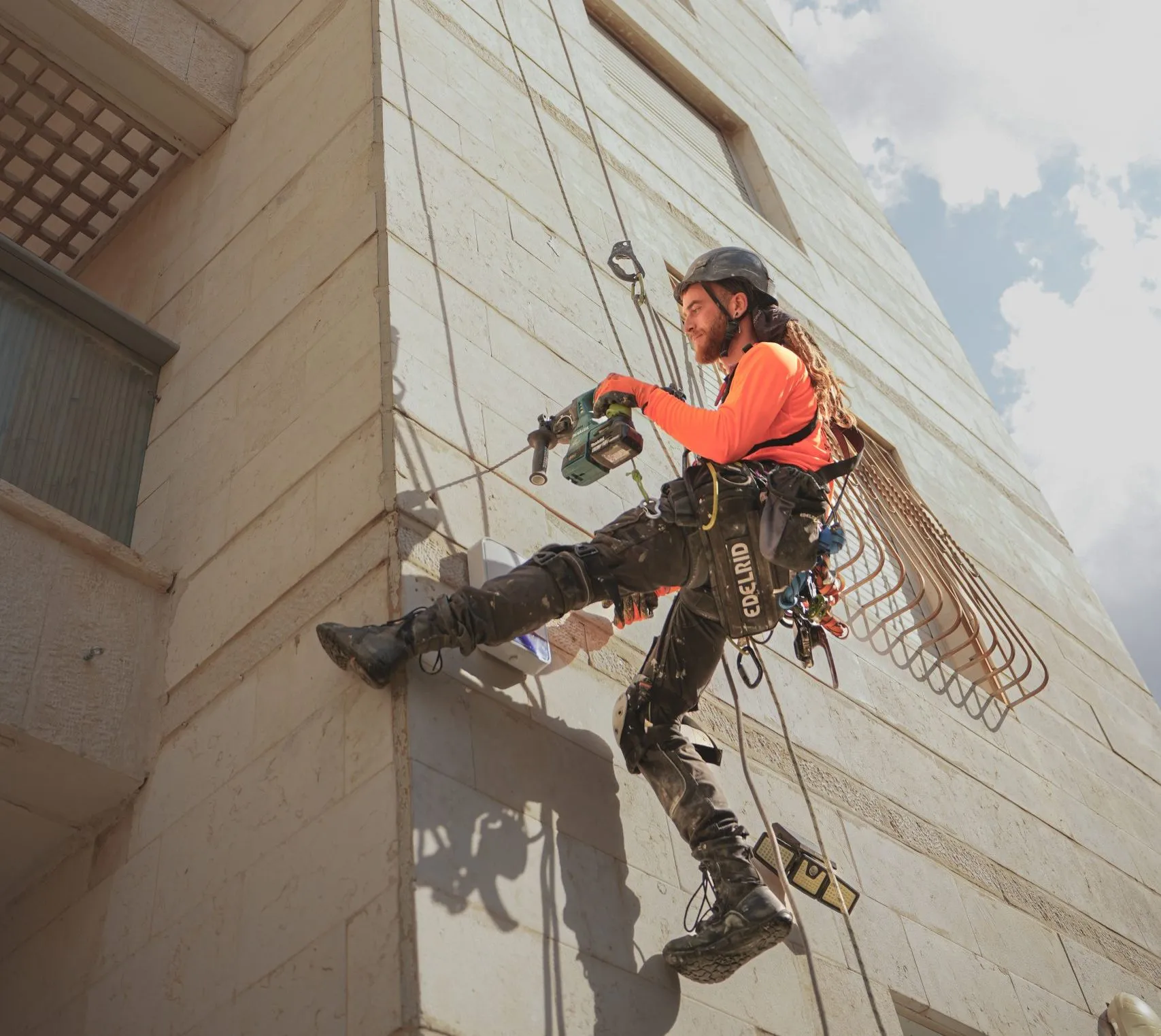
Read the article Annual Building Maintenance
A professional checklist for building committees: what to check every year on the envelope of a tall building, how to plan the budget and when to call a rope access company. A guide from Top Gova.
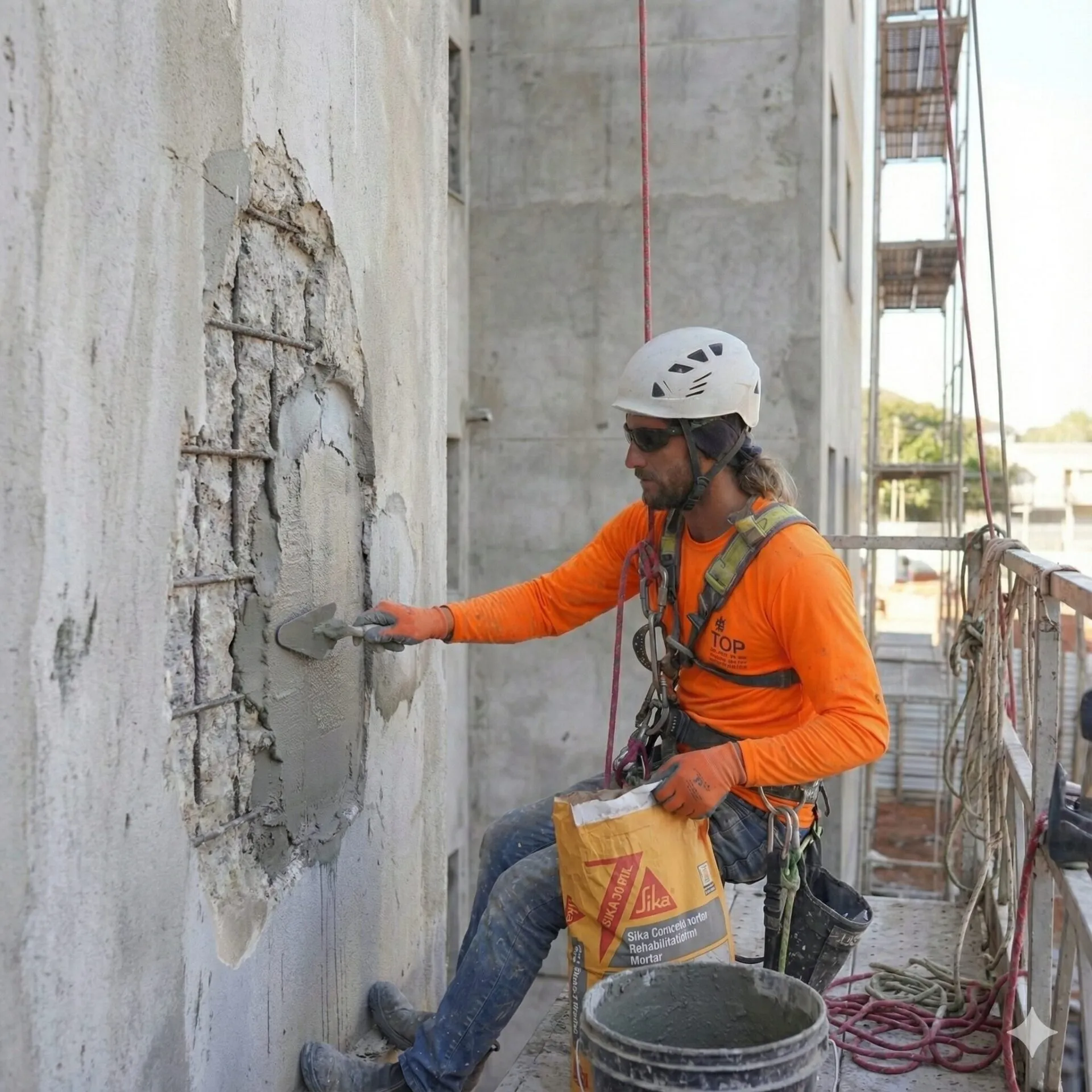
Read the article Parapet Wall Waterproofing
The parapet wall is the number one cause of damp on the top floor. Learn how to waterproof it properly with rope access and prevent damage to penthouse apartments.
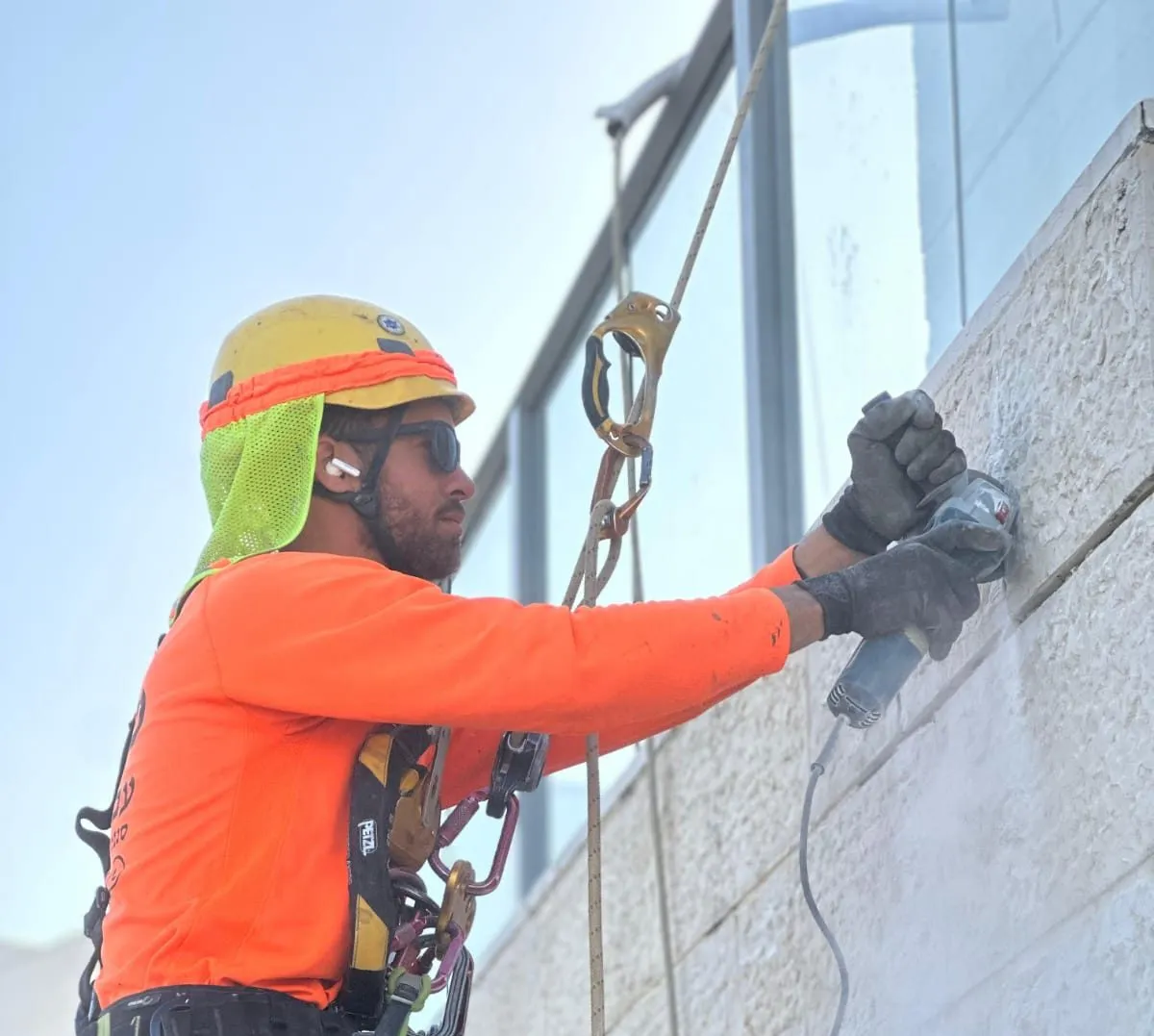
Read the article Efflorescence on Walls
Efflorescence on facades and exterior walls: the cause, how it differs from damp, and professional treatment at height. Get advice from Top Gova.