Israeli Standard 1139 for Work at Height: Everything You Need to Know
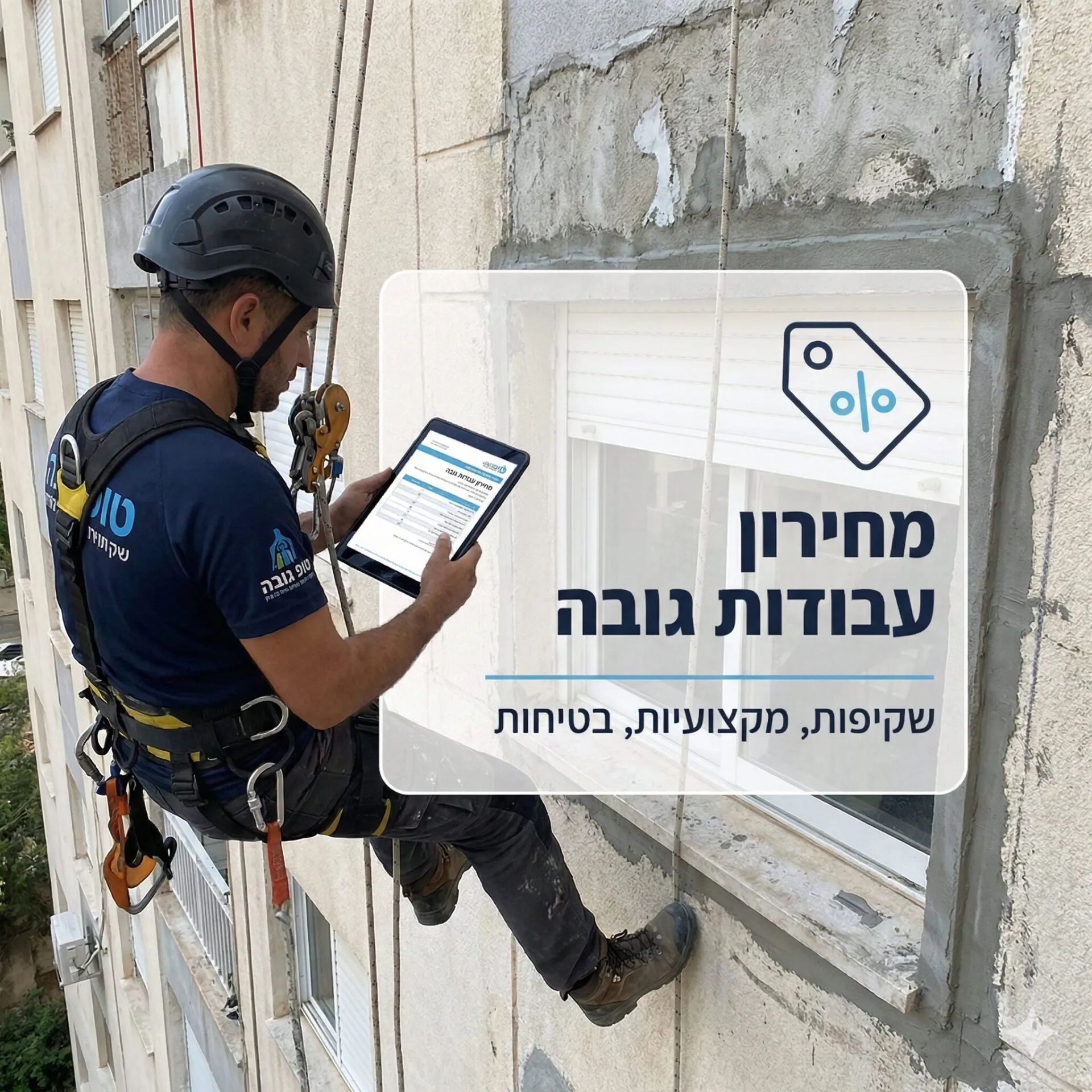
What is Standard 1139?
If there is one field where there is no room for compromise, it is safety at height. Israeli Standard 1139 is the main standard that defines the rules, requirements and procedures for carrying out work at height in Israel. It sets out how one must work when it comes to rope descent, rope access, the use of ropes, harnesses and protective equipment, and in effect it is the common language of everyone who works at height legally and professionally.
The standard was developed and updated over the years by the Standards Institution of Israel, together with professionals from the field, and reflects knowledge accumulated over decades in the field of work at height. It is not a recommendation: it is a binding requirement, and every company that carries out work at height must comply with it.
What does the standard actually include?
Standard 1139 covers a wide range of topics related to work at height. It is divided into several main parts, each dealing with a different aspect of the work.
| Topic | What is required |
|---|---|
| Worker training | Every worker must undergo certified training and hold an envelope rope-access certificate |
| Personal equipment | Harnesses, ropes, helmets and protective equipment to the CE or EN standard |
| Anchor points | Mandatory inspection and approval of the anchor points before every job |
| Backup and rescue | A rescue plan prepared in advance and rescue equipment available on site |
| Supervision and documentation | A certified work manager on site, full documentation of every action |
| Equipment inspections | Periodic inspection of all the height equipment, with marking and documentation |
Who is the standard relevant to?
Standard 1139 is relevant to everyone involved in work at height, and not just to the workers themselves. Those who commission the work, whether a building committee, a management company, a developer or a main contractor, bear responsibility for making sure the work is carried out by a company that complies with the standard.
In practice, if you hire a company for building restoration at height, you must make sure the workers have valid certificates, the equipment is inspected and documented, and there is suitable insurance. In the event of an accident, if it turns out you did not meet the requirements of the standard, the responsibility may fall on you too.
What is the difference between Standard 1139 and the Work Safety Ordinance?
A question that comes up a lot is what the connection is between the standard and general safety legislation. The answer is that Standard 1139 complements the Work Safety Ordinance and the accompanying regulations. While the ordinance sets general principles of safety in the workplace, the standard goes into the specific technical details of work at height with ropes.
It is important to understand that complying with the standard alone is not enough: you also need to meet all the other legal requirements, including the safety regulations for construction work, insurance requirements, and suitable contractor licensing.
How do you identify a company that complies with the standard?
When choosing a work-at-height company, there are a few things to check. First, ask to see the workers’ training certificates: every worker needs a valid rope-access certificate. Second, make sure the company has insurance specific to work at height, and not just general contractors’ insurance. Third, check that the company is listed in the Register of Contractors under the appropriate classification.
A professional company will have no difficulty presenting all these documents. If someone evades the question or claims that “it is not required”, it is a clear warning sign.
Updates and changes to the standard
Like every standard, 1139 is updated from time to time. The changes come from technological developments, from lessons learned from accidents, and from alignment with international standards. It is important to follow the updates and make sure the company you work with applies the most recent version.
Detailed information about the standard and its updates can be found on the website of the Standards Institution of Israel.
Why does it matter to you too?
Even if you do not work at height yourselves, Standard 1139 affects you directly. If you are building committee members ordering rope access facade maintenance, if you are project managers supervising renovation work at height, or if you are residents of a building undergoing work, this knowledge is relevant to you.
At Top Gova all our workers have been trained and hold valid certificates in line with Standard 1139. The company is insured with insurance specific to rope access work and is listed in the Register of Contractors under classification 132. When you work with us, you know that safety is never compromised.
Thank you! We received your request and will get back to you soon.
More articles you may find interesting
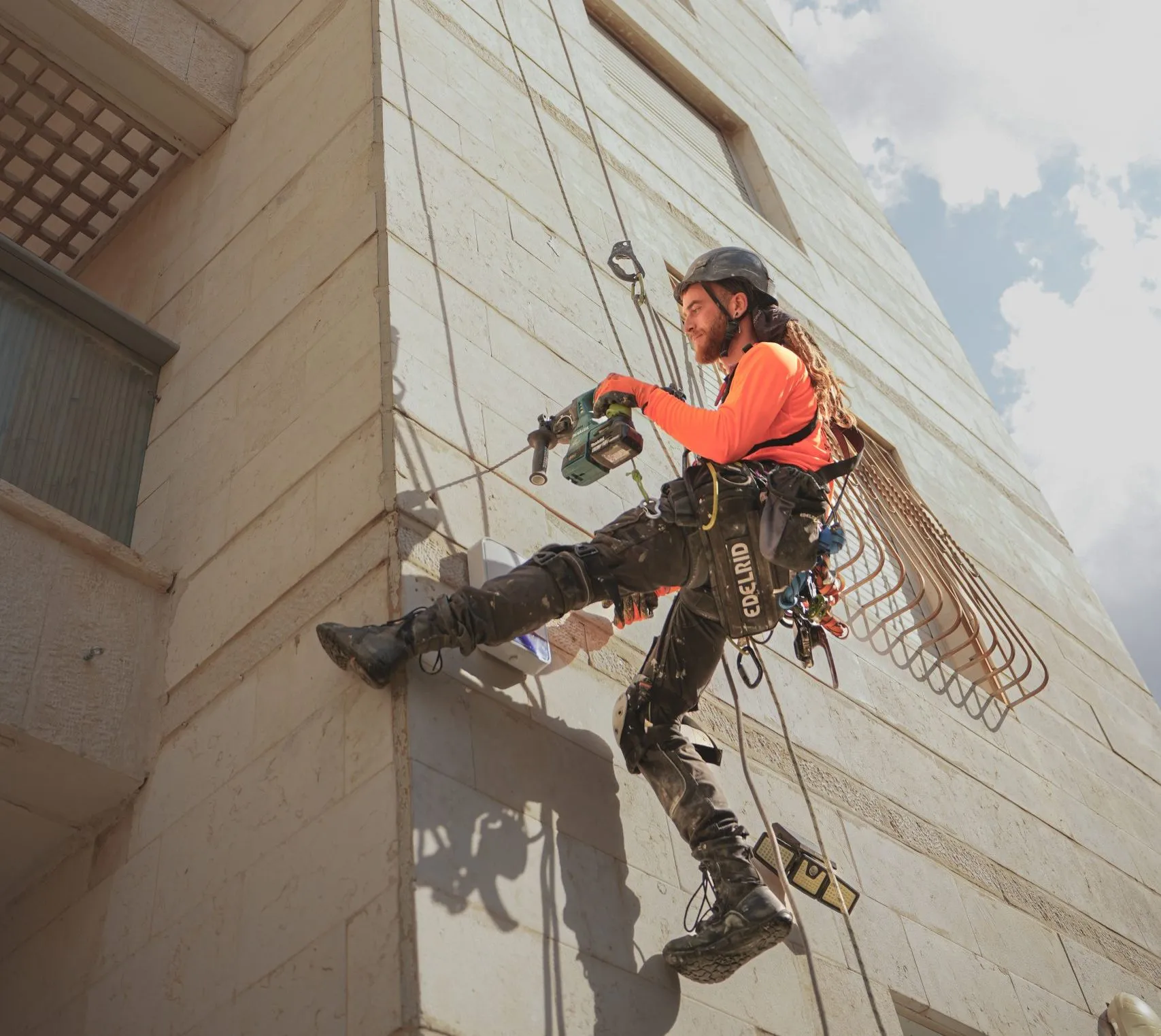
Read the article Annual Building Maintenance
A professional checklist for building committees: what to check every year on the envelope of a tall building, how to plan the budget and when to call a rope access company. A guide from Top Gova.
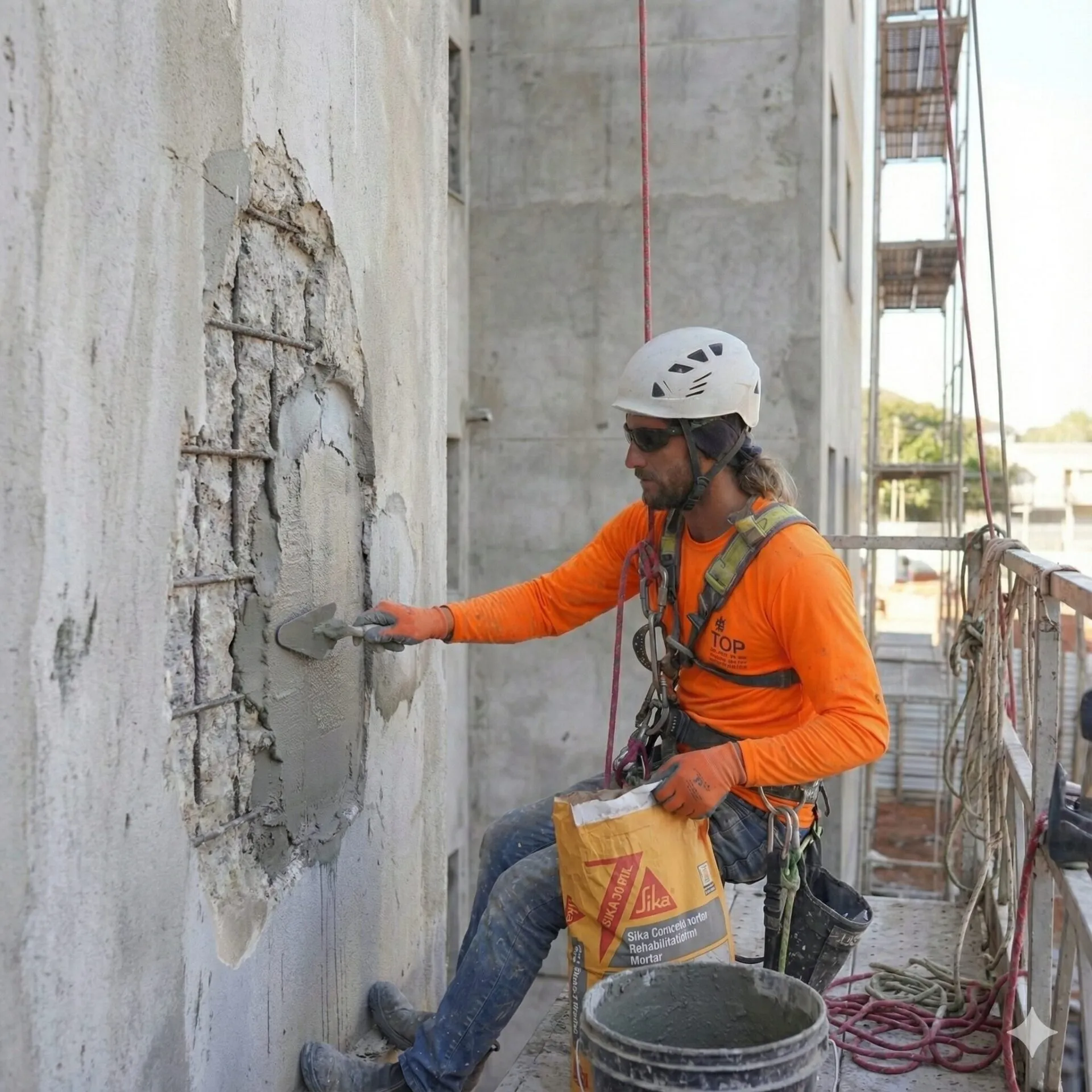
Read the article Parapet Wall Waterproofing
The parapet wall is the number one cause of damp on the top floor. Learn how to waterproof it properly with rope access and prevent damage to penthouse apartments.
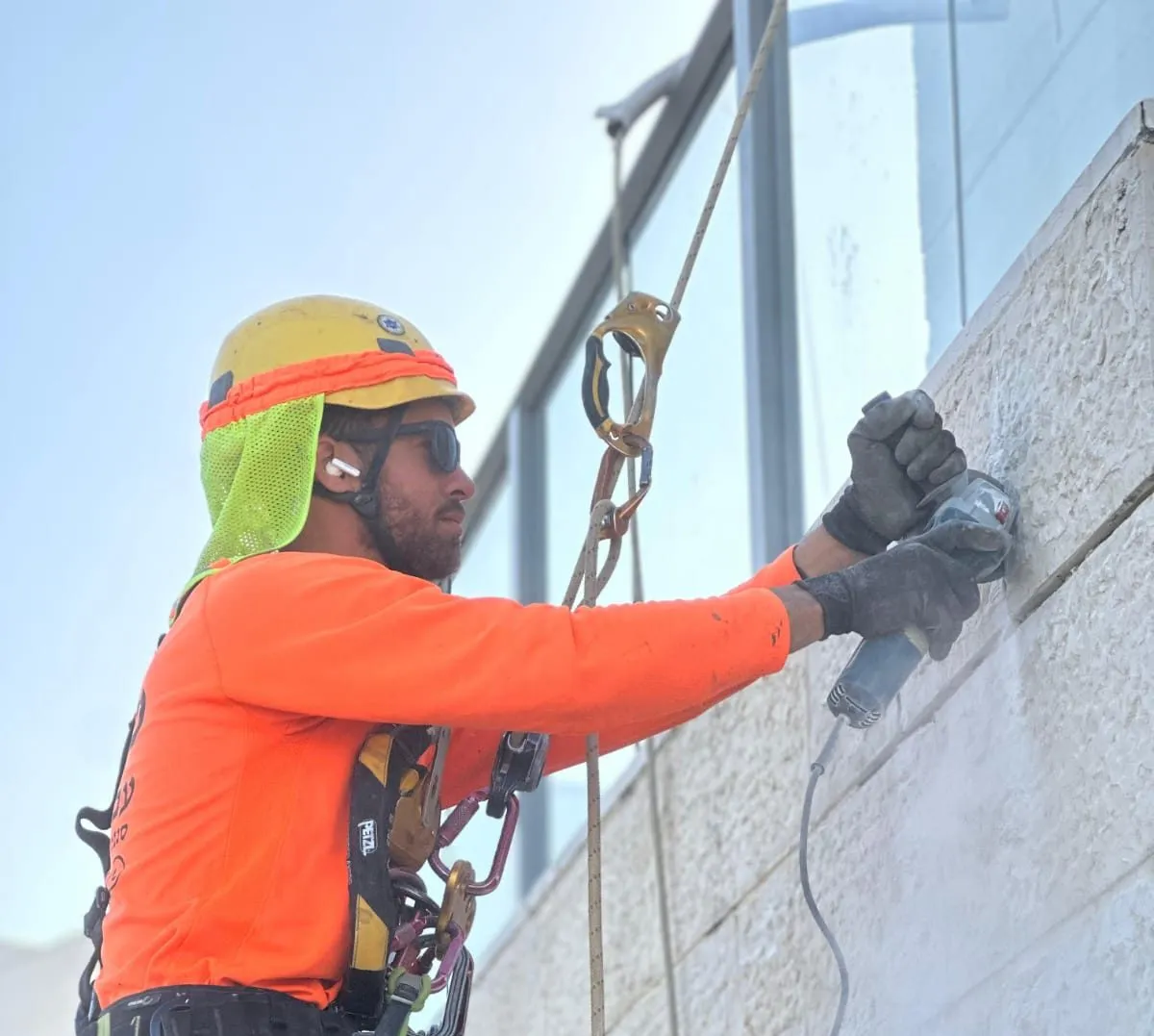
Read the article Efflorescence on Walls
Efflorescence on facades and exterior walls: the cause, how it differs from damp, and professional treatment at height. Get advice from Top Gova.