Strengthening Cladding Stones
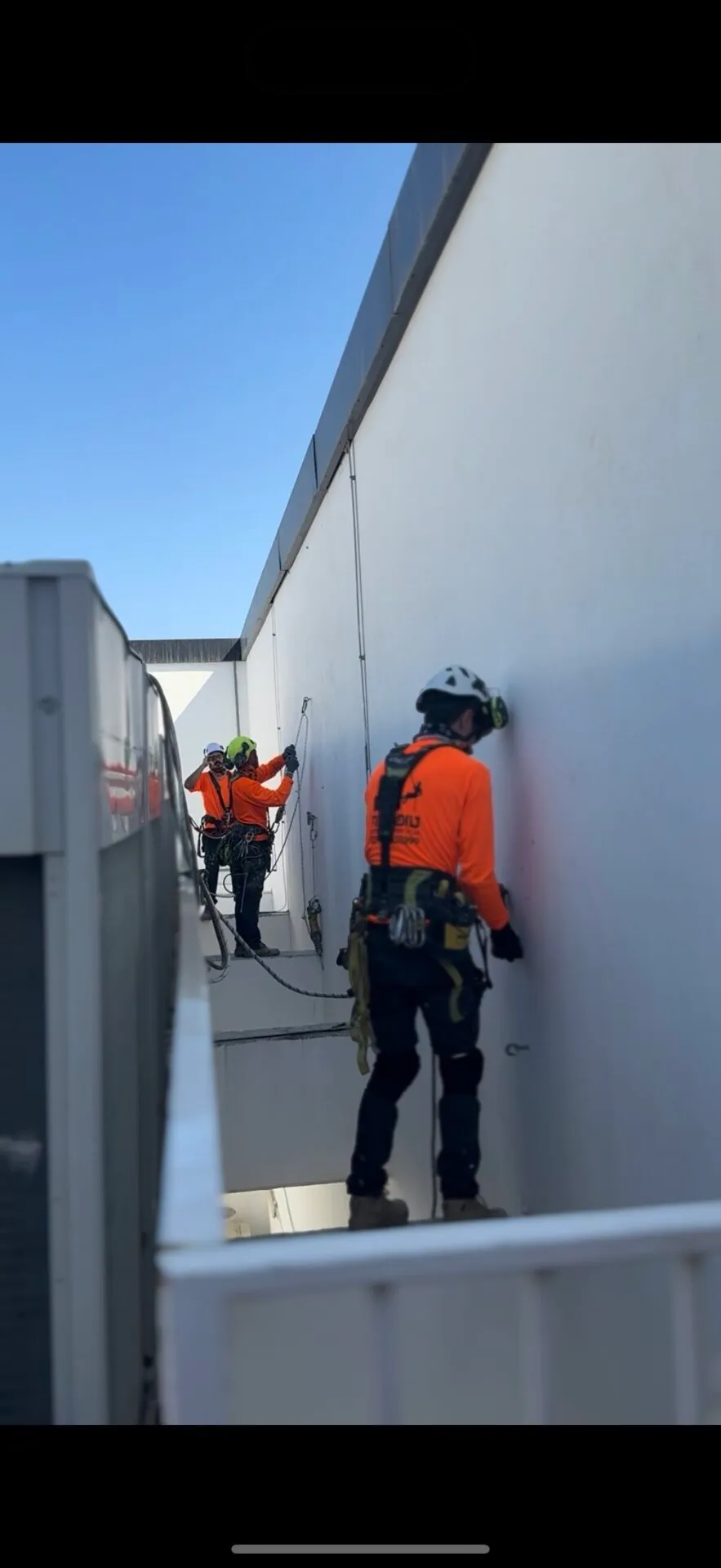
Strengthening cladding stones: the “ticking bomb” on the building’s walls and the building committee’s responsibility
It usually happens without warning. One morning a resident goes down to the parking lot and finds a fragment of a large marble stone smashed on the ground next to his car. In the best case, it ends with damage to the car’s bodywork. In the worst case, when a child or an adult happened to be passing just then, it could end in a national disaster.
For the building committee, the moment the first stone falls is an urgent wake-up call. It is an indication that the building, which looks stable and strong from outside, is starting to crumble. Strengthening cladding stones is not an aesthetic matter of facade renovation; it is a safety matter of the first order. At Top Gova we meet many building committees who come to us only after receiving a warning letter from the municipality about a “dangerous building”, or, heaven forbid, after a near miss. This article is meant to explain why this happens, what your responsibility is as the building’s representatives, and how to solve the problem before it is too late.
Why do stones suddenly come away from the wall?
To understand the problem, we have to go back in time to the construction methods of the 1980s, the 1990s and even the early 2000s. In those years, the common method of cladding buildings in stone (marble, limestone, kurkar sandstone) was the “wet method” or the use of hooks made of ordinary steel.
In this method, the stone was glued to the wall with mortar, and mechanical anchoring was added using simple steel wires drilled into the concrete. The problem is that this steel is not galvanized or durable enough. After 15-25 years, the moisture penetrating through the joints (the gaps between the stones) reaches these steel wires. The steel starts to rust.
And this is where the destructive chain begins: rust is a material whose volume is several times greater than the volume of the original steel. When the steel swells inside the small hole in the stone, it exerts enormous pressure from within. The stone cannot withstand the pressure, cracks around the anchor, and eventually breaks away from the wall and plunges down. It is a silent process, hidden from view, until the moment of the fall.
The building committee’s heavy legal liability
It is important that every building committee member knows the legal reality in Israel. The law sees the representatives of the condominium (the committee) as directly responsible for maintaining the common property and its safety.
If a stone has fallen and caused damage to property or, heaven forbid, physical or mental harm to a passer-by, a resident or a courier, the first address for a lawsuit is the building committee. Israeli courts have in the past awarded compensation of millions of shekels in such cases, and have even imposed personal liability on committee members who were negligent in their role and did not deal with a known danger.
Even if you have third-party insurance for the building, the insurance company may disclaim liability if it is proven that there was ongoing neglect (“gross negligence”) despite clear signs of danger. Strengthening cladding stones is a necessary preventive action to protect the public and also to protect you legally.
The first stage: a stone survey and a tap test
The most common mistake is to think that if one stone fell, only the area it fell from needs repairing. The opposite is true: one falling stone is a sign of a systemic failure across the whole facade.
Before starting the strengthening, a diagnosis is a must. At Top Gova, we carry out a thorough “stone survey” using rope access. Our rope-access technician goes over the face of the facade and carries out two critical checks:
- Visual inspection: locating cracked stones, stones that have “moved” out of place or bulged outward.
- Tap test (Tap Test): this is the most important check. The technician taps the suspect stones with a special rubber hammer. A well-bonded stone gives a dull, full sound. A stone that has come away from its adhesive and is about to fall gives a hollow sound (“drum”).
Every problematic stone is marked immediately, and at the end of the survey the building committee receives a detailed report on the extent of the problem.
The engineering solution: strengthening cladding stones with advanced mechanical anchoring
How do you strengthen stones that are already on the wall? They cannot be “glued” again from outside. The safest solution that meets the standard, which we apply at Top Gova, is to create a completely new anchoring system that never rusts.
The work process includes:
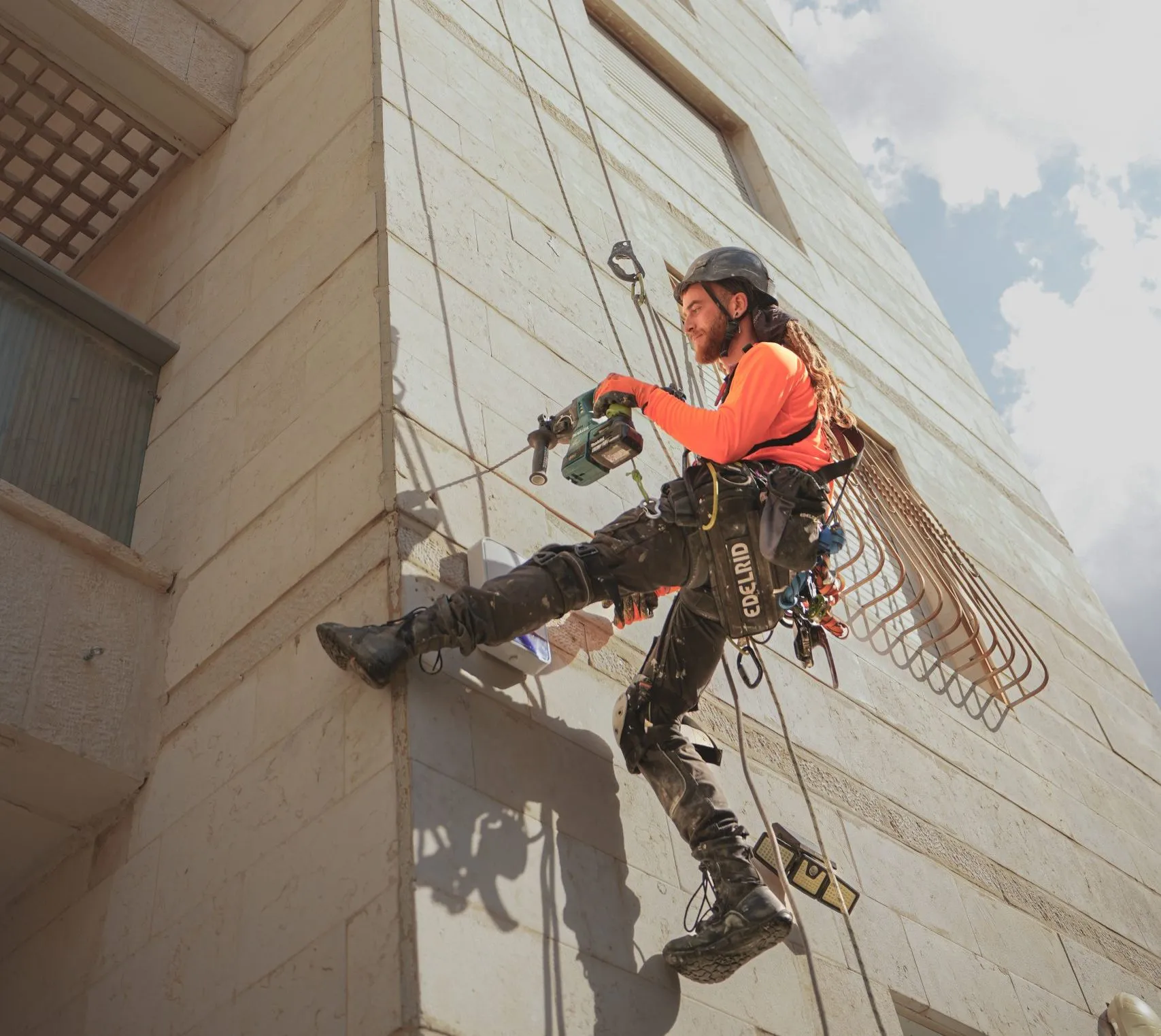
- Drilling: a hole is drilled through the existing stone to a depth of several centimeters into the concrete wall behind it.
- Inserting an anchor: a special bolt (anchor) made of stainless steel (316 stainless) that does not rust even in harsh outdoor conditions is inserted into the hole. The anchor expands inside the concrete and locks there.
- Sealing and concealing: the head of the bolt is covered with a special epoxy marble adhesive in the exact shade of the stone, so that after the repair it is almost impossible to notice.
This method ensures that even if the original adhesive behind the stone has completely failed, the stone will remain hanging safely on the new stainless anchors and will not fall.
Why carry out the strengthening by rope access?
Strengthening cladding stones is surgical work. You need to treat specific stones scattered across the full height of the building. Erecting scaffolding for this is very expensive, slow, and disruptive to the residents. Rope access work allows Top Gova’s skilled teams to reach every suspect stone quickly, carry out the drilling and anchoring, and move on to the next point, without blocking the building and without turning your life into a construction site.
Do not wait for the next stone to fall. The responsibility is yours, and the solution is within reach. Contact the experts at Top Gova for an initial risk survey, and restore confidence to yourselves and the residents.
Thank you! We received your request and will get back to you soon.
More articles you may find interesting
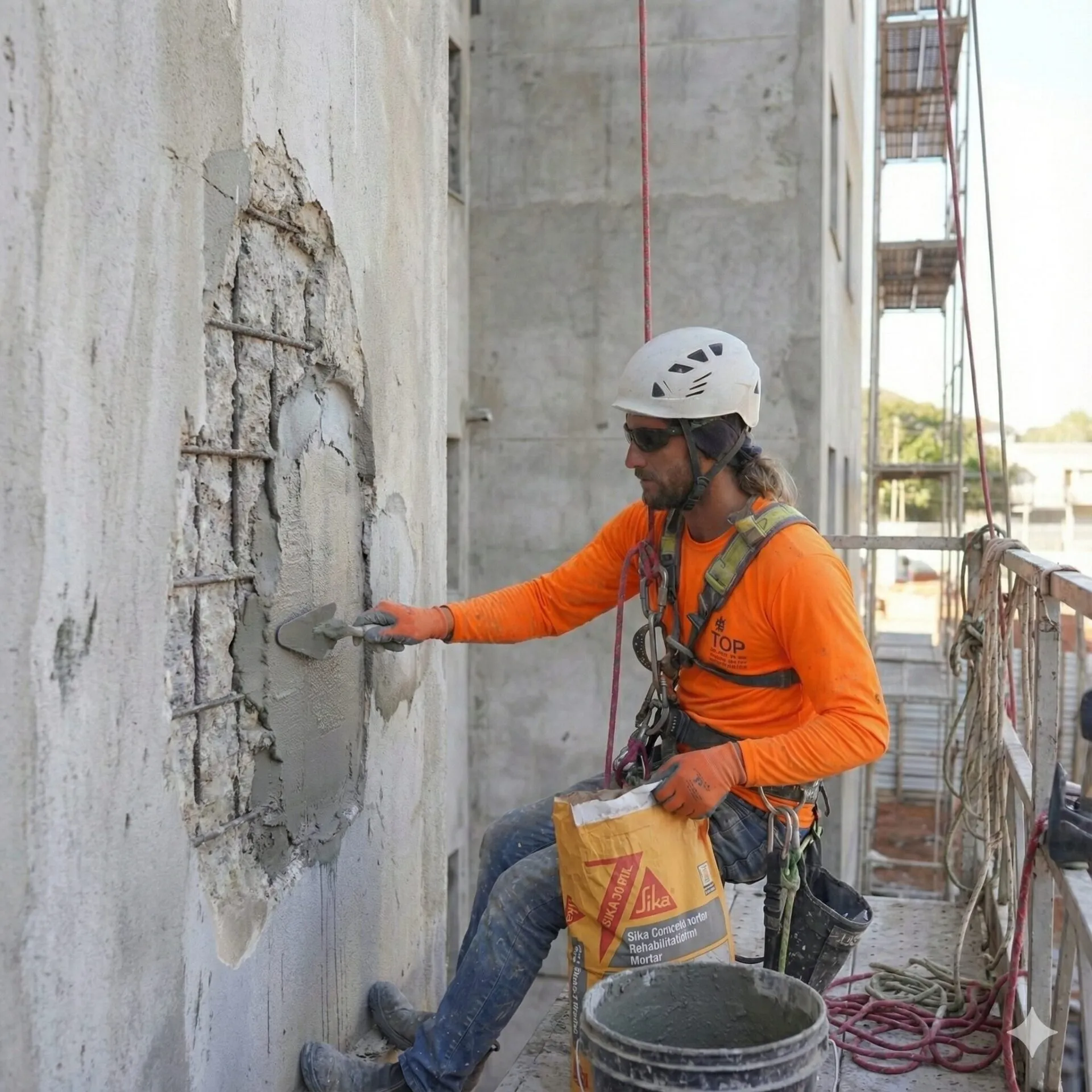
Read the article Annual Building Maintenance
A professional checklist for building committees: what to check every year on the envelope of a tall building, how to plan the budget and when to call a rope access company. A guide from Top Gova.
Read the article Parapet Wall Waterproofing
The parapet wall is the number one cause of damp on the top floor. Learn how to waterproof it properly with rope access and prevent damage to penthouse apartments.
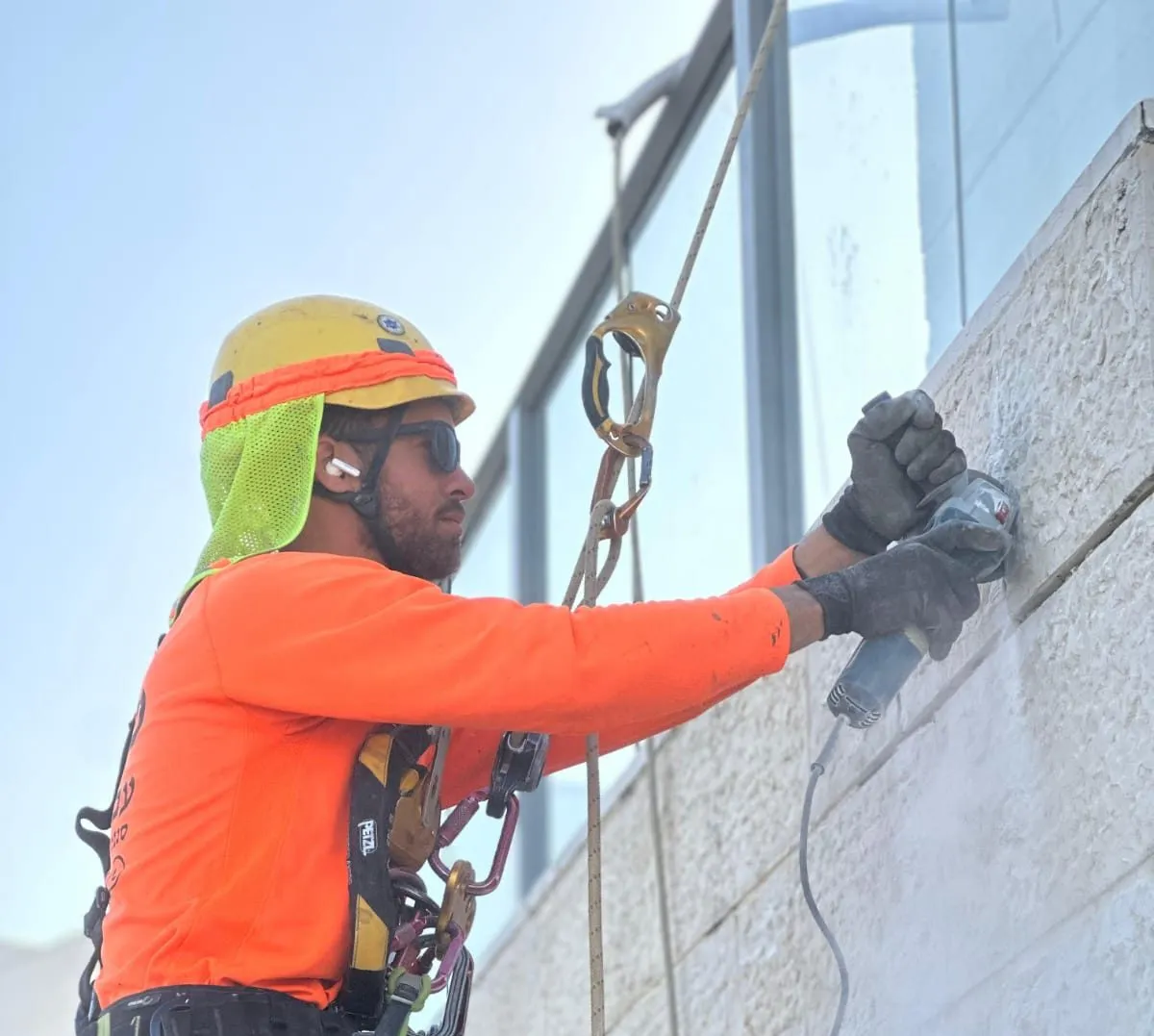
Read the article Efflorescence on Walls
Efflorescence on facades and exterior walls: the cause, how it differs from damp, and professional treatment at height. Get advice from Top Gova.